
Letters to a Friend, Written to Mrs. Ezra S. Carr, 1866-1879
John Muir
THE CLASSIC COLLECTION · 1900
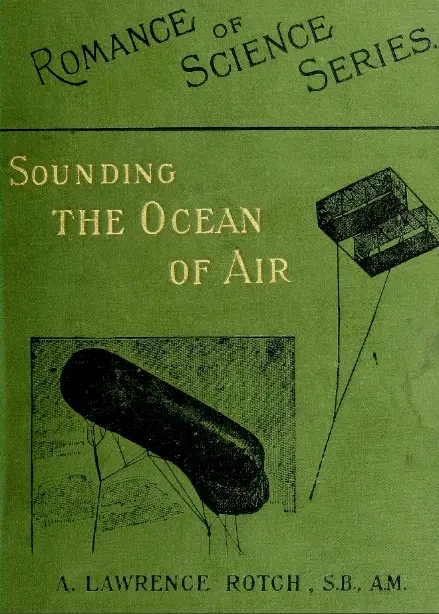
"Sounding the Ocean of Air" by Abbott Lawrence Rotch is a scientific publication written in the late 19th century. The book consists of six lectures delivered at the Lowell Institute in Boston, exploring various aspects of meteorology, particularly the structure and dynamics of the atmosphere and methods for investigating its properties through instruments like balloons and kites. Rotch aims to provide a comprehensive understanding of atmospheric phenomena, drawing attention to both historical perspectives and modern findings. The opening of the text discusses human curiosity about meteorological phenomena from ancient times to the present, detailing historical contributions from philosophers like Aristotle and modern advancements in the field. Rotch explains the atmosphere's composition, structure, and the significance of various meteorological instruments developed over centuries. The beginning sets a solid groundwork for understanding the complexities of the atmosphere and introduces the methods of exploration that will be elaborated in the subsequent chapters. This initial portion focuses on the evolution of meteorological knowledge and lays the foundation for exploring the practical applications of this science in understanding weather patterns and atmospheric behaviors.
Introduction adapted from the source catalogue; source summaries may be automatically generated.
Free to read · English · 33,509 words · No account needed
MAKE TIME FOR A GOOD BOOK
On by default. Untick to stop anonymous reading totals. Each page counts after 10 seconds in view. How this works.
Anonymous counting is on unless you have switched it off.
Dalton (J.), water-vapour in the air, 38
Daniell (J. F.), mountains a registering thermometer, 13
Davis (W. M.), cloud measurements, 53
Deluc (J. A.), theory of clouds, 42
De Saussure (H. B.), 20, 42, 73
---- (H. B.), ascent of Mont Blanc, 20
Deutsche-Seewarte, Hamburg, 43
Donaldson (W. H.), proposed crossing Atlantic in a balloon, 92
Eddy (W. A.), 123, 124 et seq.
Eiffel Tower, Paris, 23, 152
Ekholm (N.), 53, 92
Electricity, atmospheric, 70, 76, 121, 141
Espy (J. P.), kites to verify calculated height of clouds, 121
Etna, ascended by ancients, 12
Euler (L.), theory of kites, 118
Exploring the atmosphere, methods of, 35 et seq., 145-6
Fahrenheit (D. G.), thermometer, 14
Ferdinand II. (Grand Duke), distributed meteorological instruments, 17
Fergusson (S. P.), 35, 53, 126, 128, 131, 136
Ferrel (W.), theory of cyclones, 173
Flammarion (C.), balloon ascents, 81
Flying machines, future, 59, 174
Fonvielle (W. de), 81, 108
Fˆrster (W.), hypothesis of Himmelsluft, 28
Forecasting by kites, 143, 147
Franklin (B.), experiment with kites, 121, 123
Franklin Kite Club, 121
Galileo (G.), 14, 15 Gay-Lussac (J. L.), balloon ascent, 20, 73 German Emperor (William II.), patron of aeronautics, 86 ---- Society for Promotion of AÎrial Navigation, 86, 93, 106 Glaisher (J.), balloon ascents, 75 et seq., 93 Green (C.), aeronaut for Welsh, 74 Grimaldi (F. M.), first measured clouds trigonometrically, 52 Guericke (O. von), experiment of Magdeburg hemispheres, 16
Hagstrˆm (K.), measured clouds, 53
Halley (E.), measured heights by barometer, 17
Hann (J.), 36, 173
Han Sin, employed kites in warfare, 117
Hargrave (L.), invented cellular kite, 129
Harrington (M. W.), advocated exploring air with kites, 125
Harvard College Observatory, 35, 48
Hazen (H. A.), highest balloon ascent in America, 85
Height of balloon, Cailletet's apparatus for obtaining, 113
Heights of kite-flights at Blue Hill, 21, 140
---- how measured by barometer, 17, 101
Heim (A.), voyage across the Alps, 92
Hellmann (G.), historical researches, 12
Helmholtz (H. von), wave-cloud, 40
Hergesell (H.), President of Aeronautical Committee, 108
Hermite (G.), 98, 99, 101
Hildebrandsson (H. H.), 42, 65
Hodgkins' Fund of Smithsonian Institution, grant from, 131
Howard (L.), cloud nomenclature, 41
Humboldt (A. von), 18, 20, 35
Humidity, changes with altitudes, 34, 71, 73, 77, 151, 169, 171
---- diurnal changes at different altitudes, 153
---- types of change with altitudes, 159 et seq.
Hutton (J.), cause of precipitation, 38
Hygrometer, invention of, 13
Jeffries (J.), first scientific balloon ascent, 69
---- first to cross the English Channel, 71
Jourdanet (D.), hypothesis of descent of man, 24
Jovis, balloon ascent, 84
Jupiter, analogy between cloudiness on earth and on, 51
Kepler (J.), height of atmosphere, 12
Kew Observatory, 53, 74, 122
Kˆppen (W.), cloud atlas, 43
Kirwan (R.), temperature at different latitudes, 18
Kite, antiquity of the, 117
---- Eddy or Malay, 124, 129
---- flights at Blue Hill, 21, 137, 140, 142
---- Hargrave, 129, 132
---- Lamson's "aero-curve," 134
---- photography, 123, 126, 173
---- theory of, 118, 124, 130
Kites, first scientific use of, 120
---- first self-recording instruments raised by, 126
---- oriental tailless, 118
---- scientific uses of, 173
Kite-winch at Blue Hill, steam, 131, 136
Krakatoa, eruption of volcano, 27
Your reading position is saved on this browser. Take it to another device with a library code. Reading pages adapt to text, rather than matching a printed edition.
BEHIND THE BOOK
This eBook is for the use of anyone anywhere in the United States and most other parts of the world at no cost and with almost no restrictions whatsoever. You may copy it, give it away or re-use it under the terms of the Project Gutenberg License included with this eBook or online at www.gutenberg.org. If you are not located in the United States, you will have to check the laws of the country where you are located before using this eBook. Read the source licence.
The original source file, including credits and licence, is retained by this library. Request an original-format copy at no charge. Please include the book title and Project Gutenberg identifier #36252.
KEEP YOUR CURIOSITY GOING
John Muir

Asa Gray
Asa Gray

Florence Nightingale
Elizabeth Robins Pennell
Denison Olmsted