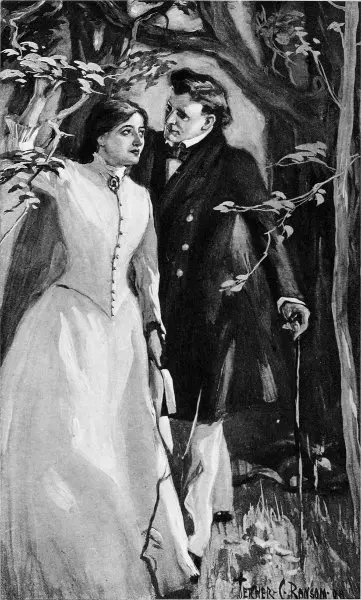
The diary of a superfluous man, and other stories
Ivan Sergeevich Turgenev
THE CLASSIC COLLECTION · 1867
"Smoke" by Ivan Turgenev is a novel published in 1867 that interweaves a passionate love affair with biting social criticism. Set in the German resort town of Baden-Baden, the story follows young Grigory Litvinov, who arrives to meet his fiancée but encounters a mysterious woman from his past. As old feelings resurface, Turgenev satirizes Russian society through sharp portrayals of both conservative aristocrats and radical Slavophiles, offering his vision of Russia's future through pointed political commentary.
Introduction adapted from the source catalogue; source summaries may be automatically generated.
Free to read · English · 66,551 words · No account needed
MAKE TIME FOR A GOOD BOOK
On by default. Untick to stop anonymous reading totals. Each page counts after 10 seconds in view. How this works.
Anonymous counting is on unless you have switched it off.
A few paces from the ‘Russian tree,’ at a little table in front of Weber’s coffee-house, there was sitting a good-looking man, about thirty, of medium height, thin and dark, with a manly and pleasant face. He sat bending forward with both arms leaning on his stick, with the calm and simple air of a man to whom the idea had not occurred that any one would notice him or pay any attention to him. His large expressive golden-brown eyes were gazing deliberately about him, sometimes screwed up to keep the sunshine out of them, and then watching fixedly some eccentric figure that passed by him while a childlike smile faintly stirred his fine moustache and lips, and his prominent short chin. He wore a roomy coat of German cut, and a soft grey hat hid half of his high forehead. At the first glance he made the impression of an honest, sensible, rather self-confident young man such as there are many in the world. He seemed to be resting from prolonged labours and to be deriving all the more simple-minded amusement from the scene spread out before him because his thoughts were far away, and because they moved too, those thoughts, in a world utterly unlike that which surrounded him at the moment. He was a Russian; his name was Grigory Mihalovitch Litvinov.
We have to make his acquaintance, and so it will be well to relate in a few words his past, which presents little of much interest or complexity.
He was the son of an honest retired official of plebeian extraction, but he was educated, not as one would naturally expect, in the town, but in the country. His mother was of noble family, and had been educated in a government school. She was a good-natured and very enthusiastic creature, not devoid of character, however. Though she was twenty years younger than her husband, she remodelled him, as far as she could, drew him out of the petty official groove into the landowner’s way of life, and softened and refined his harsh and stubborn character. Thanks to her, he began to dress with neatness, and to behave with decorum; he came to respect learned men and learning, though, of course, he never took a single book in his hand; he gave up swearing, and tried in every way not to demean himself. He even arrived at walking more quietly and speaking in a subdued voice, mostly of elevated subjects, which cost him no small effort. ‘Ah! they ought to be flogged, and that’s all about it!’ he sometimes thought to himself, but aloud he pronounced: ‘Yes, yes, that’s so ... of course; it is a great question.’ Litvinov’s mother set her household too upon a European footing; she addressed the servants by the plural ‘you’ instead of the familiar ‘thou,’ and never allowed any one to gorge himself into a state of lethargy at her table. As regards the property belonging to her, neither she nor her husband was capable of looking after it at all. It had been long allowed to run to waste, but there was plenty of land, with all sorts of useful appurtenances, forest-lands and a lake, on which there had once stood a factory, which had been founded by a zealous but unsystematic owner, and had flourished in the hands of a scoundrelly merchant, and gone utterly to ruin under the superintendence of a conscientious German manager. Madame Litvinov was contented so long as she did not dissipate her fortune or contract debts. Unluckily she could not boast of good health, and she died of consumption in the very year that her son entered the Moscow university. He did not complete his course there owing to circumstances of which the reader will hear more later on, and went back to his provincial home, where he idled away some time without work and without ties, almost without acquaintances. Thanks to the disinclination for active service of the local gentry, who were, however, not so much penetrated by the Western theory of the evils of ‘absenteeism,’ as by the home-grown conviction that ‘one’s own shirt is the nearest to one’s skin,’ he was drawn for military service in 1855, and almost died of typhus in the Crimea, where he spent six months in a mud-hut on the shore of the Putrid Sea, without ever seeing a single ally. After that, he served, not of course without unpleasant experiences, on the councils of the nobility, and after being a little time in the country, acquired a passion for farming. He realised that his mother’s property, under the indolent and feeble management of his infirm old father, did not yield a tenth of the revenue it might yield, and that in experienced and skilful hands it might be converted into a perfect gold mine. But he realised, too, that experience and skill were just what he lacked--and he went abroad to study agriculture and technology--to learn them from the first rudiments. More than four years he had spent in Mecklenburg, in Silesia, and in Carlsruhe, and he had travelled in Belgium and in England. He had worked conscientiously and accumulated information; he had not acquired it easily; but he had persevered through his difficulties to the end, and now with confidence in himself, in his future, and in his usefulness to his neighbours, perhaps even to the whole countryside, he was preparing to return home, where he was summoned with despairing prayers and entreaties in every letter from his father, now completely bewildered by the emancipation, the re-division of lands, and the terms of redemption--by the new régime in short. But why was he in Baden?
Your reading position is saved on this browser. Take it to another device with a library code. Reading pages adapt to text, rather than matching a printed edition.
Ivan Sergeevich Turgenev
Ivan Sergeevich Turgenev
Ivan Sergeevich Turgenev
Ivan Sergeevich Turgenev
BEHIND THE BOOK
This eBook is for the use of anyone anywhere in the United States and most other parts of the world at no cost and with almost no restrictions whatsoever. You may copy it, give it away or re-use it under the terms of the Project Gutenberg License included with this eBook or online at www.gutenberg.org. If you are not located in the United States, you will have to check the laws of the country where you are located before using this eBook. Read the source licence.
The original source file, including credits and licence, is retained by this library. Request an original-format copy at no charge. Please include the book title and Project Gutenberg identifier #40813.
KEEP YOUR CURIOSITY GOING
Coulson Kernahan

Maurice Baring
Frances Wright
Cécile Tormay

Frederic Jesup Stimson

W. H. P. (William Henry Pope) Jarvis