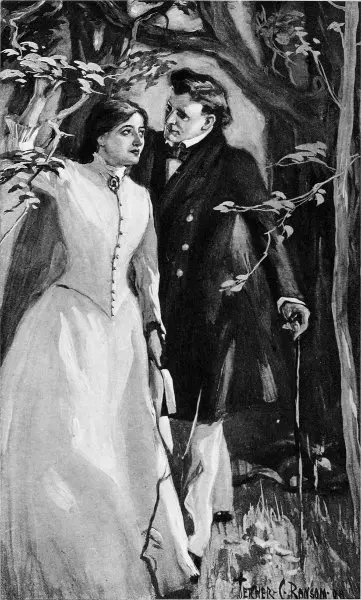
The diary of a superfluous man, and other stories
Ivan Sergeevich Turgenev
THE CLASSIC COLLECTION · 1867
"Smoke" by Ivan Turgenev is a novel published in 1867 that interweaves a passionate love affair with biting social criticism. Set in the German resort town of Baden-Baden, the story follows young Grigory Litvinov, who arrives to meet his fiancée but encounters a mysterious woman from his past. As old feelings resurface, Turgenev satirizes Russian society through sharp portrayals of both conservative aristocrats and radical Slavophiles, offering his vision of Russia's future through pointed political commentary.
Introduction adapted from the source catalogue; source summaries may be automatically generated.
Free to read · English · 66,551 words · No account needed
MAKE TIME FOR A GOOD BOOK
On by default. Untick to stop anonymous reading totals. Each page counts after 10 seconds in view. How this works.
Anonymous counting is on unless you have switched it off.
Fresh guests began to arrive; towards the end of the evening a good many people were assembled. Among them came, too, Mr. Yevseyev whom Madame Suhantchikov had vilified so cruelly. She entered into conversation with him very cordially, and asked him to escort her home; there arrived too a certain Pishtchalkin, an ideal mediator, one of those men of precisely whom perhaps Russia stands in need--a man, that is, narrow, of little information, and no great gifts, but conscientious, patient, and honest; the peasants of his district almost worshipped him, and he regarded himself very respectfully as a creature genuinely deserving of esteem. A few officers, too, were there, escaped for a brief furlough to Europe, and rejoicing--though of course warily, and ever mindful of their colonel in the background of their brains--in the opportunity of dallying a little with intellectual--even rather dangerous--people; two lanky students from Heidelberg came hurrying in, one looked about him very contemptuously, the other giggled spasmodically ... both were very ill at ease; after them a Frenchman--a so-called petit jeune homme--poked his nose in; a nasty, silly, pitiful little creature, ... who enjoyed some repute among his fellow commis-voyageurs on the theory that Russian countesses had fallen in love with him; for his own part, his reflections were centred more upon getting a supper gratis; the last to appear was Tit Bindasov, in appearance a rollicking German student, in reality a skinflint, in words a terrorist, by vocation a police-officer, a friend of Russian merchants’ wives and Parisian cocottes; bald, toothless, and drunken; he arrived very red and sodden, affirming that he had lost his last farthing to that blackguard Benazet; in reality, he had won sixteen guldens.... In short, there were a number of people. Remarkable--really remarkable--was the respect with which all these people treated Gubaryov as a preceptor or chief; they laid their ideas before him, and submitted them to his judgment; and he replied by muttering, plucking at his beard, averting his eyes, or by some disconnected, meaningless words, which were at once seized upon as the utterances of the loftiest wisdom. Gubaryov himself seldom interposed in the discussions; but the others strained their lungs to the utmost to make up for it. It happened more than once that three or four were shouting for ten minutes together, and all were content and understood. The conversation lasted till after midnight, and was as usual distinguished by the number and variety of the subjects discussed. Madame Suhantchikov talked about Garibaldi, about a certain Karl Ivanovitch, who had been flogged by the serfs of his own household, about Napoleon III., about women’s work, about a merchant, Pleskatchov, who had designedly caused the death of twelve work-women, and had received a medal for it with the inscription ‘for public services’; about the proletariat, about the Georgian Prince Tchuktcheulidzov, who had shot his wife with a cannon, and about the future of Russia. Pishtchalkin, too, talked of the future of Russia, and of the spirit monopoly, and of the significance of nationalities, and of how he hated above everything what was vulgar. There was an outburst all of a sudden from Voroshilov; in a single breath, almost choking himself, he mentioned Draper, Virchow, Shelgunov, Bichat, Helmholtz, Star, St. Raymund, Johann Müller the physiologist, and Johann Müller the historian--obviously confounding them--Taine, Renan, Shtchapov; and then Thomas Nash, Peele, Greene.... ‘What sort of queer fish may they be?’ Bambaev muttered bewildered, Shakespeare’s predecessors having the same relation to him as the ranges of the Alps to Mont Blanc. Voroshilov replied cuttingly, and he too touched on the future of Russia. Bambaev also spoke of the future of Russia, and even depicted it in glowing colours: but he was thrown into special raptures over the thought of Russian music, in which he saw something. ‘Ah! great indeed!’ and in confirmation he began humming a song of Varlamov’s, but was soon interrupted by a general shout, ‘He is singing the Miserere from the Trovatore, and singing it excruciatingly too.’ One little officer was reviling Russian literature in the midst of the hubbub; another was quoting verses from Sparks; but Tit Bindasov went even further; he declared that all these swindlers ought to have their teeth knocked out, ... and that’s all about it, but he did not particularise who were the swindlers alluded to. The smoke from the cigars became stifling; all were hot and exhausted, every one was hoarse, all eyes were growing dim, and the perspiration stood out in drops on every face. Bottles of iced beer were brought in and drunk off instantaneously. ‘What was I saying?’ remarked one; ‘and with whom was I disputing, and about what?’ inquired another. And among all the uproar and the smoke, Gubaryov walked indefatigably up and down as before, swaying from side to side and twitching at his beard; now listening, turning an ear to some controversy, now putting in a word of his own; and every one was forced to feel that he, Gubaryov, was the source of it all, that he was the master here, and the most eminent personality....
Your reading position is saved on this browser. Take it to another device with a library code. Reading pages adapt to text, rather than matching a printed edition.
Ivan Sergeevich Turgenev
Ivan Sergeevich Turgenev
Ivan Sergeevich Turgenev
Ivan Sergeevich Turgenev
BEHIND THE BOOK
This eBook is for the use of anyone anywhere in the United States and most other parts of the world at no cost and with almost no restrictions whatsoever. You may copy it, give it away or re-use it under the terms of the Project Gutenberg License included with this eBook or online at www.gutenberg.org. If you are not located in the United States, you will have to check the laws of the country where you are located before using this eBook. Read the source licence.
The original source file, including credits and licence, is retained by this library. Request an original-format copy at no charge. Please include the book title and Project Gutenberg identifier #40813.
KEEP YOUR CURIOSITY GOING
Coulson Kernahan

Maurice Baring
Frances Wright
Cécile Tormay

Frederic Jesup Stimson

W. H. P. (William Henry Pope) Jarvis