Three girls and especially one
Marion Ames Taggart
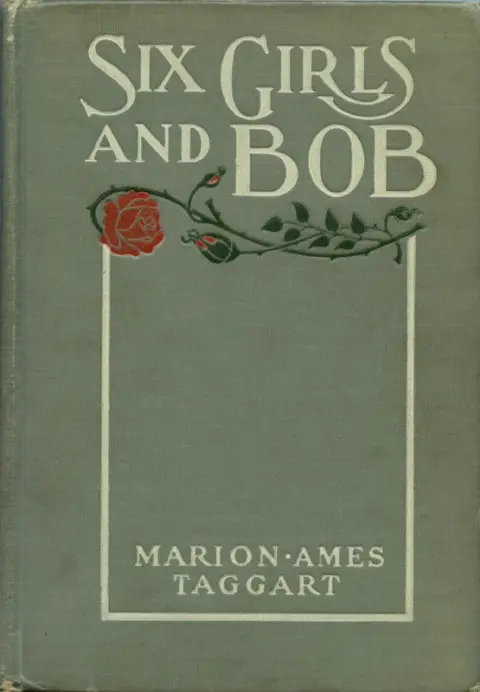
THE CLASSIC COLLECTION · 1906
"Six Girls and Bob: A Story of Patty-Pans and Green Fields" by Marion Ames Taggart is a novel written in the early 20th century. The story centers around the Scollard family, particularly the six daughters, and their newfound neighbor Bob as they navigate life, challenges, and the dream of a better future. With themes of familial love and resilience, the narrative explores the day-to-day dynamics of a lively household striving to support their ailing mother while maintaining their upbeat spirits. The opening of the novel introduces the Scollard family and their bustling life in a cramped New York City apartment, affectionately nicknamed "Patty-Pans." The character of Happie emerges as a source of humor and light, as she and her siblings engage in witty banter while cooking fudge in their tiny kitchen. The scene paints a vivid picture of their personalities: from the responsible Margery to the whimsical Laura, and even the youngest Polly's sensible nature. As they prepare dinner and cope with the small chaos of their lives, the shadows of their mother’s health loom, setting up a heartfelt narrative that promises to explore themes of hardship, togetherness, and the warmth of family bonds amidst adversity.
Introduction adapted from the source catalogue; source summaries may be automatically generated.
Free to read · English · 77,674 words · No account needed
MAKE TIME FOR A GOOD BOOK
On by default. Untick to stop anonymous reading totals. Each page counts after 10 seconds in view. How this works.
Anonymous counting is on unless you have switched it off.
"NOT any more coffee, dear," Mrs. Scollard said, pushing back her chair from the breakfast table.
"You have hardly eaten a thing, motherkins," protested Happie in a
worried voice.
"One cannot always be a credit to one's family cook, Hapsie," returned her mother. "My appetite has been mislaid somewhere between here and the city hall, in the subway, I fancy."
"I think it must have gone over to the Gordons' flat, blown the wrong whistle, the way the grocers do," said Happie. "You never in all your life saw any one so hungry as those two boys were last night when we came home from the park."
"You had a good time, didn't you, dear?" Mrs. Scollard smiled at her second daughter, who was smiling over her recollection of the previous afternoon when she and Margery and Laura had been to the Metropolitan Museum with Bob and the two Gordon boys, and to tea afterwards in the Gordon flat, and had laughed every three minutes of the six hours.
"What are you going to do to-day, my house-keepers?"
"Scour our pans, our Patty-Pans," said Happie promptly, before Margery
could speak.
"My dear, this little flat will be washed away!" protested her mother, submitting her glove to Polly for buttoning.
"Mother, it truly does need cleaning," said Margery. "You don't see it in real daylight, except on Sunday, but we know! What's the matter?"
Her mother had caught the back of a chair and swayed slightly forward, but stood erect and smiling in an instant, though her face was a shade paler than usual.
"Nothing, dearies; don't look so frightened! There is a shadow that comes over my eyes of late, and for a second I am wiped out of existence, but you see how quickly I come back! Indigestion, probably; it really is nothing."
"How can you have indigestion when you don't eat?" demanded Margery, not at all reassured by her mother's explanation.
"And how could there be digestion when one ate nothing?" retorted her mother. "Now, Margery, don't look like my worried little seventeen-years-old grandmother! I am not ill. Bob! Come, Bob! I am ready for my escort."
Bob appeared struggling with the over-starched buttonhole in his collar, through which his button refused to pass, and with his tie dangling in one hand.
"Oh, say, Margery, come on, like a good sister!" he implored. And Margery "came on," rightly interpreting this as an appeal for aid.
Your reading position is saved on this browser. Take it to another device with a library code. Reading pages adapt to text, rather than matching a printed edition.
Marion Ames Taggart
Marion Ames Taggart
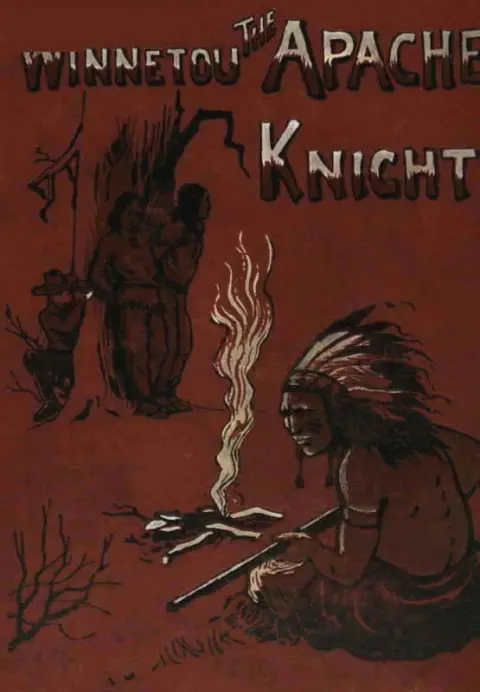
Marion Ames Taggart & Karl May
Marion Ames Taggart
BEHIND THE BOOK
This eBook is for the use of anyone anywhere in the United States and most other parts of the world at no cost and with almost no restrictions whatsoever. You may copy it, give it away or re-use it under the terms of the Project Gutenberg License included with this eBook or online at www.gutenberg.org. If you are not located in the United States, you will have to check the laws of the country where you are located before using this eBook. Read the source licence.
The original source file, including credits and licence, is retained by this library. Request an original-format copy at no charge. Please include the book title and Project Gutenberg identifier #47655.
KEEP YOUR CURIOSITY GOING
Coulson Kernahan

Maurice Baring
Frances Wright
Cécile Tormay

Frederic Jesup Stimson

W. H. P. (William Henry Pope) Jarvis