Three girls and especially one
Marion Ames Taggart
THE CLASSIC COLLECTION · 1906
"Six Girls and Bob: A Story of Patty-Pans and Green Fields" by Marion Ames Taggart is a novel written in the early 20th century. The story centers around the Scollard family, particularly the six daughters, and their newfound neighbor Bob as they navigate life, challenges, and the dream of a better future. With themes of familial love and resilience, the narrative explores the day-to-day dynamics of a lively household striving to support their ailing mother while maintaining their upbeat spirits. The opening of the novel introduces the Scollard family and their bustling life in a cramped New York City apartment, affectionately nicknamed "Patty-Pans." The character of Happie emerges as a source of humor and light, as she and her siblings engage in witty banter while cooking fudge in their tiny kitchen. The scene paints a vivid picture of their personalities: from the responsible Margery to the whimsical Laura, and even the youngest Polly's sensible nature. As they prepare dinner and cope with the small chaos of their lives, the shadows of their mother’s health loom, setting up a heartfelt narrative that promises to explore themes of hardship, togetherness, and the warmth of family bonds amidst adversity.
Introduction adapted from the source catalogue; source summaries may be automatically generated.
Free to read · English · 77,674 words · No account needed
MAKE TIME FOR A GOOD BOOK
On by default. Untick to stop anonymous reading totals. Each page counts after 10 seconds in view. How this works.
Anonymous counting is on unless you have switched it off.
"I won't be jealous of any one who wants that place," laughed Gretta, kneeling before the trunk nevertheless. "I'm not anxious to be mixed up with the Bittenbenders; they are not one bit relation to me, I'm proud to say."
"Never mind genealogy just now, Gretta; show us what's in the trunk. If Happie says you must, you must--her word is always law somehow," said Bob.
"Because her words are Happie-thought words," smiled Margery.
Gretta began to deposit on the floor the top layer of the contents of the trunk. There was nothing interesting to the eager on-lookers, and everything had a dusty, musty smell, "as if spiders had wrapped them up in their webs instead of moth balls," Margery suggested. There were queer old garments, not valuable when they were new, and far from new when they were packed away. There were old account books which none but the accountant could have understood; some old newspapers, yellow and stained, and at the bottom more newspapers, but these bore dates several years subsequent to the papers on top, or the dates revealed by the garments.
"There isn't anything wildly exciting about this," said Bob wearily. "And I'm getting chilled to my marrow up here. Queer the newer papers are below; they must have repacked this thing. Why what's the matter, Gretta? What's up?"
He spoke sharply, and dropped on his knees beside the girl to look over her shoulder. Gretta was sitting back on her heels, holding a long, yellowed envelope in her hand at which she was gazing with all color fled from her frightened face.
"'The Last Will and Testament of Anna Bittenbender,'" read Bob, aloud. "Good gracious, Gretta, has it been found at last? And right here in the house? Open it, quick!"
"I can't," said Gretta, holding out the envelope to Happie as if it had been a dynamite bomb. "You read it, Happie."
Happie took the envelope eagerly, and drew forth from it a sheet of foolscap, covered with clear writing, very different from the inscription on the envelope.
"'I, Anna Bittenbender, born Neumann, and subsequently wife to Herman Engel, now the wife of Isaac Bittenbender, being of sound mind----' Why, Gretta, is it--it is actually your grandmother's will!" cried Happie, breaking off short in her reading, greatly excited.
"No doubt of that!" cried Bob, not less excited, while Margery and Laura mounted the fateful trunk, the better to look over Happie's shoulder. "Hurry up, Hap! She gives and bequeaths, of course. What does she give and bequeath--to whom?"
Your reading position is saved on this browser. Take it to another device with a library code. Reading pages adapt to text, rather than matching a printed edition.
Marion Ames Taggart
Marion Ames Taggart
Marion Ames Taggart & Karl May
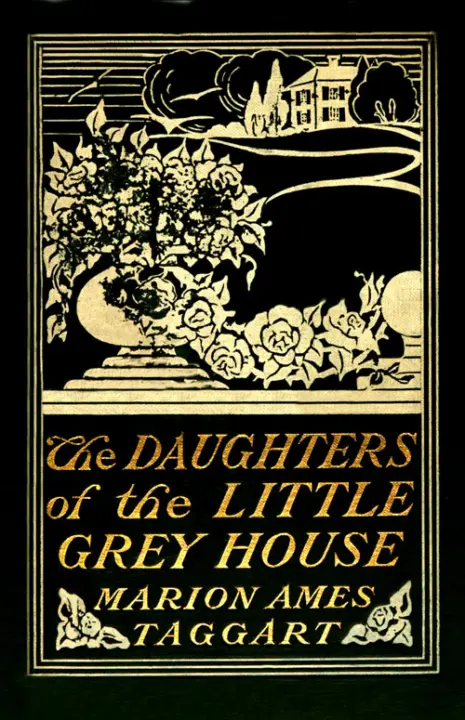
Marion Ames Taggart
BEHIND THE BOOK
This eBook is for the use of anyone anywhere in the United States and most other parts of the world at no cost and with almost no restrictions whatsoever. You may copy it, give it away or re-use it under the terms of the Project Gutenberg License included with this eBook or online at www.gutenberg.org. If you are not located in the United States, you will have to check the laws of the country where you are located before using this eBook. Read the source licence.
The original source file, including credits and licence, is retained by this library. Request an original-format copy at no charge. Please include the book title and Project Gutenberg identifier #47655.
KEEP YOUR CURIOSITY GOING
Coulson Kernahan

Maurice Baring
Frances Wright
Cécile Tormay

Frederic Jesup Stimson

W. H. P. (William Henry Pope) Jarvis