THE CLASSIC COLLECTION✦An American tragedy, v. 2CLASSIC FREE BOOKS
An American tragedy, v. 2
Theodore Dreiser
THE CLASSIC COLLECTION · 1900
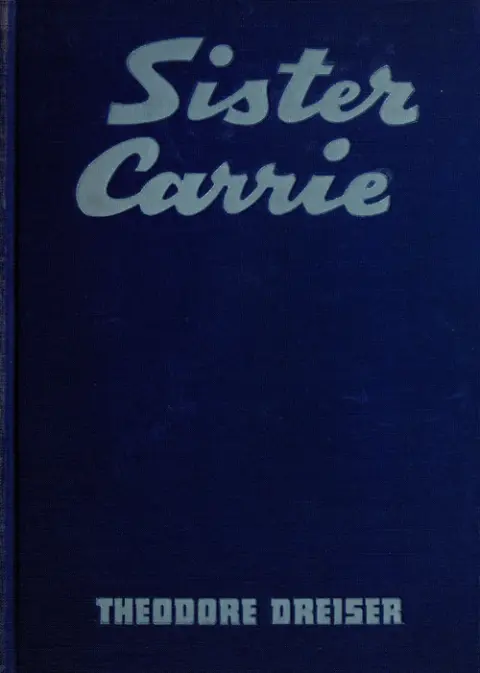
"Sister Carrie: A Novel" by Theodore Dreiser is a novel published in 1900. It follows eighteen-year-old Caroline Meeber, who leaves small-town Wisconsin for Chicago seeking a better life. In the big city, she becomes involved with two men—a charming salesman and a married bar manager—while discovering her talent for acting. As Carrie rises toward fame and fortune, those around her face vastly different fates. The novel explores ambition, desire, and the pursuit of the American Dream in urban America.
Introduction adapted from the source catalogue; source summaries may be automatically generated.
Free to read · English · 159,686 words · No account needed
MAKE TIME FOR A GOOD BOOK
On by default. Untick to stop anonymous reading totals. Each page counts after 10 seconds in view. How this works.
Anonymous counting is on unless you have switched it off.
Carrie had really discovered her neglect, but only at a quarter after five, and the open carriage was now far up Seventh Avenue, near the Harlem River.
“What time is it?” she inquired. “I must be getting back.”
“A quarter after five,” said her companion, consulting an elegant,
open-faced watch.
“Oh, dear me!” exclaimed Carrie. Then she settled back with a sigh. “There’s no use crying over spilt milk,” she said. “It’s too late.”
“Of course it is,” said the youth, who saw visions of a fine dinner now, and such invigorating talk as would result in a reunion after the show. He was greatly taken with Carrie. “We’ll drive down to Delmonico’s now and have something there, won’t we, Orrin?”
“To be sure,” replied Orrin, gaily.
Carrie thought of Hurstwood. Never before had she neglected dinner
without an excuse.
They drove back, and at 6.15 sat down to dine. It was the Sherry incident over again, the remembrance of which came painfully back to Carrie. She remembered Mrs. Vance, who had never called again after Hurstwood’s reception, and Ames.
At this figure her mind halted. It was a strong, clean vision. He liked better books than she read, better people than she associated with. His ideals burned in her heart.
“It’s fine to be a good actress,” came distinctly back.
What sort of an actress was she?
“What are you thinking about, Miss Madenda?” inquired her merry companion. “Come, now, let’s see if I can guess.”
“Oh, no,” said Carrie. “Don’t try.”
She shook it off and ate. She forgot, in part, and was merry. When it came to the after-theatre proposition, however, she shook her head.
“No,” she said, “I can’t. I have a previous engagement.”
“Oh, now, Miss Madenda,” pleaded the youth.
“No,” said Carrie, “I can’t. You’ve been so kind, but you’ll have to
excuse me.”
The youth looked exceedingly crestfallen.
“Cheer up, old man,” whispered his companion. “We’ll go around, anyhow. She may change her mind.”
Your reading position is saved on this browser. Take it to another device with a library code. Reading pages adapt to text, rather than matching a printed edition.
Theodore Dreiser
Theodore Dreiser
Theodore Dreiser
Theodore Dreiser
BEHIND THE BOOK
This eBook is for the use of anyone anywhere in the United States and most other parts of the world at no cost and with almost no restrictions whatsoever. You may copy it, give it away or re-use it under the terms of the Project Gutenberg License included with this eBook or online at www.gutenberg.org. If you are not located in the United States, you will have to check the laws of the country where you are located before using this eBook. Read the source licence.
The original source file, including credits and licence, is retained by this library. Request an original-format copy at no charge. Please include the book title and Project Gutenberg identifier #233.
KEEP YOUR CURIOSITY GOING
Coulson Kernahan

Maurice Baring
Frances Wright
Cécile Tormay

Frederic Jesup Stimson

W. H. P. (William Henry Pope) Jarvis