THE CLASSIC COLLECTION✦An American tragedy, v. 2CLASSIC FREE BOOKS
An American tragedy, v. 2
Theodore Dreiser
THE CLASSIC COLLECTION · 1900
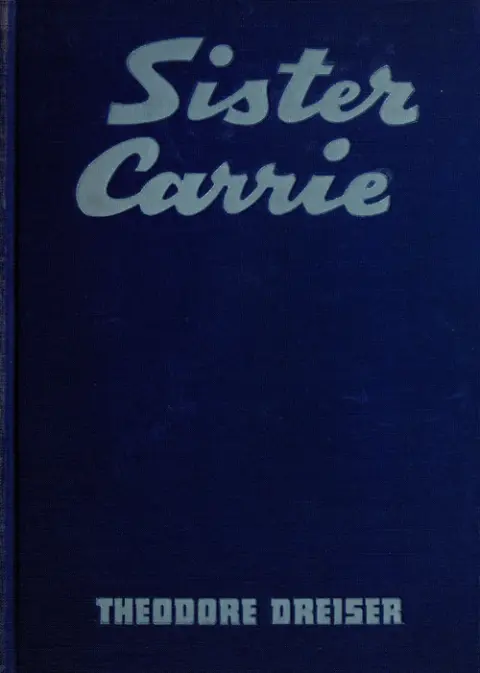
"Sister Carrie: A Novel" by Theodore Dreiser is a novel published in 1900. It follows eighteen-year-old Caroline Meeber, who leaves small-town Wisconsin for Chicago seeking a better life. In the big city, she becomes involved with two men—a charming salesman and a married bar manager—while discovering her talent for acting. As Carrie rises toward fame and fortune, those around her face vastly different fates. The novel explores ambition, desire, and the pursuit of the American Dream in urban America.
Introduction adapted from the source catalogue; source summaries may be automatically generated.
Free to read · English · 159,686 words · No account needed
MAKE TIME FOR A GOOD BOOK
On by default. Untick to stop anonymous reading totals. Each page counts after 10 seconds in view. How this works.
Anonymous counting is on unless you have switched it off.
He only said this in his anger, but it prefigured a possible course of action and attitude well enough.
“I don’t care,” thought Carrie. “He ought to be told to get out and do something. It isn’t right that I should support him.”
In these days Carrie was introduced to several youths, friends of Miss Osborne, who were of the kind most aptly described as gay and festive. They called once to get Miss Osborne for an afternoon drive. Carrie was with her at the time.
“Come and go along,” said Lola.
“No, I can’t,” said Carrie.
“Oh, yes, come and go. What have you got to do?”
“I have to be home by five,” said Carrie.
“What for?”
“Oh, dinner.”
“They’ll take us to dinner,” said Lola.
“Oh, no,” said Carrie. “I won’t go. I can’t.”
“Oh, do come. They’re awful nice boys. We’ll get you back in time. We’re only going for a drive in Central Park.” Carrie thought a while, and at last yielded.
“Now, I must be back by half-past four,” she said.
The information went in one ear of Lola and out the other.
After Drouet and Hurstwood, there was the least touch of cynicism in her attitude toward young men—especially of the gay and frivolous sort. She felt a little older than they. Some of their pretty compliments seemed silly. Still, she was young in heart and body and youth appealed to her.
“Oh, we’ll be right back, Miss Madenda,” said one of the chaps, bowing. “You wouldn’t think we’d keep you over time, now, would you?”
“Well, I don’t know,” said Carrie, smiling.
They were off for a drive—she, looking about and noticing fine clothing, the young men voicing those silly pleasantries and weak quips which pass for humour in coy circles. Carrie saw the great park parade of carriages, beginning at the Fifty-ninth Street entrance and winding past the Museum of Art to the exit at One Hundred and Tenth Street and Seventh Avenue. Her eye was once more taken by the show of wealth—the elaborate costumes, elegant harnesses, spirited horses, and, above all, the beauty. Once more the plague of poverty galled her, but now she forgot in a measure her own troubles so far as to forget Hurstwood. He waited until four, five, and even six. It was getting dark when he got up out of his chair.
“I guess she isn’t coming home,” he said, grimly.
“That’s the way,” he thought. “She’s getting a start now. I’m out of
it.”
Your reading position is saved on this browser. Take it to another device with a library code. Reading pages adapt to text, rather than matching a printed edition.
Theodore Dreiser
Theodore Dreiser
Theodore Dreiser
Theodore Dreiser
BEHIND THE BOOK
This eBook is for the use of anyone anywhere in the United States and most other parts of the world at no cost and with almost no restrictions whatsoever. You may copy it, give it away or re-use it under the terms of the Project Gutenberg License included with this eBook or online at www.gutenberg.org. If you are not located in the United States, you will have to check the laws of the country where you are located before using this eBook. Read the source licence.
The original source file, including credits and licence, is retained by this library. Request an original-format copy at no charge. Please include the book title and Project Gutenberg identifier #233.
KEEP YOUR CURIOSITY GOING
Coulson Kernahan

Maurice Baring
Frances Wright
Cécile Tormay

Frederic Jesup Stimson

W. H. P. (William Henry Pope) Jarvis