
The Story of a Governess
Mrs. (Margaret) Oliphant
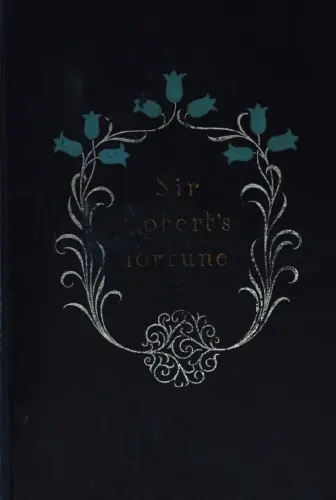
THE CLASSIC COLLECTION · 1894
"Sir Robert's Fortune: A Novel" by Mrs. Oliphant is a fiction work written in the late 19th century. The story revolves around Lily Ramsay, a young woman caught in the constraints of her uncle's strict control over her inheritance, and her budding romance with Ronald Lumsden, who is also ensnared in the turmoil caused by financial dependence on Sir Robert. As Lily grapples with her feelings of confinement and longing for independence, the narrative explores themes of love, class disparities, and the struggles against societal expectations. The opening of the novel sets the stage for Lily's predicament, revealing her desperate situation as she learns from Ronald that her uncle plans to send her away to a remote location called Dalrugas, isolating her from the world and her love. Amid lively festivities, Lily finds herself at the mercy of her uncle's whims, which dictate her future and relationship choices. The dialogue between Lily and Ronald highlights their contrasting views on money and independence, setting in motion the central conflict of the story. As the chapters progress, Lily's frustrations and aspirations are laid bare, painting a picture of a young woman on the cusp of significant life decisions amidst external constraints.
Introduction adapted from the source catalogue; source summaries may be automatically generated.
Free to read · English · 174,376 words · No account needed
MAKE TIME FOR A GOOD BOOK
On by default. Untick to stop anonymous reading totals. Each page counts after 10 seconds in view. How this works.
Anonymous counting is on unless you have switched it off.
The pigeons were very tame, and alighted not only on Katrin’s capacious shoulders, who “shoo’d” them off, but on Lily’s, who liked the sentiment, and to find herself so familiarly accosted by creatures so highly elevated above mere cocks and hens--“the bonnie creatures,” as Katrin said, who sidl’d and bridl’d about her, with mincing steps and graceful movements. “The doocot” was an old gray tower, standing apart from the barnyard, in a small field, the traditional appendage of every old Scotch house of any importance. To come upon Rory afterward, dragging after him the boy, by name Sandy, and not unlike, either in complexion or shape, to the superior animal whom he was supposed to be taking out for exercise, brought back, if not the former discussion on the prevalence of evil, at least a practical instance of “the deevil” that was in the pony, and was an additional amusement. Lily made instant trial of the feminine ministrations which had been so effective with the cow, whispering in Rory’s ear, and stroking his impatient nose, without, however, any marked effect.
“He’ll soon get used to ye,” Katrin said consolingly, “and then you’ll can ride him down to the town, and make your bit visits, and get any thing that strikes your fancy at the shop. Oh, you’ll find there’s plenty to divert ye, my bonnie leddy, when once ye are settled down.”
Would it be so? Lily felt, in the courage of the morning, that it might be possible. She resolved to be good, as a child resolves; there should be no silly despair, no brooding nor making the worst of things. She would interest herself in the beasts and the birds, in Rory, the pony, and Crummie, the cow. She would always have something to do. Her little school accomplishment of drawing, in which she had made some progress according to the drawing-master, she would take that up again. The kind of drawing Lily had learned consisted in little more than copying other drawings; but that, when it had been carefully done, had been thought a great deal of at school. And then there was the fine fancy-work which had been taught her--the wonderful things in Berlin wool, which was adapted to so many purposes, and occupied so large a share of feminine lives. Miss Martineau, that strong-minded politician and philosopher, amused her leisure with it, and why should not Lily? But Berlin patterns, and all the beautiful shades of the wool, could not, alas! be had on Dalrugas moor. Lily decided bravely that she would knit stockings at least, and that practice would soon overcome that difficulty about turning the heel which had damped her early efforts. She would knit warm stockings for Sir Robert--warm and soft as he liked them--ribbed so as to cling close to his handsome old leg, and show its proportions, and so, perhaps, touch his heart. And then there would, no doubt, turn up, from time to time, something to do for the poor folk. Surely, surely there would be employment enough to “keep her heart.” Then she would go to Kinloch-Rugas and see “Miss Eelen,” Helen Blythe, the minister’s daughter, whom she remembered well, with the admiration of a little girl for one much older than herself. Here was something that would interest her and occupy her mind, and prevent her from thinking. And then there were the old books in the library, in which she feared there would be little amusement, but probably a great many good books that she had not read, and what a fine opportunity for her to improve her mind! Her present circumstances were quite usual features in the novels before the age of Sir Walter: a residence in an old castle or other lonely house, where a persecuted heroine had the best of reading, and emerged quite an accomplished woman, was the commonest situation. She said to herself that there would be plenty to do, that she would not leave a moment without employment, that her life would be too busy and too full to leave any time for gazing out at that window, watching the little bit of road, and looking, looking for some one who never came. Having drawn up this useful programme, and decided how she was to spend every day, Lily, poor Lily, all alone--even Beenie having gone down stairs for a long talk with Katrin--seated herself, quite unconsciously, at the window, and gazed and gazed, without intermission, at the little corner of the road that climbed the brae, and across the long level of the unbroken moor.
Your reading position is saved on this browser. Take it to another device with a library code. Reading pages adapt to text, rather than matching a printed edition.
Mrs. (Margaret) Oliphant

Mrs. (Margaret) Oliphant

Mrs. (Margaret) Oliphant

Mrs. (Margaret) Oliphant
BEHIND THE BOOK
This eBook is for the use of anyone anywhere in the United States and most other parts of the world at no cost and with almost no restrictions whatsoever. You may copy it, give it away or re-use it under the terms of the Project Gutenberg License included with this eBook or online at www.gutenberg.org. If you are not located in the United States, you will have to check the laws of the country where you are located before using this eBook. Read the source licence.
The original source file, including credits and licence, is retained by this library. Request an original-format copy at no charge. Please include the book title and Project Gutenberg identifier #53744.
KEEP YOUR CURIOSITY GOING
Coulson Kernahan

Maurice Baring
Frances Wright
Cécile Tormay

Frederic Jesup Stimson

W. H. P. (William Henry Pope) Jarvis