
The Story of a Governess
Mrs. (Margaret) Oliphant
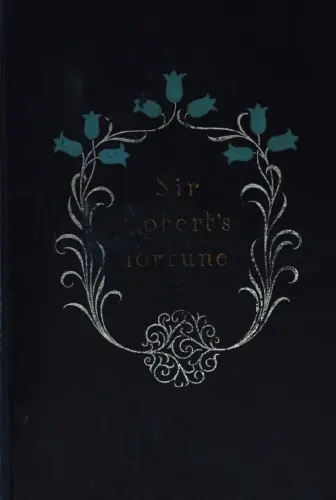
THE CLASSIC COLLECTION · 1894
"Sir Robert's Fortune: A Novel" by Mrs. Oliphant is a fiction work written in the late 19th century. The story revolves around Lily Ramsay, a young woman caught in the constraints of her uncle's strict control over her inheritance, and her budding romance with Ronald Lumsden, who is also ensnared in the turmoil caused by financial dependence on Sir Robert. As Lily grapples with her feelings of confinement and longing for independence, the narrative explores themes of love, class disparities, and the struggles against societal expectations. The opening of the novel sets the stage for Lily's predicament, revealing her desperate situation as she learns from Ronald that her uncle plans to send her away to a remote location called Dalrugas, isolating her from the world and her love. Amid lively festivities, Lily finds herself at the mercy of her uncle's whims, which dictate her future and relationship choices. The dialogue between Lily and Ronald highlights their contrasting views on money and independence, setting in motion the central conflict of the story. As the chapters progress, Lily's frustrations and aspirations are laid bare, painting a picture of a young woman on the cusp of significant life decisions amidst external constraints.
Introduction adapted from the source catalogue; source summaries may be automatically generated.
Free to read · English · 174,376 words · No account needed
MAKE TIME FOR A GOOD BOOK
On by default. Untick to stop anonymous reading totals. Each page counts after 10 seconds in view. How this works.
Anonymous counting is on unless you have switched it off.
Alick Duff went away from the valley of the Rugas, calling on heaven and earth to witness that he would never be seen there more, and that from henceforward he was to be considered as an altogether shipwrecked and ruined man. “There is nobody that will contradict you there,” the minister said sternly, “and nothing but the grace of God, my man, for all you threep and swear to make my poor Eelen meeserable, that would ever have made any difference.” “And who will say,” cried Duff, “that it was not just her that would have been the grace o’ God?” The minister shook his head, yet was a little startled by the argument. As for Helen, she said little more to her strange lover. “It is no use speaking now. There is nothing more to say. I cannot leave my father.” Lily, to whom this story had come like a revelation in the midst of the quiet country life which seems, especially in Scotland, never to be ruffled by emotion, much less passion, and on whom it acted powerfully, restoring her mental balance and withdrawing at least a portion of her thoughts from herself, was a great deal at the Manse during this agitating period, which was all the more curious that nothing was ever said about it on the surface of the life which flowed on in an absolutely unbroken routine, as if there was no impassioned despairing man outside in the darkness waiting the moment to fling himself and his terrible needs and wishes at Helen’s feet, and no terrible question tearing her heart asunder. That it was there underneath all the time was plain enough to those who were in the secret. The minister had an anxious look, even when he laughed and told his stories; and Helen, though her serenity was extraordinary, grew pale and red with an unconscious listening for every sound which Lily divined. He might burst in at any moment and make a scene in the quiet Manse parlor, destroying all the pretence of composure with which they had covered their life, or, worse still, he might do something desperate--he might disappear in the river or end his existence with a shot, leaving an indelible shame on his memory, and upon those who belonged to him, and upon her who, as the country folk would say, “had driven him to it.” If she had married Alick Duff and gone away with him, there would have been an unanimous cry over her folly; but if in his despair he had cut the thread in any such conclusive way, Helen never would have been mentioned afterward but as the woman who drove poor Alick Duff to his death. There was a thrill of this possibility even in the air of the little town, where he was seen from time to time wandering about the precincts of the Manse, and where every-body knew him and his story. But the most exciting thing of all to Lily was to see the face and watch the ways of the excellent young minister, Mr. Blythe’s assistant and successor, who went and came through these troubled days, talking of the affairs of the parish, sedulously restraining himself that he might not appear to think of, or be conscious of, any thing else, but with a countenance which reflected Helen’s, which followed every change of hers, yet when her attention was attracted toward him, closed up in a moment, with the most extraordinary effort dismissing all meaning from his countenance. Lily became fascinated by Mr. Douglas, through whom she could read, as in a mirror, every thing that was happening. He said not a word on this subject, which, indeed, nobody spoke of, nor did he betray any consciousness of the other man’s presence, about which even the maid in the kitchen and the minister’s man, who never had been so assiduous in the discharge of his duties as now, were so perfectly informed; but yet she felt sure that something in him tingled to the neighborhood of his rival like an elastic chord. He would come in sometimes pale, with a stern look in his closely drawn mouth, and then Lily would feel sure that he had seen Alick Duff in the way, waiting till Helen should appear. And sometimes the lines of his countenance would relax, so that she felt sure he had heard good news and believed that haunting figure to have gone away; and then at a sound which was no sound outside, at the most trifling change in Helen’s face, the veil, the cloud, would shut again over his face.
Your reading position is saved on this browser. Take it to another device with a library code. Reading pages adapt to text, rather than matching a printed edition.
Mrs. (Margaret) Oliphant

Mrs. (Margaret) Oliphant

Mrs. (Margaret) Oliphant

Mrs. (Margaret) Oliphant
BEHIND THE BOOK
This eBook is for the use of anyone anywhere in the United States and most other parts of the world at no cost and with almost no restrictions whatsoever. You may copy it, give it away or re-use it under the terms of the Project Gutenberg License included with this eBook or online at www.gutenberg.org. If you are not located in the United States, you will have to check the laws of the country where you are located before using this eBook. Read the source licence.
The original source file, including credits and licence, is retained by this library. Request an original-format copy at no charge. Please include the book title and Project Gutenberg identifier #53744.
KEEP YOUR CURIOSITY GOING
Coulson Kernahan

Maurice Baring
Frances Wright
Cécile Tormay

Frederic Jesup Stimson

W. H. P. (William Henry Pope) Jarvis