
The Story of a Governess
Mrs. (Margaret) Oliphant
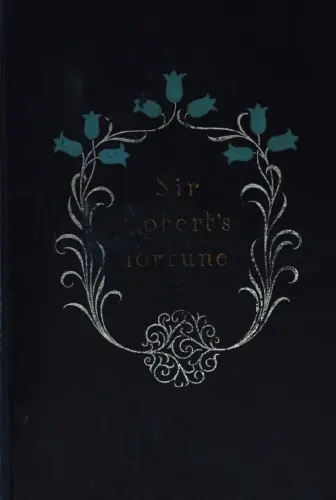
THE CLASSIC COLLECTION · 1894
"Sir Robert's Fortune: A Novel" by Mrs. Oliphant is a fiction work written in the late 19th century. The story revolves around Lily Ramsay, a young woman caught in the constraints of her uncle's strict control over her inheritance, and her budding romance with Ronald Lumsden, who is also ensnared in the turmoil caused by financial dependence on Sir Robert. As Lily grapples with her feelings of confinement and longing for independence, the narrative explores themes of love, class disparities, and the struggles against societal expectations. The opening of the novel sets the stage for Lily's predicament, revealing her desperate situation as she learns from Ronald that her uncle plans to send her away to a remote location called Dalrugas, isolating her from the world and her love. Amid lively festivities, Lily finds herself at the mercy of her uncle's whims, which dictate her future and relationship choices. The dialogue between Lily and Ronald highlights their contrasting views on money and independence, setting in motion the central conflict of the story. As the chapters progress, Lily's frustrations and aspirations are laid bare, painting a picture of a young woman on the cusp of significant life decisions amidst external constraints.
Introduction adapted from the source catalogue; source summaries may be automatically generated.
Free to read · English · 174,376 words · No account needed
MAKE TIME FOR A GOOD BOOK
On by default. Untick to stop anonymous reading totals. Each page counts after 10 seconds in view. How this works.
Anonymous counting is on unless you have switched it off.
The day of clubs was not yet, at least in Edinburgh, to make life easy for young men, but yet to get along, as he was doing precariously, was easier for one than it would be for two. Even Lily, all hot for sacrifice and for ministering with her own hands to all the needs of life, had never contemplated the idea of doing without Robina, her maid, who had been with her so many years that it was impossible for either of them to realize what life would be if they were separated. Even if it should be a necessary reality, Robina was included as a matter of course. How it might be that Lily should require to scrub, and clean, and cook with her own hands, while she was attended by a lady’s maid, was a thing she had never reasoned out. You may think that a lady’s maid would probably be of less use than her mistress had such service been necessary; but this was not Robina’s case, who was a very capable person all round, and prided herself on being able to “turn her hand” to any thing. But then a runaway match was the last thing that was in Lumsden’s thoughts.
It was a dance which every-body enjoyed that evening in the big, old-fashioned rooms in George Square. George Square has fallen out of knowledge in all the expansions of new Edinburgh, the Edinburgh that lies on the other side of the valley, and dates no farther back than last century. It also is of last century, but earlier than the Moray Places and Crescents; far earlier than the last developments, the Belgravia of the town. There Sir Walter once lived, in, I think, his father’s house; and these substantial, ample, homely houses were the first outlet of the well-to-do, the upper classes, of Edinburgh out of the closes and high-up apartments, approached through the atrocities of a common stair, in which so refined and luxurious a sybarite as Lawyer Pleydell still lived in Sir Walter’s own time. These mansions are severely plain outside--“undemonstrative,” as Scotch pride arrogantly declares itself to be, aping humility with a pretence to which I, for one, feel disposed to allow no quarter; but they are large and pleasant inside, and the big square rooms the very thing to dance in or to feast in. They were full of a happy crowd, bright in color and lively in movement, with a larger share of golden hair and rosy cheeks than is to be seen in most assemblies, and, perhaps, a greater freedom of laughter and talk than would have been appropriate to a solemn ball in other localities. For Edinburgh was not so large then as now, and they all knew each other, and called each other by their Christian names--boy and girl alike--with a general sense of fraternity modified by almost as many love affairs as there were pairs of boys and girls present. There were mothers and aunts all round the wide walls, but this did not subdue the hilarity of the young ones, who knew each other’s mothers and aunts almost as well as they knew their own, and counted upon their indulgence. Lily Ramsay was almost the only girl who had nobody of her own to turn to; but this only made her the more protected and surrounded, every-body feeling that the motherless girl had a special claim. They were by no means angels, these old-fashioned Edinburgh folk: sharper tongues could not be than were to be found among them, or more wicked wits; but there was a great deal of kindness under the terrible turbans which crowned the heads of the elder ladies and the scarfs which fell from their bare shoulders, and they all knew every one, and every one’s father and mother for generations back. Their dress was queer, or rather, I should have said, it was queer before the present revival of the early Victorian or late Georgian style began. They wore puffed-out sleeves, with small feather pillows in them to keep them inflated; they had bare shoulders and ringlets; they had scarfs of lace or silk, carefully disposed so as not to cover any thing, but considered very classical and graceful, drawn in over the elbows, by people who knew how to wear them, making manifest the slender waist (or often the outlines of a waist which had ceased to be slender) behind. And they had, as has been said, a dreadful particular, which it is to be hoped the blind fury of fashion will not bring up again--turbans upon their heads. Turbans such as no Indian or Bedouin ever wore, of all colors and every kind of savage decoration, such as may be seen in pictures of that alarming age.
Your reading position is saved on this browser. Take it to another device with a library code. Reading pages adapt to text, rather than matching a printed edition.
Mrs. (Margaret) Oliphant

Mrs. (Margaret) Oliphant

Mrs. (Margaret) Oliphant

Mrs. (Margaret) Oliphant
BEHIND THE BOOK
This eBook is for the use of anyone anywhere in the United States and most other parts of the world at no cost and with almost no restrictions whatsoever. You may copy it, give it away or re-use it under the terms of the Project Gutenberg License included with this eBook or online at www.gutenberg.org. If you are not located in the United States, you will have to check the laws of the country where you are located before using this eBook. Read the source licence.
The original source file, including credits and licence, is retained by this library. Request an original-format copy at no charge. Please include the book title and Project Gutenberg identifier #53744.
KEEP YOUR CURIOSITY GOING
Coulson Kernahan

Maurice Baring
Frances Wright
Cécile Tormay

Frederic Jesup Stimson

W. H. P. (William Henry Pope) Jarvis