
The Story of a Governess
Mrs. (Margaret) Oliphant
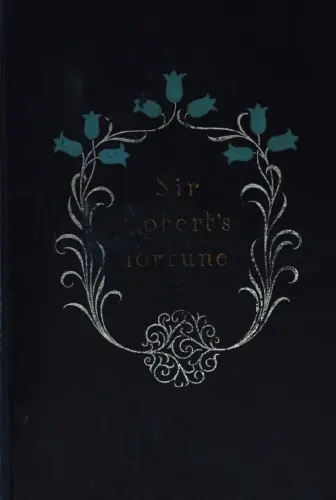
THE CLASSIC COLLECTION · 1894
"Sir Robert's Fortune: A Novel" by Mrs. Oliphant is a fiction work written in the late 19th century. The story revolves around Lily Ramsay, a young woman caught in the constraints of her uncle's strict control over her inheritance, and her budding romance with Ronald Lumsden, who is also ensnared in the turmoil caused by financial dependence on Sir Robert. As Lily grapples with her feelings of confinement and longing for independence, the narrative explores themes of love, class disparities, and the struggles against societal expectations. The opening of the novel sets the stage for Lily's predicament, revealing her desperate situation as she learns from Ronald that her uncle plans to send her away to a remote location called Dalrugas, isolating her from the world and her love. Amid lively festivities, Lily finds herself at the mercy of her uncle's whims, which dictate her future and relationship choices. The dialogue between Lily and Ronald highlights their contrasting views on money and independence, setting in motion the central conflict of the story. As the chapters progress, Lily's frustrations and aspirations are laid bare, painting a picture of a young woman on the cusp of significant life decisions amidst external constraints.
Introduction adapted from the source catalogue; source summaries may be automatically generated.
Free to read · English · 174,376 words · No account needed
MAKE TIME FOR A GOOD BOOK
On by default. Untick to stop anonymous reading totals. Each page counts after 10 seconds in view. How this works.
Anonymous counting is on unless you have switched it off.
One of these winters was a bad one for the old folk; something ungenial was in the air. It was not actually that the temperature was much lower than usual, but the cold lasted long, without breaks or any intervals of rest: always cold, always gray, with no gleams in the sky. The babies felt it first, and then the old people; every-body had bronchitis, for influenza was not in those days. There was coughing in every cottage, and by degrees the old fathers and mothers began to disappear. There were not enough of them to startle people in the newspapers as with any record of an epidemic, but only the old people who were ripe for falling, and wanted only a puff of wind to blow them away like the last leaves on a tree, felt that puff, and dropped noiselessly, their time being come. It began to appear of more decided importance when Mr. Blythe was known to be very ill, not in his usual quiet chronic manner, but with bronchitis, too, like all the rest. There had not been very much intercourse between Dalrugas and the Manse since Sir Robert’s arrival. He had been eager to see the old minister, who was almost the only relic of the friends of his youth, and they had found a great deal to say to each other on the first and even on the second visit. But Sir Robert liked his visitors to come to him, and Mr. Blythe was incapable of moving from his chair, so that their intercourse gradually lessened even in the first year, and in the second came almost to nothing at all. There was an embarrassment, too, between the two old gentlemen. Mr. Blythe felt it, and would stop short even in the midst of one of his best stories, struck by some sudden suggestion, and grow portentously grave, just where the laugh came in. Sometimes he would look round at Lily, half angry, half enquiring. He could not be at ease with his old friend when so great a secret lay between them, and though Sir Robert knew nothing about any secret, nor even suspected the existence of such a thing, he yet felt also that there was something on Blythe’s mind. “What is it he wants to speak to me about?” he would say to Lily. “I am certain there is something. Is it about his girl? He should be able to leave his girl pretty well off, or at least to provide for her according to her station. Does he want me to take the charge of his girl?” “Helen will want nobody to take care of her,” said Lily. “Then what is it he has on his mind?” Sir Robert asked, but got no reply. Thus it was that their intercourse had been checked. And there was a cloud between Lily and Helen, who was deeply troubled in her mind by the complete disappearance of Lumsden from the scene. There were many things about him, and her friend’s connection with him, that had disturbed Helen in the past. She had not known how to account for many circumstances in the story: his constant reappearance, the mystery of an intercourse which never came to any thing further, yet never slackened, had troubled her sorely. She had not asked, nor wished to hear, any explanation which might be, in however small a degree, derogatory to Lily. She would rather bear the pain of doubt than the worse pain of knowing that her doubts were justified. And there were a host of minor circumstances which had added to her confusion and trouble just before Sir Robert’s arrival, when Lily had, as she thought, withdrawn from her society, and even made pretexts not to see her, to Helen’s astonishment and dismay. And then there came Lily’s illness, and Ronald’s anxious visit, and then--nothing more: a curtain falling, as it were, on the whole confused drama; an end, which was no end. Ronald’s name had never been mentioned since; he had never been seen in the country; he had gone out of Lily’s life, so far as appeared, totally without reason given or word said. And Helen had not continued to question Lily, whom she, like every-body else, found to be so much changed by her illness. There was something in the face which had been so sweet and almost child-like a little time before which now stopped expansion. Helen looked into it wistfully, and was silent. And thus the veil which had fallen between the two old men came down still more darkly between the other two, and the intercourse had grown less and less, until, in the cold wintry weather of this miserable season, it had almost died away.
Your reading position is saved on this browser. Take it to another device with a library code. Reading pages adapt to text, rather than matching a printed edition.
Mrs. (Margaret) Oliphant

Mrs. (Margaret) Oliphant

Mrs. (Margaret) Oliphant

Mrs. (Margaret) Oliphant
BEHIND THE BOOK
This eBook is for the use of anyone anywhere in the United States and most other parts of the world at no cost and with almost no restrictions whatsoever. You may copy it, give it away or re-use it under the terms of the Project Gutenberg License included with this eBook or online at www.gutenberg.org. If you are not located in the United States, you will have to check the laws of the country where you are located before using this eBook. Read the source licence.
The original source file, including credits and licence, is retained by this library. Request an original-format copy at no charge. Please include the book title and Project Gutenberg identifier #53744.
KEEP YOUR CURIOSITY GOING
Coulson Kernahan

Maurice Baring
Frances Wright
Cécile Tormay

Frederic Jesup Stimson

W. H. P. (William Henry Pope) Jarvis