
The Story of a Governess
Mrs. (Margaret) Oliphant
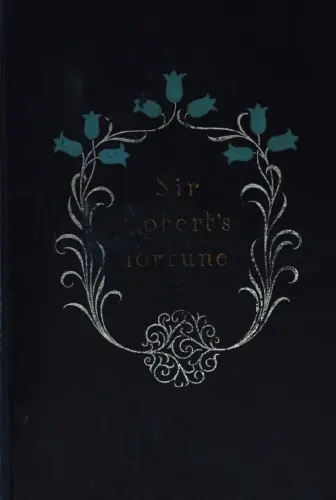
THE CLASSIC COLLECTION · 1894
"Sir Robert's Fortune: A Novel" by Mrs. Oliphant is a fiction work written in the late 19th century. The story revolves around Lily Ramsay, a young woman caught in the constraints of her uncle's strict control over her inheritance, and her budding romance with Ronald Lumsden, who is also ensnared in the turmoil caused by financial dependence on Sir Robert. As Lily grapples with her feelings of confinement and longing for independence, the narrative explores themes of love, class disparities, and the struggles against societal expectations. The opening of the novel sets the stage for Lily's predicament, revealing her desperate situation as she learns from Ronald that her uncle plans to send her away to a remote location called Dalrugas, isolating her from the world and her love. Amid lively festivities, Lily finds herself at the mercy of her uncle's whims, which dictate her future and relationship choices. The dialogue between Lily and Ronald highlights their contrasting views on money and independence, setting in motion the central conflict of the story. As the chapters progress, Lily's frustrations and aspirations are laid bare, painting a picture of a young woman on the cusp of significant life decisions amidst external constraints.
Introduction adapted from the source catalogue; source summaries may be automatically generated.
Free to read · English · 174,376 words · No account needed
MAKE TIME FOR A GOOD BOOK
On by default. Untick to stop anonymous reading totals. Each page counts after 10 seconds in view. How this works.
Anonymous counting is on unless you have switched it off.
There was not much satisfaction to be got from this letter, and, indeed, his mind got little relief from any thing, and the time of Lily’s illness was a time of mental trouble for the husband, which was not, perhaps, more easy to bear. Had he lost her altogether? It seemed like that, though he could not think it possible that the child at least should be allowed to drop, or that the fever could have made her forget, which it was evident she had not done in his own case. The courts had begun again, and Lumsden was more occupied than he had ever been in his life. He made one furtive visit to Kinloch-Rugas, where he heard something of Lily’s state, and engaged Helen Blythe to communicate with him any thing that reached her ears. But no one was allowed to see her in her illness, and this gave him small satisfaction. He did not dare to go near the house, which Sir Robert guarded more effectually than a squadron of soldiers. There was nothing for him to do but to wait. The unusual rush of occupation which came upon him with the beginning of the session had a certain irony in it, that irony which is so often apparent in life. Was he about to become a successful man now that the chief thing which made life valuable was slipping out of his grasp? He went about his business briskly, and rose to the claims of his business and profession, so that he began to be mentioned in the Parliament House and among his contemporaries, and even by elder men of still more importance, who said of him that young Lumsden, old Pontalloch’s son, though he had hung fire at first, was now beginning at last to come to the front. Was it possible that this was coming to him, this exhilarating tide of success, just at the moment when Lily, who would have stood by him in evil fortune and never failed him, had dropped away from his side? To do him justice, he had never thought of success, of wealth, of prosperity, without her to share it. And he did not understand it now. He could not understand how even a woman, however ignorant or unreasonable by nature, could be so narrow as not to see that all he had done had been for the best. The last step, no doubt, might be allowed to be hard upon her, but what else was possible? Could she for a moment have entertained the idea of keeping the child--a baby that cried and made a noise, and could not be hid--at Dalrugas? Even if there had been no word of Sir Robert, it still would have been impossible; and he had done no more than he had a right to do. He had considered, and considered most carefully--he did himself but justice in this--what as her head and guardian it was best for him to do. It was his duty as well as his right; and the responsibility being upon him as the husband, and not upon her as the wife, he had done it. Was it possible that Lily--a creature full of intelligence on other matters, who even now and then picked up a thing quicker than he did himself--should not have sense enough and judgment enough to see this? But these thoughts, though they mingled with all he did, and accompanied him night and day, did not make things any better. The fact that she had taken no notice of him all this time, that she had not written to him even to upbraid him, that she had not even asked him for news of the child, was very heavy on Lumsden’s mind--almost, I had said, upon his heart, for he still had a heart, notwithstanding all that had come and gone. Perhaps it might have relieved him a little had he known that news had been obtained of the child, though not through him. Marg’ret--who, though she had been unfaithful to the young mother, to whom at the same time she had been so kind, certainly had a heart, which smote her much as being a party to a proceeding which became more and more doubtful the more she thought of it--had written twice to Beenie, altogether superior to the question of the eightpence to pay, to assure her of the baby’s health. He was well, he was thriving, his mother would not know him he had grown so big and strong, and Marg’ret hoped that ere long she would put him, just a perfect beauty, into his mother’s arms. These queer missives, sealed with a wafer and a thimble, had been better than all the eloquent letters in the world to Lily. When those from Ronald, full of excellent reason and all the philosophy that could be brought to bear on the circumstances, were given to her on her recovery, they had but made her wound more bitter and her resentment more warm; but the nurse’s letters had given her strength. They had made her able to charm and please her uncle; they had enabled her to face life again and fight her way back to a certain degree of health; they had sustained her in her journey, and this first set out upon the world to manage her own affairs, which was as novel to her as if she had been fifteen, instead of twenty-five. They wanted only one thing--they had no address. The postmark was Edinburgh, but Edinburgh was (to these inexperienced women) a very wide word.
Your reading position is saved on this browser. Take it to another device with a library code. Reading pages adapt to text, rather than matching a printed edition.
Mrs. (Margaret) Oliphant

Mrs. (Margaret) Oliphant

Mrs. (Margaret) Oliphant

Mrs. (Margaret) Oliphant
BEHIND THE BOOK
This eBook is for the use of anyone anywhere in the United States and most other parts of the world at no cost and with almost no restrictions whatsoever. You may copy it, give it away or re-use it under the terms of the Project Gutenberg License included with this eBook or online at www.gutenberg.org. If you are not located in the United States, you will have to check the laws of the country where you are located before using this eBook. Read the source licence.
The original source file, including credits and licence, is retained by this library. Request an original-format copy at no charge. Please include the book title and Project Gutenberg identifier #53744.
KEEP YOUR CURIOSITY GOING
Coulson Kernahan

Maurice Baring
Frances Wright
Cécile Tormay

Frederic Jesup Stimson

W. H. P. (William Henry Pope) Jarvis