
The Story of a Governess
Mrs. (Margaret) Oliphant
THE CLASSIC COLLECTION · 1894
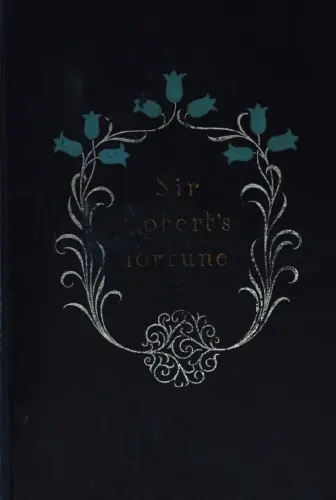
"Sir Robert's Fortune: A Novel" by Mrs. Oliphant is a fiction work written in the late 19th century. The story revolves around Lily Ramsay, a young woman caught in the constraints of her uncle's strict control over her inheritance, and her budding romance with Ronald Lumsden, who is also ensnared in the turmoil caused by financial dependence on Sir Robert. As Lily grapples with her feelings of confinement and longing for independence, the narrative explores themes of love, class disparities, and the struggles against societal expectations. The opening of the novel sets the stage for Lily's predicament, revealing her desperate situation as she learns from Ronald that her uncle plans to send her away to a remote location called Dalrugas, isolating her from the world and her love. Amid lively festivities, Lily finds herself at the mercy of her uncle's whims, which dictate her future and relationship choices. The dialogue between Lily and Ronald highlights their contrasting views on money and independence, setting in motion the central conflict of the story. As the chapters progress, Lily's frustrations and aspirations are laid bare, painting a picture of a young woman on the cusp of significant life decisions amidst external constraints.
Introduction adapted from the source catalogue; source summaries may be automatically generated.
Free to read · English · 174,376 words · No account needed
MAKE TIME FOR A GOOD BOOK
On by default. Untick to stop anonymous reading totals. Each page counts after 10 seconds in view. How this works.
Anonymous counting is on unless you have switched it off.
The doctor, when he came, listened with very small attention to Beenie’s long and confused story, chiefly made up from things she had read and heard of the causes of Lily’s illness. Whatever the causes were, the result was clear enough. She was in a high fever, her faculties all lost in that confusion of violent illness which takes away at once all consciousness of the present and all personal control. “Fever” was an impressive word in those days, more alarming in some senses, less so in others, than now. It was not mapped out and distinct, with its charts and its well-known rules. There was not, so far as I am aware, such a thing as a clinical thermometer known, at least not in ordinary practice; and the word “fever” meant something dangerously “catching,” something before which nurses fled and friends retired in dismay--which is not to say that those who suffered from it were less sedulously guarded and taken care of by their own people then than now. The first idea of both Beenie and Katrin, however, was that it must be “catching,” being fever, and Sir Robert, when he was informed, was not much wiser. “Fever--where could she have got it?” he said with a sudden imagination of some wretched beggar-woman with a sick child who might have given it to the young lady. “It is not a thing of that kind. You are thinking of scarlatina or maybe typhus. Nothing of that sort. It does not spring from infection. It is brain-fever,” the medical man said. “Brain-fever!” said Sir Robert, indignant. “There was never any thing of that kind in my family.” He took it as a reproach, as if the Ramsays had ever been a race subject to disturbance in the brain!
But whatever they said, it mattered little to Lily. She lay on her bed for hours together moving her restless head to and fro, muttering inarticulate words, then pouring forth a stream of vague discourse, through which there gleamed occasionally a ray of meaning, a wild sudden demand, a flash of protest and expostulation. “Not that! not him!” she would sometimes say, “any thing but him!” and the doctor, making out as much as that one day, believed that the poor girl had been refused her lover, and that it was the sudden arrival of the uncle, who was hostile to them, which had brought on or precipitated the trouble in her brain. Sometimes she would call for “Marg’ret, Marg’ret, Marg’ret!” in accents now of impatience, now of despair. And then he asked who Marg’ret was and why she did not come, or rather: “Which of you is Marg’ret?” to the confusion of the two women. “Oh, sir, neither her nor me,” cried Beenie, “neither her nor me! but a woman that had something to do with her--in an ill moment.” “Let her be sent for, then,” he said peremptorily. Beenie and Katrin had a great deal to bear. Knowing every thing, they had to pretend they knew nothing, to shake their heads and wonder why the patient should utter words which were heartrending to them as betraying the dreadful persistence of that impression of misery in her mind which they knew so well. They gave themselves the comfort of exchanging a glance now and then, which was almost all the mutual consolation they had. For Katrin was very much occupied with the housekeeping and her work, and the necessity for satisfying her master and his guests, who, knowing nothing of Sir Robert’s family, and never having seen his niece, did not propose to go away, as guests in other circumstances would have done. And Sir Robert was very far from desiring that they should go away. He was terrified to find himself here alone, without even Lily’s company, and therefore said very little of her illness. What difference could it make to her, if she never saw them or heard of them, whether Sir Robert had company or not? So Katrin labored morning and night to feed with her best the party in the dining-room, and with very imperfect help at first to look after all the wants of the gentlemen, while Beenie, isolated in her mistress’s room, nursed night and day the helpless, unconscious creature who required so little, yet needed so much care. Those were not the days of carefully regulated nursing, in which the most important matter of all is the preservation of the nurse’s health and her meals and hours of taking exercise. It was an age when the household was sufficient for itself, and the domestic nurse devoted herself night and day to her charge, accepting all the risks and fatigue as a matter of course. Beenie had no help and wanted none. Sometimes for a moment’s refreshment she would go down to the door, and breathe in a long draught of the fresh morning air, while Katrin stood by Lily’s bed trying to elicit from her a look or sign of intelligence. But Beenie could not have remained absent from her young mistress had the wisest of nurses been there to take her place. “Na, na; I’ve ta’en care of her a’ her days, and I’ll take care of her till the end,” Beenie said, when Katrin exhorted her to take a few minutes more of the outdoor freshness. “Hold your tongue, woman, with your ends!” cried Katrin--“a young thing like that with a’ her life in her! She will see us baith out.” “Oh, the Lord grant it!” cried Beenie, shaking her large head. “But how is she to live and face the truth and ken all that’s happened if ever she comes to herself? She will just sit up in her bed, and clap her two hands together as she did yon dreadful night--and give up the ghost.”
Your reading position is saved on this browser. Take it to another device with a library code. Reading pages adapt to text, rather than matching a printed edition.
Mrs. (Margaret) Oliphant

Mrs. (Margaret) Oliphant

Mrs. (Margaret) Oliphant

Mrs. (Margaret) Oliphant
BEHIND THE BOOK
This eBook is for the use of anyone anywhere in the United States and most other parts of the world at no cost and with almost no restrictions whatsoever. You may copy it, give it away or re-use it under the terms of the Project Gutenberg License included with this eBook or online at www.gutenberg.org. If you are not located in the United States, you will have to check the laws of the country where you are located before using this eBook. Read the source licence.
The original source file, including credits and licence, is retained by this library. Request an original-format copy at no charge. Please include the book title and Project Gutenberg identifier #53744.
KEEP YOUR CURIOSITY GOING
Coulson Kernahan

Maurice Baring
Frances Wright
Cécile Tormay

Frederic Jesup Stimson

W. H. P. (William Henry Pope) Jarvis