
The Story of a Governess
Mrs. (Margaret) Oliphant
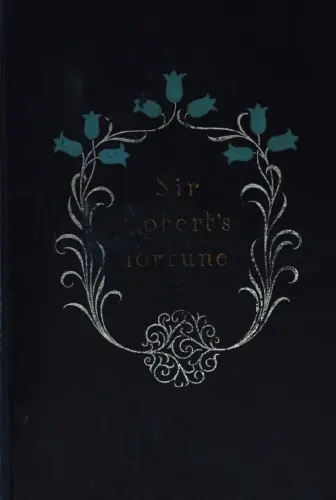
THE CLASSIC COLLECTION · 1894
"Sir Robert's Fortune: A Novel" by Mrs. Oliphant is a fiction work written in the late 19th century. The story revolves around Lily Ramsay, a young woman caught in the constraints of her uncle's strict control over her inheritance, and her budding romance with Ronald Lumsden, who is also ensnared in the turmoil caused by financial dependence on Sir Robert. As Lily grapples with her feelings of confinement and longing for independence, the narrative explores themes of love, class disparities, and the struggles against societal expectations. The opening of the novel sets the stage for Lily's predicament, revealing her desperate situation as she learns from Ronald that her uncle plans to send her away to a remote location called Dalrugas, isolating her from the world and her love. Amid lively festivities, Lily finds herself at the mercy of her uncle's whims, which dictate her future and relationship choices. The dialogue between Lily and Ronald highlights their contrasting views on money and independence, setting in motion the central conflict of the story. As the chapters progress, Lily's frustrations and aspirations are laid bare, painting a picture of a young woman on the cusp of significant life decisions amidst external constraints.
Introduction adapted from the source catalogue; source summaries may be automatically generated.
Free to read · English · 174,376 words · No account needed
MAKE TIME FOR A GOOD BOOK
On by default. Untick to stop anonymous reading totals. Each page counts after 10 seconds in view. How this works.
Anonymous counting is on unless you have switched it off.
“Bless me, bless me!” Sir Robert had gone on saying, shaking his head. He was receiving a rude awakening. He saw in his mind’s eye the old house running over with lively figures, with fun and laughter--and now desolate. It gave him a great shock, partly from the simple fact, which by itself was overwhelming, partly because of a sudden pity which sprang up in his mind for Lily, and, most of all, for himself. What, nobody to come and see him, to tell the news and hear what was in the London papers; no cheerful house to form an object for his walk, no men to talk to, no ladies to whom to pay his old-fashioned compliments! This discovery went very much to his heart. After a long time he said: “It would be better to let the houses than to leave them to go to rack and ruin, or shut up, as you say--the best houses in the countryside.”
“Let them!” cried Katrin. “Gentlemen’s ain houses! We’re maybe fallen low, Sir Robert, but we’re no just fallen to that.”
“You silly woman! the grandest folk do it,” cried Sir Robert. Then he added in a lower tone: “Lily, I am afraid, may not have had a very lively life.”
“You may well say that!” cried Katrin. “Poor bonnie lassie, if she had bidden ony gangrel body on the road, or any person travelling that passed this way, to come in and bear her company, I would not have been surprised for my part.”
Katrin spoke very deliberately, avec intention. It seemed well to prepare an argument, in case it might be used with effect another time. And Sir Robert was much subdued. He had not meant to inflict such a punishment upon his niece. He had believed, indeed, that her life at Dalrugas would be even more gay than her life in Edinburgh. There the parties might occasionally be formal, or the convives bores, according to his own experience at least; but here there was nothing but the good, warm, simple intimacy of the country, the life almost in common, the hospitable doors always open. If a compunctious recollection of Lily ever crossed his mind in the midst of his own elderly amusements, this was what he had been in the habit of saying to himself: “There will be lads enough to make a little queen of her, and lasses enough to keep her company, for she’s a bonnie bit thing when all is said.” He had always been a little proud of her, though she had been a great trouble to him; and he thought he knew that in his old home Lily would be fully appreciated. That he had sent her out into the wilderness had never entered his thoughts. He dismissed Katrin with an uneasy mind, imploring her, almost with humility, to do every thing she could think of for his poor Lily, and if she was not better in the morning, to send at once for the best doctor in the neighborhood. Who was the best doctor in the neighborhood? Indeed, there was but little choice--the doctor at Kinloch-Rugas, who was not so young as he once was, and had, alas, a sore weakness for his glass, and the one at Ardenlennie on the other side, who was well spoken of. “Let it be the one at Ardenlennie,” Sir Robert said. He spent rather a wretched day afterward, taking two or three short constitutionals, up and down the high-road, three-quarters of an hour at a time, to while away the lonely day until his friends returned from the moor. It was far too painful an ordeal, to spend the 12th of August alone in this place where, in his recollection, the 12th of August had always been ecstasy. He should have chosen another moment. He had not imagined that he would have felt so much his own disabilities of old age. He had been wont to boast that he did not feel them at all, one kind of enjoyment having been replaced by another, and his desire for athletic pleasures having died a natural death in the perfection of his matured spirit and changed tastes, which were equal to better things. But he had certainly subjected himself to too great a trial now. That the 12th should be his first day at home, and that all his sport should consist of a convoy given to the sportsmen on the back of Rory, but not a gun for his own shoulder, not a step on the heather for his foot! It was too much. He had been a fool. And then this silly misadventure of Lily and her illness to make every thing worse.
Your reading position is saved on this browser. Take it to another device with a library code. Reading pages adapt to text, rather than matching a printed edition.
Mrs. (Margaret) Oliphant

Mrs. (Margaret) Oliphant

Mrs. (Margaret) Oliphant

Mrs. (Margaret) Oliphant
BEHIND THE BOOK
This eBook is for the use of anyone anywhere in the United States and most other parts of the world at no cost and with almost no restrictions whatsoever. You may copy it, give it away or re-use it under the terms of the Project Gutenberg License included with this eBook or online at www.gutenberg.org. If you are not located in the United States, you will have to check the laws of the country where you are located before using this eBook. Read the source licence.
The original source file, including credits and licence, is retained by this library. Request an original-format copy at no charge. Please include the book title and Project Gutenberg identifier #53744.
KEEP YOUR CURIOSITY GOING
Coulson Kernahan

Maurice Baring
Frances Wright
Cécile Tormay

Frederic Jesup Stimson

W. H. P. (William Henry Pope) Jarvis