
The Story of a Governess
Mrs. (Margaret) Oliphant
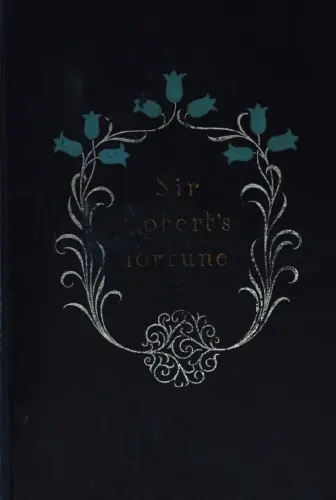
THE CLASSIC COLLECTION · 1894
"Sir Robert's Fortune: A Novel" by Mrs. Oliphant is a fiction work written in the late 19th century. The story revolves around Lily Ramsay, a young woman caught in the constraints of her uncle's strict control over her inheritance, and her budding romance with Ronald Lumsden, who is also ensnared in the turmoil caused by financial dependence on Sir Robert. As Lily grapples with her feelings of confinement and longing for independence, the narrative explores themes of love, class disparities, and the struggles against societal expectations. The opening of the novel sets the stage for Lily's predicament, revealing her desperate situation as she learns from Ronald that her uncle plans to send her away to a remote location called Dalrugas, isolating her from the world and her love. Amid lively festivities, Lily finds herself at the mercy of her uncle's whims, which dictate her future and relationship choices. The dialogue between Lily and Ronald highlights their contrasting views on money and independence, setting in motion the central conflict of the story. As the chapters progress, Lily's frustrations and aspirations are laid bare, painting a picture of a young woman on the cusp of significant life decisions amidst external constraints.
Introduction adapted from the source catalogue; source summaries may be automatically generated.
Free to read · English · 174,376 words · No account needed
MAKE TIME FOR A GOOD BOOK
On by default. Untick to stop anonymous reading totals. Each page counts after 10 seconds in view. How this works.
Anonymous counting is on unless you have switched it off.
“I hope so, Sir Robert,” said Katrin. She was relieved that his animadversions on Lily should be cut short.
And then they mounted the spiral staircase with the worn steps, which in one or two places were almost dangerous, and which the elder men mounted very cautiously, one after the other, the loud footsteps of the men echoing through the place, their deeper voices filling the air.
“Lord bless us all!” Katrin cried within herself, “if they had arrived ten days ago!” It was a comfort, in the midst of all the trouble, that Lily was safe in her bed, and, whatever happened, could not be disturbed.
Sir Robert’s enquiries again next morning after his niece were made late and after long delay. It was the 12th of August, and unnecessary to say that Dalrugas was full of sound and hurry from an early hour; the manufacture and consumption of an enormous breakfast, and the preparations for the first great day with the grouse, occupying every-body, so that Katrin herself, though very anxious, had not found a moment to visit Lily’s room, or even to snatch a moment’s talk with Beenie over her mistress’s state. “Just the same, and that’s very bad,” Beenie said, through the half-open door, “and just half out of her wits with the noise, and no able to understand what it means.” “Oh, it’s a’ thae men!” cried Katrin. “The gentlemen and their grouse, and the others with the guns and the douges and a’ the rest o’t. Pity me that have not a moment, that must gang and toil for them and their breakfasts!” When every thing was ready at last, and the party set out, Sir Robert, whose shooting days were over, accompanied them to a certain favorite corner upon Rory, who, though the old gentleman was not a heavy weight, objected to the unusual length of his limbs and decision of his proceedings; but he returned to the house shortly after, musing, with a sigh or two. Perhaps it was a rash experiment to come back after so many years; his doctor had advised it strongly, giving him much hope from his native air, the air of the moors and hills, and from the quiet and regular hours and rule of measured living which he would have no temptation to transgress. “We must remember we are not so young as we once were--any of us,” the physician had said, notwithstanding that he himself was but forty. When a man is old and ailing, and lives too perilously well, and sees and does too much in the gayer regions of the land, and is known at the same time to have a castle in the North, an old patrimony in the Highlands, delightful in August at least, and probably the best place in the world for him at all times of the year, such a prescription is easy. “Your native air, Sir Robert, and a quiet country life.” The 12th of August, a fine day, and already the sharp, clear report of the guns in the brilliant air, and a sense of company and enjoyment about, and the moor a great magnificent garden, purple with heather, is about as cheerful a moment as could be chosen to make a beginning of such a life. But old Sir Robert, returning from the beginning of the sport which he was not able to share to his old house, his Highland castle, which, as he turned toward it in the glorious sunshine of the morning, looked so gray and pinched and penurious, with the tower, that was only a high outstanding gable, and the farm buildings, which had for so long a time been the chief and most important points of the cluster of buildings to its humble occupants, had little to make him cheerful. A sharp sensation almost of shame stung the old man as he realized what his friends must have thought of his Highland castle. Taymouth and Inverary are castles, and so are the brand-new houses down the Clyde in which the Glasgow merchants establish themselves with all the luxuries which money can buy. But where did old Dalrugas come in, so spare and poor, rising straight out of the moor without garden or plaisance, not to speak of parks or woods? He smiled to himself a little sadly at the misnomer. He was wounded in the pride with which he had regarded that shrunken, impoverished little place--a pride which he felt now was half ludicrous and yet half pathetic. How was it that he had not thought so when last he was here, then a mature man and having passed all the glamour of youth? He shook his head at the pinched, tall gable, the corbie steps cut so clearly against the blue sky, the gray line of the bare, blank wall. After all, it was but a poor house for a family with such pretensions as the Ramsays of Dalrugas--a poor thing to brag to his Southern friends about. And it was not very gay. He, who had been a man who loved to enjoy himself, and who had done so wherever he had been, to come back here in the end of his days to settle down to the dreariness of the solitary moor and the silence of a country life--was it not a discipline more than he could bear that “those doctors” had put him under? Was a year or two more of vegetation here worth the giving up of all his old gratifications and amusements? It is hard even upon a man who knows he is old, but does not care to acknowledge it, to accompany on a pony for a little way his friends, who are keen for their sport, to set them off on the 12th without being able to go a step or fire a shot with them. Those doctors--what did they know? They had probably sent him off, not knowing what more to do for him, that they might not be troubled with the sight of him dying before their eyes.
Your reading position is saved on this browser. Take it to another device with a library code. Reading pages adapt to text, rather than matching a printed edition.
Mrs. (Margaret) Oliphant

Mrs. (Margaret) Oliphant

Mrs. (Margaret) Oliphant

Mrs. (Margaret) Oliphant
BEHIND THE BOOK
This eBook is for the use of anyone anywhere in the United States and most other parts of the world at no cost and with almost no restrictions whatsoever. You may copy it, give it away or re-use it under the terms of the Project Gutenberg License included with this eBook or online at www.gutenberg.org. If you are not located in the United States, you will have to check the laws of the country where you are located before using this eBook. Read the source licence.
The original source file, including credits and licence, is retained by this library. Request an original-format copy at no charge. Please include the book title and Project Gutenberg identifier #53744.
KEEP YOUR CURIOSITY GOING
Coulson Kernahan

Maurice Baring
Frances Wright
Cécile Tormay

Frederic Jesup Stimson

W. H. P. (William Henry Pope) Jarvis