
The Story of a Governess
Mrs. (Margaret) Oliphant
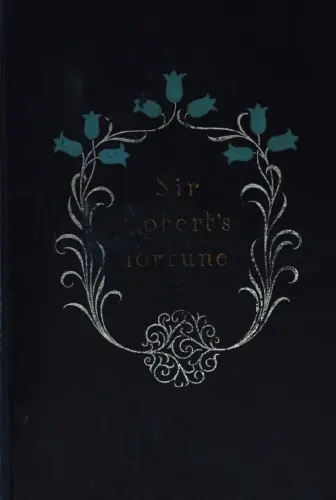
THE CLASSIC COLLECTION · 1894
"Sir Robert's Fortune: A Novel" by Mrs. Oliphant is a fiction work written in the late 19th century. The story revolves around Lily Ramsay, a young woman caught in the constraints of her uncle's strict control over her inheritance, and her budding romance with Ronald Lumsden, who is also ensnared in the turmoil caused by financial dependence on Sir Robert. As Lily grapples with her feelings of confinement and longing for independence, the narrative explores themes of love, class disparities, and the struggles against societal expectations. The opening of the novel sets the stage for Lily's predicament, revealing her desperate situation as she learns from Ronald that her uncle plans to send her away to a remote location called Dalrugas, isolating her from the world and her love. Amid lively festivities, Lily finds herself at the mercy of her uncle's whims, which dictate her future and relationship choices. The dialogue between Lily and Ronald highlights their contrasting views on money and independence, setting in motion the central conflict of the story. As the chapters progress, Lily's frustrations and aspirations are laid bare, painting a picture of a young woman on the cusp of significant life decisions amidst external constraints.
Introduction adapted from the source catalogue; source summaries may be automatically generated.
Free to read · English · 174,376 words · No account needed
MAKE TIME FOR A GOOD BOOK
On by default. Untick to stop anonymous reading totals. Each page counts after 10 seconds in view. How this works.
Anonymous counting is on unless you have switched it off.
“By Jove!” said Sir Robert, with a laugh; and then he added, “To be so young you are a very cool hand, my dear.”
“How am I a cool hand? I am not cool at all. I am very anxious. It does not matter much to you, Uncle Robert, what you do with me; but,” said Lily, tears springing to her eyes, “it will matter a great deal to me.”
“You little----” He could not find an epithet that suited, so left the adjective by itself, in sheer disability to express himself. He would have said hussy had he been an Englishman. He was tempted to say cutty, being a Scot--innocent epithets enough, both, but sufficient to make that little---- flare up. “You mean,” he said, “I suppose, that you have nothing to do with it, and that the whole affair is in my hands.”
“Yes, uncle, I think it is,” said Lily very sedately.
He looked at her again with another ejaculation on his lips, and then he
laughed.
“Well, my dear,” he said, “if that is the case, we can make short work of it--as you are in such a submissive frame of mind and have no will or intentions on your own part.”
Here Lily’s impatient spirit got the better of the hasty impulse of policy which she had taken up by sudden inspiration. “I never said that!” she cried.
“Then you will be so good as to explain to me what you did say, or rather what you meant, which is more important still,” Sir Robert said.
“I meant--just what I have always meant,” said Lily, drawing back her chair a little and fixing her eyes upon her foot, which beat the floor with a nervous movement.
“And what is that?” he asked.
Lily drew back a little more, her foot ceased to tap, her hands clasped each other. She looked up into his face with half-reproachful eyes full of meaning. “Oh, Uncle Robert, you know!”
Sir Robert jumped up from his chair, and then sat down again. Demonstrations of wrath were of no use. He felt inclined to cry, “You little cutty!” again, but did not. He puffed out a quick breath, which was a sign of great impatience, yet self-repression. “You mean, I suppose, that things are exactly as they were--that you mean to pay no attention to my representations, that you choose your own will above mine--notwithstanding that I have complete power over you, and can do with you what I will?”
“Nobody can do that,” said Lily, only half aloud. “I am not a doll,” she said, “Uncle Robert. You have the power--so that I don’t like to disobey you.”
Your reading position is saved on this browser. Take it to another device with a library code. Reading pages adapt to text, rather than matching a printed edition.
Mrs. (Margaret) Oliphant

Mrs. (Margaret) Oliphant

Mrs. (Margaret) Oliphant

Mrs. (Margaret) Oliphant
BEHIND THE BOOK
This eBook is for the use of anyone anywhere in the United States and most other parts of the world at no cost and with almost no restrictions whatsoever. You may copy it, give it away or re-use it under the terms of the Project Gutenberg License included with this eBook or online at www.gutenberg.org. If you are not located in the United States, you will have to check the laws of the country where you are located before using this eBook. Read the source licence.
The original source file, including credits and licence, is retained by this library. Request an original-format copy at no charge. Please include the book title and Project Gutenberg identifier #53744.
KEEP YOUR CURIOSITY GOING
Coulson Kernahan

Maurice Baring
Frances Wright
Cécile Tormay

Frederic Jesup Stimson

W. H. P. (William Henry Pope) Jarvis