
In Various Moods: Poems and Verses
Irving Bacheller
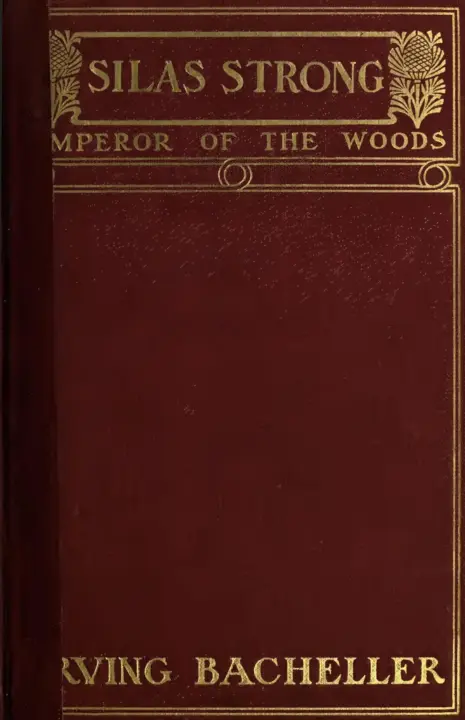
THE CLASSIC COLLECTION · 1906
"Silas Strong, Emperor of the Woods" by Irving Bacheller is a novel written in the early 20th century. The story is set against the backdrop of the Adirondack wilderness and revolves around Silas Strong, a woodsman revered as the "Emperor of the Woods." Through his eyes, the narrative explores themes of nature, the encroachment of industrialization, and familial love as it follows the lives of Silas and his brother-in-law Gordon, along with the children of the latter. The opening of the novel introduces readers to the devastation wrought by logging and industrial growth on the natural landscape, framing Silas Strong as both a protector of the woods and an embodiment of traditional, rustic courage. We meet his niece and nephew, Socky and Sue, who idolize their uncle from afar. Their father, Gordon, is struggling with personal and financial issues, reflecting a tale of modern struggles intertwined with Silas's timeless connection to the wilderness. The chapter lays the groundwork for a multi-generational narrative, merging themes of childlike wonder with the harsh realities of adulthood. The juxtaposition of the children's imaginative view of their uncle and the complex truth of their family's situation invites readers to ponder the interplay between innocence and responsibility in the face of change.
Introduction adapted from the source catalogue; source summaries may be automatically generated.
Free to read · English · 63,316 words · No account needed
MAKE TIME FOR A GOOD BOOK
On by default. Untick to stop anonymous reading totals. Each page counts after 10 seconds in view. How this works.
Anonymous counting is on unless you have switched it off.
"Silas Strong--speak t' me. I can't--I can't spare ye nohow--I can't
spare ye."
The children knelt by her and called with frightened voices: "Uncle Silas! Uncle Silas!" Strong began to move. Those beloved voices had seemed to call him back. He put his hand on the head of Sinth and drew it close to him.
"B-better times!" he whispered. "B-better times, I tell ye, s-sis!"
He struggled to his knees.
"S-say," he said to Master, "I've been shot. T-tie yer han'kerchief r-round my arm quick." The young man tied his handkerchief as directed. Then Strong tried to rise, but his weight bore him down.
"Lie still," said Master. "I can carry you." He took the rope from Zeb's collar and looped it over the breast of the helpless man and drew its ends under his arms and knotted them. Then, while Sinth supported her brother, the young man reached backward over his shoulders and, grasping the rope, lifted his friend so their backs were against each other, and, leaning under his burden, struggled on with it, the others following.
It was a toilsome, painful journey to Harris's. But what is impossible when the strong heart of youth, warmed with dauntless courage, turns to its task? We that wonder as we look backward may venture to put the query, but dare not answer it.
Often Master fell to his knees and there steadied himself a moment with heaving breast, then tightened his thews again and rose and measured the way with slow, staggering feet.
An hour or so later a clear-voiced call rang through the noisy wind.
They stopped and listened.
"Somebody coming," said Master.
He answered with, a loud halloo as they went on wearily. Soon they saw some one approaching in the dusky trail.
"Who's there?" the young man asked.
"Edith Dunmore," was the answer that trembled with gladness. "Oh, sir! I would have gone through the fire."
"I know," said he, "you would have gone through the fire."
"For--for you," she added, brokenly.
Master dared not lay down his burden. He toiled on, his heart so full that he could not answer. The girl walked beside him for a moment of solemn, suggestive silence. She could dimly see the prostrate body of Strong on the back of her lover, and understood. What a singular and noble restraint was in that meeting!
"I love you--I love you, and I want to help you," she said, as she
walked beside him.
"Help Miss Strong," he answered. "She is badly burned."
Little Sue was overcome with weariness and fear, and could not be
comforted.
Your reading position is saved on this browser. Take it to another device with a library code. Reading pages adapt to text, rather than matching a printed edition.
Irving Bacheller
Irving Bacheller
Irving Bacheller

Irving Bacheller
BEHIND THE BOOK
This eBook is for the use of anyone anywhere in the United States and most other parts of the world at no cost and with almost no restrictions whatsoever. You may copy it, give it away or re-use it under the terms of the Project Gutenberg License included with this eBook or online at www.gutenberg.org. If you are not located in the United States, you will have to check the laws of the country where you are located before using this eBook. Read the source licence.
The original source file, including credits and licence, is retained by this library. Request an original-format copy at no charge. Please include the book title and Project Gutenberg identifier #50091.
KEEP YOUR CURIOSITY GOING
Coulson Kernahan

Maurice Baring
Frances Wright
Cécile Tormay

Frederic Jesup Stimson

W. H. P. (William Henry Pope) Jarvis