
In Various Moods: Poems and Verses
Irving Bacheller
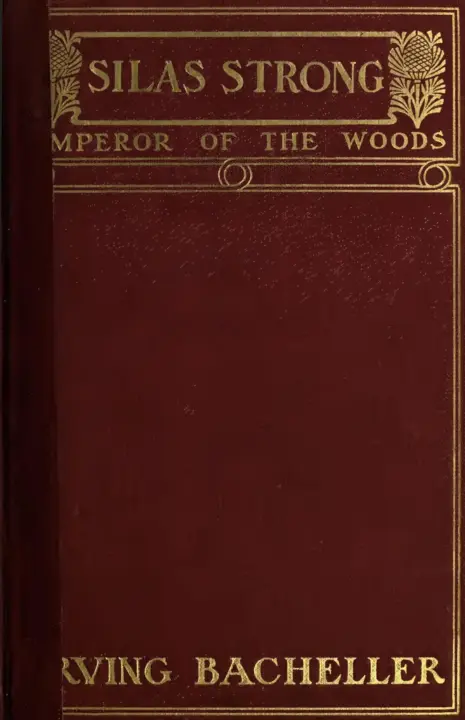
THE CLASSIC COLLECTION · 1906
"Silas Strong, Emperor of the Woods" by Irving Bacheller is a novel written in the early 20th century. The story is set against the backdrop of the Adirondack wilderness and revolves around Silas Strong, a woodsman revered as the "Emperor of the Woods." Through his eyes, the narrative explores themes of nature, the encroachment of industrialization, and familial love as it follows the lives of Silas and his brother-in-law Gordon, along with the children of the latter. The opening of the novel introduces readers to the devastation wrought by logging and industrial growth on the natural landscape, framing Silas Strong as both a protector of the woods and an embodiment of traditional, rustic courage. We meet his niece and nephew, Socky and Sue, who idolize their uncle from afar. Their father, Gordon, is struggling with personal and financial issues, reflecting a tale of modern struggles intertwined with Silas's timeless connection to the wilderness. The chapter lays the groundwork for a multi-generational narrative, merging themes of childlike wonder with the harsh realities of adulthood. The juxtaposition of the children's imaginative view of their uncle and the complex truth of their family's situation invites readers to ponder the interplay between innocence and responsibility in the face of change.
Introduction adapted from the source catalogue; source summaries may be automatically generated.
Free to read · English · 63,316 words · No account needed
MAKE TIME FOR A GOOD BOOK
On by default. Untick to stop anonymous reading totals. Each page counts after 10 seconds in view. How this works.
Anonymous counting is on unless you have switched it off.
NEXT morning, an hour after sunrise, Master set out with the children. He promised Sinth that he would keep them near him and bring them back before noon, They shut Zeb in a cabin, and he stood on his hind feet peering out of the window and barking loudly as they went away. Master brought his blankets, rifle, books, and cooking outfit, for that day he was to take possession of the new camp. Strong had gone with the Migleys and their outfit in the trail to Nick.
It was another hot, still morning, but the eastern shore of Catamount lay deep under cool shadows when Master dropped his pack at the shanty. A deer stood knee-deep in the white border of lilies. It looked across the cove at them, walked slowly along the margin of the shaded water, and disappeared in the tamaracks. Master and the children crossed to Birch Cove, hallooed, but received no answer, and sat down upon the high, mossy bank.
"Maybe she won't come?" Socky suggested.
"She will come soon," said Master.
Sue propped her little doll against a fern leaf and said: "Oh, dear! I wish she'd never go 'way."
"She's awful good"--that was the opinion of Socky.
"She wouldn't tell no falsehoods," Sue suggested.
"I wish she'd come an' live with us; don't you?" Socky queried, turning to Master. The little Cupid was searching for another arrow.
"Wouldn't dare say--you little busybody!" the young man replied. "You'd
go and tell on me."
Both looked up at him soberly. Socky was first to speak. "Where'bouts does 'the beautiful lady' live?"
"Way off in the woods."
"At the home of the fairies?"
"No, but on the road to it."
"If she'd come an' live with us, she wouldn't have to fill no wood-box, would she?" Sue inquired.
"Or pick up chips," Socky put in, brushing one palm across the other with a look of dread. The children had discussed that problem in bed the night before. Their aunt had made them fill the wood-box and bring in a little basket of chips every night and morning. It went well enough for a day or two, but the task had begun to interrupt other plans.
"Oh no," said Master. "We'll be good to her."
Socky was noting every look and word--nothing escaped him. He felt grateful to his young lieutenant, and sat for a little time looking dreamily into the air. Then, with thoughtful eyes, he felt the watch-chain of the young man.
"You'd let her wear your watch--wouldn't you?"
"Gladly."
"She could look at my aunt's album," Sue suggested, as she thought of
the pleasures of the camp.
Socky looked a bit doubtful.
Your reading position is saved on this browser. Take it to another device with a library code. Reading pages adapt to text, rather than matching a printed edition.
Irving Bacheller
Irving Bacheller
Irving Bacheller

Irving Bacheller
BEHIND THE BOOK
This eBook is for the use of anyone anywhere in the United States and most other parts of the world at no cost and with almost no restrictions whatsoever. You may copy it, give it away or re-use it under the terms of the Project Gutenberg License included with this eBook or online at www.gutenberg.org. If you are not located in the United States, you will have to check the laws of the country where you are located before using this eBook. Read the source licence.
The original source file, including credits and licence, is retained by this library. Request an original-format copy at no charge. Please include the book title and Project Gutenberg identifier #50091.
KEEP YOUR CURIOSITY GOING
Coulson Kernahan

Maurice Baring
Frances Wright
Cécile Tormay

Frederic Jesup Stimson

W. H. P. (William Henry Pope) Jarvis