THE CLASSIC COLLECTION✦An outlaw’s diary: the CommuneCLASSIC FREE BOOKS
An outlaw’s diary: the Commune
Cécile Tormay
THE CLASSIC COLLECTION · 1919
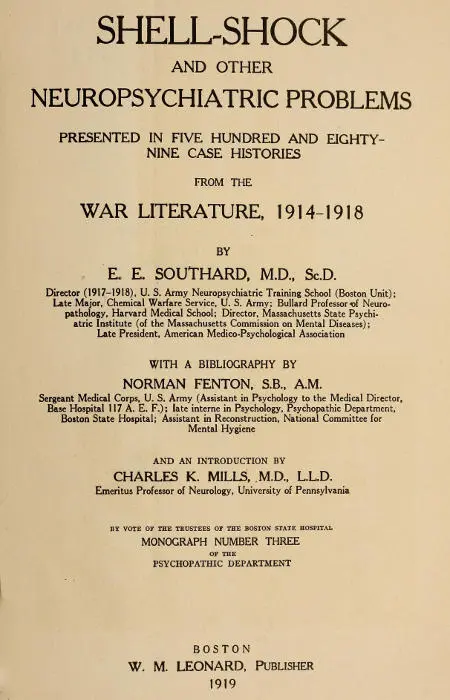
"SHELL-SHOCK AND OTHER NEUROPSYCHIATRIC PROBLEMS" by E. E. Southard is a scientific publication written in the early 20th century. The book serves as a case-history compilation focused on neuropsychiatric conditions arising from World War I, specifically highlighting cases categorized under 'Shell-shock.' Through detailed records and analyses of various cases, Southard aims to provide insights into the psychological and neurological effects of warfare on soldiers. The opening of the volume sets the stage for a comprehensive examination of neuropsychiatric issues linked to the horrors of war. It introduces the purpose of the book, which is to document and analyze case histories from both military and civilian perspectives. Southard discusses the challenges faced by the medical community in treating these conditions due to the unique stresses of combat, and he emphasizes the importance of including a wide range of cases from different countries involved in the war. The introduction also hints at the evolving understanding of war-related psychological conditions and lays the groundwork for the subsequent sections that delve deeper into specific cases and treatments.
Introduction adapted from the source catalogue; source summaries may be automatically generated.
Free to read · English · 312,106 words · No account needed
MAKE TIME FOR A GOOD BOOK
On by default. Untick to stop anonymous reading totals. Each page counts after 10 seconds in view. How this works.
Anonymous counting is on unless you have switched it off.
Re malingering, Blum speaks of fictitious jaundice as having received the name of La Carotte (the carrot) from the soldiers. Blum gives a partial list of instances of simulation as follows:
False angina, from irritating solution.
Gastric disorder. Oil and tobacco (with tachycardia or jaundice) (use
ipecac).
Diarrhea. (Isolate.)
Diarrheal stools imitated by a mixture of urine and water.
Dysenteric stools imitated by the addition of fat pork and bits of raw
meat.
Appendicitis. Complaint of pain at the well-known McBurney point.
Tape worm. Carriers supply others.
Jaundice. (Smoke mixture of antipyrin and tobacco; drink tobacco
juice. Ingest picric acid.)
Hemoptysis. Irritation of throat surfaces with a needle.
Albuminuria. Eat kitchen salt to excess in a bowl of milk. Edema and albumin disappear on surveillance. Albumin injected into bladder.
Diabetes. Phloridzin, or oxalate of ammonia. Glucose added to urine.
Incontinence. (Difficult to prove fraudulent. True incontinence in middle of night. Simulated, just before waking.)
Skin diseases:
Erythema. Herbs.
Eruptions. Mercury, arsenic, iodine, bromide.
Herpes. Euphorbiacae.
Eczema. Rubbing with slightly warmed thapsia. Rubbing excoriated skin with acids, Croton oil, bark of garou, sulphur, oil of cade, mercurial pomade.
Impetigo. With cantharides plaster and pomade stibiée.
Intertrigo. (In the infantry.)
Hyperidrosis of feet. Prolonged hot baths. Hot foot baths with
excoriation, followed by scratching and covering with linen soaked in
urine.
Edema of legs. Constriction.
(In Lombardy, cases due to introduction of equisetum arvense, an astringent herb, by fingers and toes, followed by energetic rubbing.)
Recurrent wounds. (Cover with wax sealed bandages.)
Abscesses. Introduction of septic material. A thread soiled with tartar from teeth is drawn through the skin. Characteristic odor of resulting abscess.
Phlegmons. Subcutaneous introduction of turpentine or petrol.
Paraffine tumors. (Apply heat.)
Sprain. A stopper is put under the heel; or compress the leg with bandages to stop circulation and knock below repeatedly and forcibly. Edema and ecchymosis follow.
Conjunctivitis. Ipecac, pepper, septic or fecal materials. Pupillary dilatation has been produced by introduction of a belladonna grain under the eyelid daily.
Ears. Running at the ears produced by placing urine or chemical
product in the ear.
Emaciation and pallor. Ingestion of a large amount of vinegar. Abuse
of strong tobacco.
Muscular weakness. Arsenious acid in eggs. Voluntary lead and
mercurial intoxications.
Epilepsy. Absence of pupillary reflex to light and pupillary dilatation, insensibility of nasal mucosa and modifications of pulse persistent after the attack is over cannot be imitated.
Fever. Striking elbows against walls to elevate the mercury in the thermometer. Take temperature by rectum.
Bites. One simulator had a fork with twisted teeth to produce the
effect.
Intra-abdominal projectiles. Bullet swallowed.
Swelling of hand and forearm, seven months.
=Case 468.= (LÉRI and ROGER, September, 1915.)
Your reading position is saved on this browser. Take it to another device with a library code. Reading pages adapt to text, rather than matching a printed edition.
BEHIND THE BOOK
This eBook is for the use of anyone anywhere in the United States and most other parts of the world at no cost and with almost no restrictions whatsoever. You may copy it, give it away or re-use it under the terms of the Project Gutenberg License included with this eBook or online at www.gutenberg.org. If you are not located in the United States, you will have to check the laws of the country where you are located before using this eBook. Read the source licence.
The original source file, including credits and licence, is retained by this library. Request an original-format copy at no charge. Please include the book title and Project Gutenberg identifier #52105.
KEEP YOUR CURIOSITY GOING
Cécile Tormay

Moritz Busch
John L. Ransom
Frances Wright
Cécile Tormay

Mabel Potter Daggett