THE CLASSIC COLLECTION✦The queen of the isleCLASSIC FREE BOOKS
The queen of the isle
May Agnes Fleming
THE CLASSIC COLLECTION · 1882
"Sharing Her Crime: A Novel" by May Agnes Fleming is a fiction work likely written in the late 19th century. The story revolves around dark themes of ambition, deceit, and moral ambiguity, focusing on the motivations of the main character, Madge Oranmore, as she plots the demise of her rival, Esther, to secure her son Barry's fortune. At the start of the novel, the scene is set on Christmas Eve, contrasting the festive atmosphere outside with the ominous, dim surroundings of a solitary mansion where Madge Oranmore conspires. She coldly discusses her plans with Dr. Wiseman to eliminate Esther and her child, revealing her ruthless ambitions. The opening chapter introduces the main players in a grim tableau of plotting and foreboding, establishing the tone for a story that intertwines personal vendetta with the consequences of moral choices. The reader is left with a palpable sense of tension and anticipation of the chaos that will follow from Madge's actions.
Introduction adapted from the source catalogue; source summaries may be automatically generated.
Free to read · English · 108,216 words · No account needed
MAKE TIME FOR A GOOD BOOK
On by default. Untick to stop anonymous reading totals. Each page counts after 10 seconds in view. How this works.
Anonymous counting is on unless you have switched it off.
"Oh, you're welcome to call her what you please, for all I care," replied Archie, in a nonchalant tone. "I'm not dying about her."
"There's no love lost, I think," said Louis, laughing.
By this time they had reached the hotel. Lizzie took Gipsy to her room to brush her hair and arrange her dress, and then led her to the parlor, where the trio were waiting them.
"And now for your story!" exclaimed Archie, condescendingly pushing a stool toward Gipsy with his foot.
"Well, it's not much to tell," said Gipsy. "After leaving you, Guardy, that night, in an excessively amiable frame of mind, I went up to my room and sat down to deliberate whether I'd set fire to the house and burn you all in your beds, or take a razor and cut your windpipe, by way of letting in a little hint to be more polite to me in future."
"Good Lord! I just thought so!" ejaculated the horrified squire.
"Finally, Guardy, I came to the conclusion that I would do neither. Both were unpleasant jobs--at least they would have been unpleasant to you, whatever they might have been to me, and would have taken too much time. So I concluded to let you burden the earth a little longer, and quote Solomon for the edification of the world generally, and in the meantime to make myself as scarce as possible; for I'd no idea of staying to be knocked about like an old dishcloth. So I got up, took my last supply of pocket-money, stole down to the stables, mounted Mignonne, and dashed off like the wind. Poor Mignonne! I rather think I astonished him that night, and we were both pretty well blown by the time we reached Brande's Tavern.
"There I took breakfast, left Mignonne--much against my will--jumped into the mail-coach, and started for the city. Arrived there, I was for awhile rather at a loss in what direction to turn my talents. My predominant idea, however, was to don pantaloons and go to sea. Being determined to see the lions, while I staid, I went one night to the play, saw a little girl dancing, and--Eureka! I had discovered what I was born for at last! 'Couldn't I beat that?' says I to myself. And so, when I went home, I just got up before the looking-glass, stood on one toe, and stuck the other leg straight out, as she had done, cut a few pigeon-wings, turned a somerset or two, and came to the conclusion that if I didn't become a danseuse forthwith, it would be the greatest loss this world ever sustained--the fall of Jerusalem not excepted. To a young lady of my genius it was no very difficult thing to accomplish. I went to see Old Barnes, who politely declined my services. But I wasn't going 'to give it up so, Mr. Brown,' and, like the widow in the Scripture, I gave him no peace, night or day, until he accepted my services. Well, after that all was plain sailing enough. Maybe I didn't astonish the world by the rapidity with which my continuations went up and down. It was while there I wrote that letter of consolation to Aunty Gower, by way of setting your minds at ease. Then we went to Washington, then to New York, and everywhere I 'won golden opinions from all sorts of people,' as Shakespeare, or Solomon, or some of them old fellows says. I always kept a bright lookout for you all, for I had a sort of presentiment I'd stumble against you some day. So I wasn't much surprised, but a good pleased, when I saw Guardy's dear old head protruding, like a huge overboiled beet, from one of the boxes to-night. And so--Finis!"
Your reading position is saved on this browser. Take it to another device with a library code. Reading pages adapt to text, rather than matching a printed edition.
May Agnes Fleming
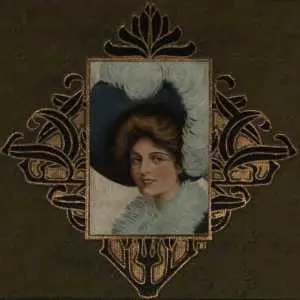
May Agnes Fleming
May Agnes Fleming
May Agnes Fleming
BEHIND THE BOOK
This eBook is for the use of anyone anywhere in the United States and most other parts of the world at no cost and with almost no restrictions whatsoever. You may copy it, give it away or re-use it under the terms of the Project Gutenberg License included with this eBook or online at www.gutenberg.org. If you are not located in the United States, you will have to check the laws of the country where you are located before using this eBook. Read the source licence.
The original source file, including credits and licence, is retained by this library. Request an original-format copy at no charge. Please include the book title and Project Gutenberg identifier #35462.
KEEP YOUR CURIOSITY GOING
Coulson Kernahan

Maurice Baring
Frances Wright
Cécile Tormay

Frederic Jesup Stimson

W. H. P. (William Henry Pope) Jarvis