THE CLASSIC COLLECTION✦An outlaw’s diary: the CommuneCLASSIC FREE BOOKS
An outlaw’s diary: the Commune
Cécile Tormay
THE CLASSIC COLLECTION · 1896
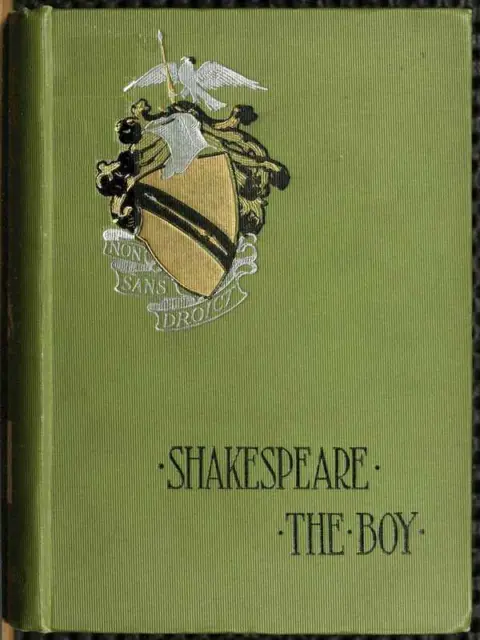
"Shakespeare the Boy" by W. J. Rolfe is a historical account written in the late 19th century. The book explores the early life of William Shakespeare, delving into the environment of his upbringing in Stratford-on-Avon, including aspects of his home life, education, and the cultural context of his childhood. The author aims to provide insights into how Shakespeare's formative years influenced his works and character. The opening of the volume introduces the region of Warwickshire as the heart of England and provides an overview of the important landmarks and historical figures associated with it. Rolfe paints a vivid picture of Shakespeare’s hometown, detailing its significance and the influence of local geography and history on the young playwright. The text discusses various attractions of the area, such as Warwick Castle and Kenilworth, and hints at the historical narratives that Shakespeare may have been exposed to during his youth, suggesting these elements played a key role in shaping his literary genius.
Introduction adapted from the source catalogue; source summaries may be automatically generated.
Free to read · English · 64,182 words · No account needed
MAKE TIME FOR A GOOD BOOK
On by default. Untick to stop anonymous reading totals. Each page counts after 10 seconds in view. How this works.
Anonymous counting is on unless you have switched it off.
His ears up-prick'd; his braided hanging mane Upon his compass'd crest now stand on end; His nostrils drink the air, and forth again, As from a furnace, vapours doth he send; His eye, which scornfully glisters like fire, Shows his hot courage and his high desire.
Sometime he trots, as if he told the steps,
With gentle majesty and modest pride;
Anon he rears upright, curvets and leaps,
As who should say, 'Lo! thus my strength is tried;
And this I do to captivate the eye
Of the fair breeder that is standing by.'
What recketh he his rider's angry stir, His flattering 'Holla', or his 'Stand, I say'? What cares he now for curb or pricking spur, For rich caparisons, or trapping gay? He sees his love, and nothing else he sees, Nor nothing else with his proud sight agrees.
Look, when a painter would surpass the life, In limning out a well-proportion'd steed, His art with nature's workmanship at strife, As if the dead the living should exceed; So did this horse excel a common one, In shape, in courage, colour, pace, and bone.
Round-hoof'd, short-jointed, fetlocks shag and long, Broad breast, full eye, small head, and nostril wide, High crest, short ears, straight legs, and passing strong, Thin mane, thick tail, broad buttock, tender hide: Look, what a horse should have he did not lack, Save a proud rider on so proud a back.
Sometime he scuds far off, and there he stares; Anon he starts at stirring of a feather; To bid the wind a base he now prepares, And whether he run or fly they know not whether; For thro' his mane and tail the high wind sings, Fanning the hairs, who wave like feather'd wings."
In Richard II. (v. 5. 72) the dialogue between the Groom and the King could have been written only by one who knew by experience the affection that one comes to feel for a favorite horse:--
"Groom. I was a poor groom of thy stable, king, When thou wert king; who, travelling towards York, With much ado at length have gotten leave To look upon my sometimes royal master's face. O, how it yearn'd my heart, when I beheld, In London streets, that coronation day, When Bolingbroke rode on roan Barbary, That horse that thou so often hast bestrid, That horse that I so carefully have dress'd!
King Richard. Rode he on Barbary? Tell me, gentle friend,
How went he under him?
Groom. So proud as if he had disdain'd the ground.
Your reading position is saved on this browser. Take it to another device with a library code. Reading pages adapt to text, rather than matching a printed edition.
BEHIND THE BOOK
This eBook is for the use of anyone anywhere in the United States and most other parts of the world at no cost and with almost no restrictions whatsoever. You may copy it, give it away or re-use it under the terms of the Project Gutenberg License included with this eBook or online at www.gutenberg.org. If you are not located in the United States, you will have to check the laws of the country where you are located before using this eBook. Read the source licence.
The original source file, including credits and licence, is retained by this library. Request an original-format copy at no charge. Please include the book title and Project Gutenberg identifier #54151.
KEEP YOUR CURIOSITY GOING
Cécile Tormay

Moritz Busch
John L. Ransom
Frances Wright
Cécile Tormay

Mabel Potter Daggett