THE CLASSIC COLLECTION✦An outlaw’s diary: the CommuneCLASSIC FREE BOOKS
An outlaw’s diary: the Commune
Cécile Tormay
THE CLASSIC COLLECTION · 1896
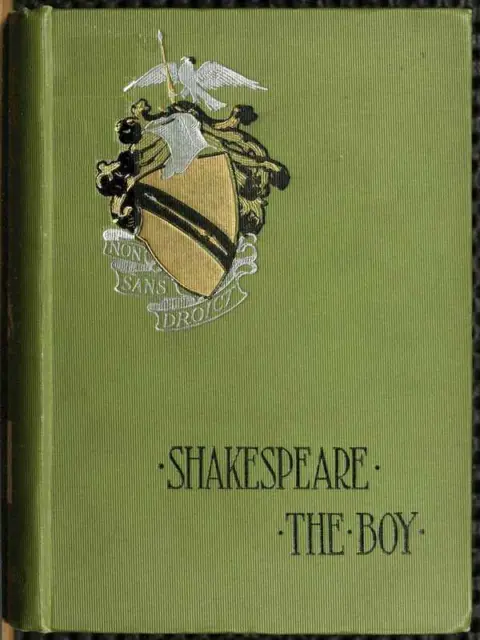
"Shakespeare the Boy" by W. J. Rolfe is a historical account written in the late 19th century. The book explores the early life of William Shakespeare, delving into the environment of his upbringing in Stratford-on-Avon, including aspects of his home life, education, and the cultural context of his childhood. The author aims to provide insights into how Shakespeare's formative years influenced his works and character. The opening of the volume introduces the region of Warwickshire as the heart of England and provides an overview of the important landmarks and historical figures associated with it. Rolfe paints a vivid picture of Shakespeare’s hometown, detailing its significance and the influence of local geography and history on the young playwright. The text discusses various attractions of the area, such as Warwick Castle and Kenilworth, and hints at the historical narratives that Shakespeare may have been exposed to during his youth, suggesting these elements played a key role in shaping his literary genius.
Introduction adapted from the source catalogue; source summaries may be automatically generated.
Free to read · English · 64,182 words · No account needed
MAKE TIME FOR A GOOD BOOK
On by default. Untick to stop anonymous reading totals. Each page counts after 10 seconds in view. How this works.
Anonymous counting is on unless you have switched it off.
Theseus. My hounds are bred out of the Spartan kind, So flew'd, so sanded, and their heads are hung With ears that sweep away the morning dew; Crook-knee'd, and dew-lapp'd like Thessalian bulls; Slow in pursuit, but match'd in mouth like bells Each under each. A cry more tuneable Was never holla'd to, nor cheer'd with horn, In Crete, in Sparta, nor in Thessaly: Judge when you hear."
The talk of the hunters about the dogs in The Taming of the Shrew (ind. 1. 16) is in the same vein:--
"Lord. Huntsman, I charge thee, tender well my hounds-- Brach Merriman, the poor cur, is emboss'd-- And couple Clowder with the deep-mouth'd brach. Saw'st thou not, boy, how Silver made it good At the hedge corner, in the coldest fault? I would not lose the dog for twenty pound.
1 Hunter. Why, Bellman is as good as he, my lord; He cried upon it at the merest loss, And twice to-day pick'd out the dullest scent: Trust me, I take him for the better dog.
Lord. Thou art a fool: if Echo were as fleet,
I would esteem him worth a dozen such.
But sup them well, and look unto them all;
To-morrow I intend to hunt again."
In the Merry Wives of Windsor (i. 1. 96) Page defends his
greyhound against the criticisms of Slender, and Shallow takes his
part:--
"Slender. How does your fallow greyhound, sir? I heard say, he
was outrun on Cotsall.
Page. It could not be judged, sir.
Slender. You'll not confess, you'll not confess.
Shallow. That he will not.--'T is your fault, 't is your fault:
't is a good dog.
Page. A cur, sir.
Shallow. Sir, he 's a good dog, and a fair dog; can there be more said? he is good and fair."
Cotsall (or Cotswold) is an allusion to the Cotswold downs in Gloucestershire, celebrated for coursing (hunting the hare), for which their fine turf fitted them, and also for other rural sports.
The description of the horse in Venus and Adonis (259), a youthful work of Shakespeare's, is famous:--
"But, lo, from forth a copse that neighbours by, A breeding jennet, lusty, young, and proud, Adonis' trampling courser doth espy, And forth she rushes, snorts, and neighs aloud; The strong-neck'd steed, being tied unto a tree, Breaketh his rein, and to her straight goes he.
Imperiously he leaps, he neighs, he bounds, And now his woven girths he breaks asunder; The bearing earth with his hard hoof he wounds, Whose hollow womb resounds like heaven's thunder; The iron bit he crushes 'tween his teeth, Controlling what he was controlled with.
Your reading position is saved on this browser. Take it to another device with a library code. Reading pages adapt to text, rather than matching a printed edition.
BEHIND THE BOOK
This eBook is for the use of anyone anywhere in the United States and most other parts of the world at no cost and with almost no restrictions whatsoever. You may copy it, give it away or re-use it under the terms of the Project Gutenberg License included with this eBook or online at www.gutenberg.org. If you are not located in the United States, you will have to check the laws of the country where you are located before using this eBook. Read the source licence.
The original source file, including credits and licence, is retained by this library. Request an original-format copy at no charge. Please include the book title and Project Gutenberg identifier #54151.
KEEP YOUR CURIOSITY GOING
Cécile Tormay

Moritz Busch
John L. Ransom
Frances Wright
Cécile Tormay

Mabel Potter Daggett