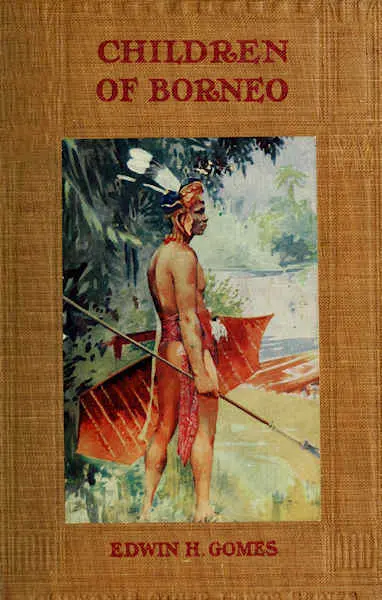
Children of Borneo
Edwin Herbert Gomes
THE CLASSIC COLLECTION · 1911
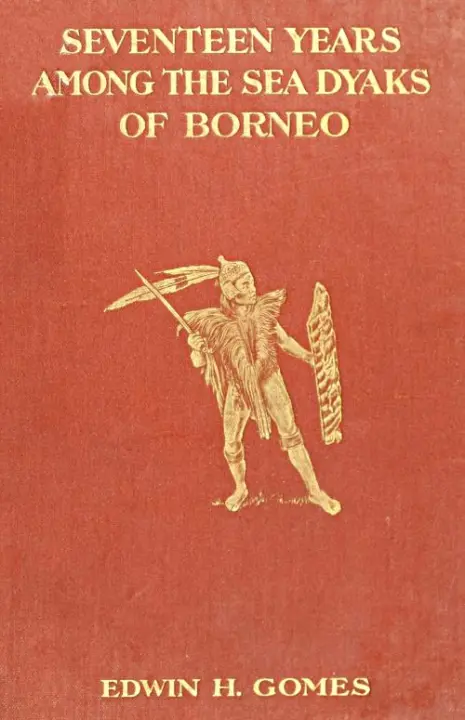
"Seventeen Years Among the Sea Dyaks of Borneo" by Edwin Herbert Gomes is a historical account written in the early 20th century. The book explores the life and customs of the Sea Dyaks, a native tribe in Borneo, drawing from Gomes's extensive experience as a missionary among them. It delves deeply into their traditions, social structure, and the transformative effects of Western influence on their culture. At the start of the book, Gomes sets the stage by describing the lush, untamed jungles of Borneo and the tumultuous history of the Dyaks, emphasizing their past involvement in piracy and head-hunting. He introduces Sir James Brooke, who played a pivotal role in suppressing these practices and bringing order to the region, ultimately paving the way for reforms that impacted the Dyaks' way of life. The opening portion outlines the precarious existence of the Dyaks in the past, detailing the violence and fear that permeated their society. It also foreshadows the significant cultural changes they would face with the advent of Western governance and missionary work, a theme that will be explored in depth throughout the book.
Introduction adapted from the source catalogue; source summaries may be automatically generated.
Free to read · English · 106,654 words · No account needed
MAKE TIME FOR A GOOD BOOK
On by default. Untick to stop anonymous reading totals. Each page counts after 10 seconds in view. How this works.
Anonymous counting is on unless you have switched it off.
=Achar=, a spoon-bait.
=Akal plandok=, the cunning of the plandok or mouse-deer.
=Anggat=, a term of endearment used in addressing a boy.
=Antu=, a spirit; the dead.
=Ari ni nuan?= “From whence are you (come)?” A form of greeting.
=Attap=, a leaf roof made from the leaves of the nipa palm.
=Baiya=, goods put aside upon the owner’s death and placed upon or within
his grave.
=Banghong=, a Dyak boat.
=Baru=, a tree with fibrous bark.
=Batu=, a stone.
=Batu bintang=, “star stone.”
=Batu ilau=, “stone of light.”
=Batu krang jiranau=, the petrified section of jiranau (Zingeberad?).
=Batu krat ikan sembilan=, the petrified section of the sembilan fish.
=Batu kudi=, “stones of wrath.”
=Batu lintar=, thunderbolt.
=Batu nitar=, thunderbolt.
=Bebaju besi=, “wearing an iron coat.” Name of a manang ceremony.
=Bebandong api=, “displaying fire.” Name of a manang ceremony.
=Bebayak=, making a bayak or iguana. Name of a manang ceremony.
=Beburong raia=, “making or acting the adjutant bird.” Name of a manang
ceremony.
=Begiling lantai=, “rolled up in the flooring.” Name of a manang
ceremony.
=Bekliti=, opening. One of the ceremonies of initiation of a manang, or
witch-doctor.
=Belelang=, to wander about; to visit a far country.
=Benih=, seed.
=Bepancha=, “making a pancha, or swing.” Name of a manang ceremony.
=Beremaung=, “acting the tiger.” Name of a manang ceremony.
=Berencha=, “making an assault.” Name of a manang ceremony.
=Berua=, “swinging.” Name of a manang ceremony.
=Besi=, iron.
=Besudi=, “feeling or touching.” One of the ceremonies of initiation of manang, or witch-doctor.
=Betanam pentik=, “planting a pentik, or wooden representation of a man.” Name of a manang ceremony.
=Betepas=, “sweeping.” Name of a manang ceremony.
=Betiang garong=, “making a post for souls.” Name of a manang ceremony.
=Betiti tendai=, “walking on the tendai, or bar on which cotton is placed in weaving.” Name of a manang ceremony.
=Betukup rarong=, “to split open the coffin.” Name of a manang ceremony.
=Bilian=, iron-wood; the only wood which the white ants do not attack.
=Bilik=, a room.
=Bliong=, a Dyak tool, which can be used both as an adze and an axe.
=Bubong=, a cage.
Your reading position is saved on this browser. Take it to another device with a library code. Reading pages adapt to text, rather than matching a printed edition.
Edwin Herbert Gomes
BEHIND THE BOOK
This eBook is for the use of anyone anywhere in the United States and most other parts of the world at no cost and with almost no restrictions whatsoever. You may copy it, give it away or re-use it under the terms of the Project Gutenberg License included with this eBook or online at www.gutenberg.org. If you are not located in the United States, you will have to check the laws of the country where you are located before using this eBook. Read the source licence.
The original source file, including credits and licence, is retained by this library. Request an original-format copy at no charge. Please include the book title and Project Gutenberg identifier #57201.
KEEP YOUR CURIOSITY GOING
Wilfrid Scawen Blunt
Wilfrid Scawen Blunt

E. W. (Edgar Watson) Howe
Cécile Tormay

Moritz Busch
John L. Ransom