The Devil
Leo, graf Tolstoy
THE CLASSIC COLLECTION · 1888
"Sevastopol" by graf Leo Tolstoy is a collection of three short stories published in 1855. Based on Tolstoy's firsthand experiences during the Siege of Sevastopol in Crimea, these sketches offer an unflinching look at war's realities. Through intimate tours of battlefield hospitals, examinations of military psychology and vanity, and the intertwined fates of two brothers, Tolstoy captures both the human cost of conflict and the senselessness of war. These stories later formed the foundation for episodes in his masterwork, "War and Peace."
Introduction adapted from the source catalogue; source summaries may be automatically generated.
Free to read · English · 47,351 words · No account needed
MAKE TIME FOR A GOOD BOOK
On by default. Untick to stop anonymous reading totals. Each page counts after 10 seconds in view. How this works.
Anonymous counting is on unless you have switched it off.
Prince Galtsin, Lieutenant-Colonel Neferdoff, and Praskukhin, whom no one had invited, to whom no one spoke, but who never left them, all went to drink tea with Adjutant Kalugin.
“Well, you did not finish telling me about Vaska Mendel,” said Kalugin, as he took off his cloak, seated himself by the window in a soft lounging-chair, and unbuttoned the collar of his fresh, stiffly starched cambric shirt: “How did he come to marry?”
“That's a joke, my dear fellow! There was a time, I assure you, when nothing else was talked of in Petersburg,” said Prince Galtsin, with a laugh, as he sprang up from the piano, and seated himself on the window beside Kalugin. “It is simply ludicrous, and I know all the details of the affair.”
And he began to relate—in a merry, and skilful manner—a love story, which we will omit, because it possesses no interest for us. But it is worthy of note that not only Prince Galtsin, but all the gentlemen who had placed themselves here, one on the window-sill, another with his legs coiled up under him, a third at the piano, seemed totally different persons from what they were when on the boulevard; there was nothing of that absurd arrogance and haughtiness which they and their kind exhibit in public to the infantry officers; here they were among their own set and natural, especially Kalugin and Prince Galtsin, and were like very good, amiable, and merry children. The conversation turned on their companions in the service in Petersburg, and on their acquaintances.
“What of Maslovsky?”
“Which? the uhlan of the body-guard or of the horse-guard?”
“I know both of them. The one in the horse-guards was with me when he was a little boy, and had only just left school. What is the elder one? a captain of cavalry?”
“Oh, yes! long ago.”
“And is he still going about with his gypsy maid?”
“No, he has deserted her ...” and so forth, and so forth, in the same
strain.
Then Prince Galtsin seated himself at the piano, and sang a gypsy song in magnificent style. Praskukhin began to sing second, although no one had asked him, and he did it so well that they requested him to accompany the prince again, which he gladly consented to do.
The servant came in with the tea, cream, and cracknels on a silver
salver.
“Serve the prince,” said Kalugin.
“Really, it is strange to think,” said Galtsin, taking a glass, and walking to the window, “that we are in a beleaguered city; tea with cream, and such quarters as I should be only too happy to get in Petersburg.”
Your reading position is saved on this browser. Take it to another device with a library code. Reading pages adapt to text, rather than matching a printed edition.
Leo, graf Tolstoy
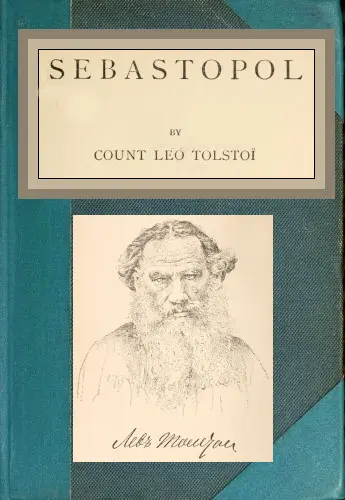
Leo, graf Tolstoy
Leo, graf Tolstoy
Leo, graf Tolstoy
BEHIND THE BOOK
This eBook is for the use of anyone anywhere in the United States and most other parts of the world at no cost and with almost no restrictions whatsoever. You may copy it, give it away or re-use it under the terms of the Project Gutenberg License included with this eBook or online at www.gutenberg.org. If you are not located in the United States, you will have to check the laws of the country where you are located before using this eBook. Read the source licence.
The original source file, including credits and licence, is retained by this library. Request an original-format copy at no charge. Please include the book title and Project Gutenberg identifier #47197.
KEEP YOUR CURIOSITY GOING
Cécile Tormay

Moritz Busch
Coulson Kernahan
John L. Ransom

Maurice Baring
Frances Wright