All in a Life-time
Henry Morgenthau & French Strother
THE CLASSIC COLLECTION · 1918
"Secrets of the Bosphorus" by Henry Morgenthau is a historical account written in the early 20th century. The book recounts the author's experiences as the American ambassador to the Ottoman Empire during a critical period, from 1913 to 1916. It offers insights into the political machinations and intrigues surrounding the German influence in Turkey and the broader geopolitical context leading up to World War I. Morgenthau's narrative provides both personal observations and a broader analysis of the tumultuous events unfolding in the region, focusing on key figures such as German Ambassador Baron Wangenheim and Turkish leaders Talaat and Enver. The opening of the book sets the stage for an exploration of the complex and often treacherous political landscape in Turkey as Germany sought to solidify its power in the region. Morgenthau reflects on his early impressions of the characters who played pivotal roles in the unfolding drama, particularly emphasizing Wangenheim's ambitions and the chaotic state of the Ottoman government. He describes the Young Turks, whose initial promises of democracy had devolved into a regime marked by violence and oppression. As tensions rise and the specter of war looms, the author hints at the dire consequences of these historical events, foreshadowing the tragic fate of various ethnic groups, especially the Armenians, in the years to come.
Introduction adapted from the source catalogue; source summaries may be automatically generated.
Free to read · English · 110,892 words · No account needed
MAKE TIME FOR A GOOD BOOK
On by default. Untick to stop anonymous reading totals. Each page counts after 10 seconds in view. How this works.
Anonymous counting is on unless you have switched it off.
I awoke one November morning at four o’clock; I had been dreaming, or I had had a “presentiment,” that all was not going well with the Sion Sœurs, a French sisterhood which had for many years conducted a school for girls in Constantinople. Madame Bompard, the wife of the French Ambassador, and several ladies of the French colony, had particularly requested me to keep a watchful eye on this institution. It was a splendidly-conducted school; the daughters of many of the best families of all nationalities attended it, and when these girls were assembled, the Christians wearing silver crosses and the non-Christians silver stars, the sight was particularly beautiful and impressive. Naturally the thought of the brutal Turks breaking into such a community was enough to arouse the wrath of any properly constituted man. Though we had nothing more definite than an uneasy feeling that something might be wrong, Mrs. Morgenthau and I decided to go up immediately after breakfast. As we approached the building we noted nothing particularly suspicious; the place was quiet and the whole atmosphere was one of peace and sanctity. Just as we ascended the steps, however, five Turkish policemen followed on our heels. They crowded after us into the vestibule, much to the consternation of a few of the Sisters, who happened to be in the waiting-room. The mere fact that the American Ambassador came with the police in itself increased their alarm, though our arrival together was purely coincidental.
“What do you want?” I asked, turning to the men. As they spoke only Turkish, naturally they did not understand me, and they started to push me aside. My own knowledge of Turkish was extremely limited, but I knew that the word “Elchi” meant “Ambassador.” So, pointing to myself, I said “Elchi Americaner.”
This scrap of Turkish worked like magic. In Turkey an Ambassador is a much revered object, and these policemen immediately respected my authority. Meanwhile the Sisters had sent for their Superior, Mère Elvira. This lady was one of the most distinguished and influential personages in Constantinople. That morning, as she came in quietly and faced these Turkish policemen, showing not a sign of fear, and completely overawing them by the splendour and dignity of her bearing, she represented to my eyes almost a supernatural being. Mère Elvira was a daughter of one of the most aristocratic families of France; she was a woman of perhaps forty years of age, with black hair and shining black eyes, all accentuated by a pale face that radiated culture, character, and intelligence. I could not help thinking, as I looked at her that morning, that there was not a diplomatic circle in the world to which she would not have added grace and dignity. In a few seconds Mère Elvira had this present distracting situation completely under control. She sent for a Sister who spoke Turkish, and queried the policemen. They said that they were acting under Bedri’s orders. All the foreign schools were to be closed that morning, the Government intending to seize all their buildings. There were about seventy-two teachers and Sisters in this convent; the police had orders to shut all these into two rooms, where they were to be held practically as prisoners. There were about two hundred girls; these were to be turned out into the streets, and left to shift for themselves. The fact that it was raining in torrents, and that the weather was extremely cold, accentuated the barbarity of this proceeding. Yet every enemy school and religious institution in Constantinople was undergoing a similar experience at this time. Clearly this was a situation which I could not handle alone, and I at once telephoned my Turkish-speaking legal adviser. Herein is another incident which may have an interest for those who believe in providential intervention. When I arrived in Constantinople telephones had been unknown, but, in the last few months, an English company had been introducing a system. The night before my experience with the Sion Sœurs, my legal adviser had called me up and proudly told me that his telephone had just been installed. I jotted down his number, and this memorandum I now found in my pocket. Without my interpreter I should have been hard pressed, and without this telephone I could not have immediately brought him to the spot.
Your reading position is saved on this browser. Take it to another device with a library code. Reading pages adapt to text, rather than matching a printed edition.
Henry Morgenthau & French Strother
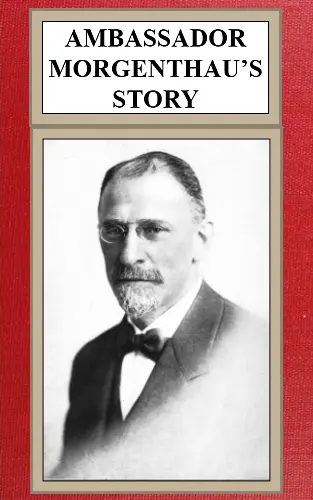
Henry Morgenthau
BEHIND THE BOOK
This eBook is for the use of anyone anywhere in the United States and most other parts of the world at no cost and with almost no restrictions whatsoever. You may copy it, give it away or re-use it under the terms of the Project Gutenberg License included with this eBook or online at www.gutenberg.org. If you are not located in the United States, you will have to check the laws of the country where you are located before using this eBook. Read the source licence.
The original source file, including credits and licence, is retained by this library. Request an original-format copy at no charge. Please include the book title and Project Gutenberg identifier #55421.
KEEP YOUR CURIOSITY GOING
Cécile Tormay

Moritz Busch
John L. Ransom
Frances Wright
Cécile Tormay

Mabel Potter Daggett