
All in a Life-time
Henry Morgenthau & French Strother
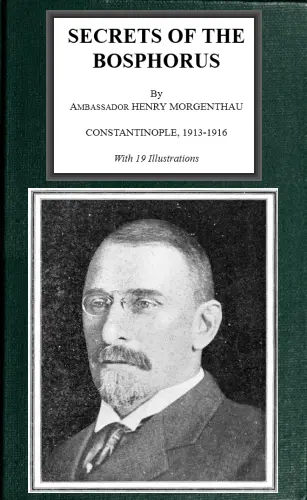
THE CLASSIC COLLECTION · 1918
"Secrets of the Bosphorus" by Henry Morgenthau is a historical account written in the early 20th century. The book recounts the author's experiences as the American ambassador to the Ottoman Empire during a critical period, from 1913 to 1916. It offers insights into the political machinations and intrigues surrounding the German influence in Turkey and the broader geopolitical context leading up to World War I. Morgenthau's narrative provides both personal observations and a broader analysis of the tumultuous events unfolding in the region, focusing on key figures such as German Ambassador Baron Wangenheim and Turkish leaders Talaat and Enver. The opening of the book sets the stage for an exploration of the complex and often treacherous political landscape in Turkey as Germany sought to solidify its power in the region. Morgenthau reflects on his early impressions of the characters who played pivotal roles in the unfolding drama, particularly emphasizing Wangenheim's ambitions and the chaotic state of the Ottoman government. He describes the Young Turks, whose initial promises of democracy had devolved into a regime marked by violence and oppression. As tensions rise and the specter of war looms, the author hints at the dire consequences of these historical events, foreshadowing the tragic fate of various ethnic groups, especially the Armenians, in the years to come.
Introduction adapted from the source catalogue; source summaries may be automatically generated.
Free to read · English · 110,892 words · No account needed
MAKE TIME FOR A GOOD BOOK
On by default. Untick to stop anonymous reading totals. Each page counts after 10 seconds in view. How this works.
Anonymous counting is on unless you have switched it off.
Probably one thing that stimulated this German desire for peace was the situation at the Dardanelles. In early January, when Wangenheim persuaded me to write my letter to Washington, Constantinople was in a state of the utmost excitement. It was reported that the Allies had assembled a fleet of forty warships at the mouth of the Dardanelles and that they intended to attempt the forcing of the strait. What made the situation particularly tense was the belief, which then generally prevailed in Constantinople, that such an attempt would succeed. Wangenheim shared this belief, and so, in a modified form, did von der Goltz, who probably knew as much about the Dardanelles defences as any other man, as he had for years been Turkey’s military instructor. I find in my diary von der Goltz’s precise opinion on this point as reported to me by Wangenheim, and I quote it exactly as written at that time: “Although he thought it was almost impossible to force the Dardanelles, still, if England thought it an important move of the general war, they could, by sacrificing ten ships, force the entrance, and do it very fast, and be up in the Marmora within ten hours from the time they forced it.”
The very day that Wangenheim gave me this expert opinion of von der Goltz, he asked me to store several cases of his valuables in the American Embassy. Evidently he was making preparations for his own departure.
Reading the Cromer Report on the Dardanelles bombardment, I find that Admiral Sir John Fisher, then First Sea Lord, placed the price of success at twelve ships. Evidently von der Goltz and Fisher did not differ materially in their estimates.
The situation of Turkey, when these first rumours of an Allied bombardment reached us, was fairly desperate. On all hands there were evidences of the fear and panic that had seized not only the populace, but the official classes. Calamities from all sides were apparently closing in on the country. Up to January 1, 1915, Turkey had done nothing to justify her participation in the war; on the contrary, she had met defeat practically everywhere. Djemal, as already recorded, had left Constantinople as the prospective “Conqueror of Egypt,” but his expedition had proved to be a bloody and humiliating failure. Enver’s attempt to redeem the Caucasus from Russian rule had resulted in an even more frightful military disaster. He had ignored the advice of the Germans, which was to let the Russians advance to Sivas and make his stand there, and, instead, he had boldly attempted to gain Russian territory in the Caucasus. This army had been defeated at every point, but the military reverses did not end its sufferings. The Turks had a most inadequate medical or sanitary service; typhus and dysentery broke out in all the camps, the deaths from these diseases reaching 100,000 men. Dreadful stories were constantly coming in telling of the sufferings of these soldiers. That England was preparing an invasion of Mesopotamia was well known, and no one at that time had any reason to believe that it would not succeed. Every day the Turks expected the news that the Bulgarians had declared war and were marching on Constantinople, and they knew that such an attack would necessarily bring in Rumania and Greece. It was no diplomatic secret that Italy was waiting only for the arrival of warm weather to join the Allies. At this moment the Russian fleet was bombarding Trebizond, on the Black Sea, and was daily expected at the entrance to the Bosphorus. Meanwhile the domestic situation was deplorable; all over Turkey thousands of the populace were daily dying of starvation; practically all able-bodied men had been taken into the army, so that only a few were left to till the fields; the criminal requisitions had almost destroyed all business; the Treasury was in a more exhausted state than normally, for the closing of the Dardanelles and the blockading of the Mediterranean ports had stopped all imports and customs dues; and the increasing wrath of the people seemed likely any day to break out against Talaat and his associates. And now, surrounded by increasing troubles on every hand, the Turks learned that this mighty armada of England and her allies was approaching, determined to destroy the defences and capture the city. At that time there was no force which the Turks feared so greatly as they feared the British fleet. Its tradition of several centuries of uninterrupted victories had completely seized their imagination. It seemed to them superhuman--the one overwhelming power which it was hopeless to contest.
Your reading position is saved on this browser. Take it to another device with a library code. Reading pages adapt to text, rather than matching a printed edition.
Henry Morgenthau & French Strother
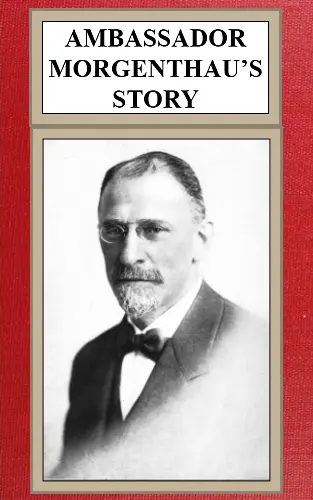
Henry Morgenthau
BEHIND THE BOOK
This eBook is for the use of anyone anywhere in the United States and most other parts of the world at no cost and with almost no restrictions whatsoever. You may copy it, give it away or re-use it under the terms of the Project Gutenberg License included with this eBook or online at www.gutenberg.org. If you are not located in the United States, you will have to check the laws of the country where you are located before using this eBook. Read the source licence.
The original source file, including credits and licence, is retained by this library. Request an original-format copy at no charge. Please include the book title and Project Gutenberg identifier #55421.
KEEP YOUR CURIOSITY GOING
Cécile Tormay

Moritz Busch
John L. Ransom
Frances Wright
Cécile Tormay

Mabel Potter Daggett