All in a Life-time
Henry Morgenthau & French Strother
THE CLASSIC COLLECTION · 1918
"Secrets of the Bosphorus" by Henry Morgenthau is a historical account written in the early 20th century. The book recounts the author's experiences as the American ambassador to the Ottoman Empire during a critical period, from 1913 to 1916. It offers insights into the political machinations and intrigues surrounding the German influence in Turkey and the broader geopolitical context leading up to World War I. Morgenthau's narrative provides both personal observations and a broader analysis of the tumultuous events unfolding in the region, focusing on key figures such as German Ambassador Baron Wangenheim and Turkish leaders Talaat and Enver. The opening of the book sets the stage for an exploration of the complex and often treacherous political landscape in Turkey as Germany sought to solidify its power in the region. Morgenthau reflects on his early impressions of the characters who played pivotal roles in the unfolding drama, particularly emphasizing Wangenheim's ambitions and the chaotic state of the Ottoman government. He describes the Young Turks, whose initial promises of democracy had devolved into a regime marked by violence and oppression. As tensions rise and the specter of war looms, the author hints at the dire consequences of these historical events, foreshadowing the tragic fate of various ethnic groups, especially the Armenians, in the years to come.
Introduction adapted from the source catalogue; source summaries may be automatically generated.
Free to read · English · 110,892 words · No account needed
MAKE TIME FOR A GOOD BOOK
On by default. Untick to stop anonymous reading totals. Each page counts after 10 seconds in view. How this works.
Anonymous counting is on unless you have switched it off.
As assassination had been the means by which these chieftains had obtained the supreme power, so assassination continued to be the instrument upon which they depended for maintaining their control. Djemal, in addition to his other duties, was Military Governor of Constantinople, and in this capacity he had control of the police; in this office he developed all the talents of a Fouché, and did his work so successfully that any man who wished to conspire against the Young Turks usually retired for that purpose to Paris or Athens. The few months that preceded my arrival had been a reign of terror. The Young Turks had destroyed Abdul Hamid’s régime only to adopt that Sultan’s favourite methods of quieting opposition. Instead of having one Abdul Hamid, Turkey now discovered that she had several. Men were arrested and deported by the score, and hangings of political offenders--opponents, that is, of the ruling gang--were common occurrences.
The weakness of the Sultan particularly facilitated the ascendancy of this Committee. We must remember that Mohammed V. was not only Sultan but Caliph--not only the temporary ruler, but also head of the Mohammedan Church. In this capacity he was an object of veneration to millions of devout Mussulmans, a fact which would have given a strong man in his position great influence in freeing Turkey from its oppressors. I presume that even those who had the most kindly feelings toward the Sultan would not have described him as an energetic, masterful man. It is a miracle that the circumstances which fate had forced upon Mohammed had not long since completely destroyed him. His brother was Abdul Hamid--Gladstone’s “great assassin”--a man who ruled by espionage and bloodshed, and who had no more consideration for his own relations than for his massacred Armenians. One of Abdul Hamid’s first acts, when he ascended the throne, was to shut up his heir-apparent in a palace, surrounding him with spies, limiting him for society to his harem and a few palace functionaries, and constantly holding over his head the fear of assassination. Naturally Mohammed’s education had been limited; he spoke only Turkish, and his only means of learning about the outside world was an occasional Turkish newspaper. So long as he remained quiescent, the heir-apparent was comfortable and fairly secure, but he knew that the first sign of revolt, or even a too curious interest in what was going on, would be the signal for his death. Hard as this preparation was, it had not destroyed what was at bottom a benevolent, gentle nature. The Sultan had no characteristics that suggested the “terrible Turk.” He was simply a quiet, easy-going, gentlemanly old man. Everybody liked him, and I do not think that he harboured ill-feeling against a human soul. He could not rule his empire, for he had had no preparation for such a difficult task; he took a certain satisfaction in his title and in his consciousness that he was a lineal descendant of the great Osman; clearly, however, he could not oppose the schemes of the men who were then struggling for the control of Turkey. In exchanging Abdul Hamid, as his master, for Talaat, Enver, and Djemal, the Sultan had not greatly improved his personal position. The Committee of Union and Progress ruled him precisely as they ruled all the rest of Turkey--by intimidation. They had shown their power when they dethroned Abdul Hamid and locked him up in a palace, and poor Mohammed naturally lived under the constant fear that they would treat him similarly. Indeed, they had already given him a sample of their power; and the Sultan had attempted on one occasion to assert his independence, and the conclusion of this episode left no doubt as to who was master. A group of thirteen “conspirators” and other criminals, some real ones, others merely political offenders, had been sentenced to be hanged. Among them was the imperial son-in-law. Before the execution could take place the Sultan had to sign the death-warrants. He begged that he be permitted to pardon the imperial son-in-law, though he raised no objection to viséing the passports of the other twelve. The nominal ruler of 20,000,000 people figuratively went down upon his knees before Talaat, but all his pleadings did not affect this determined man. Here, Talaat reasoned, was a chance to decide, once for all, who was master, the Sultan or themselves. A few days afterward the melancholy figure of the imperial son-in-law, dangling at the end of a rope in full view of the Turkish populace, visibly reminded the Empire that Talaat and the Committee were the masters of Turkey. After this tragical test of strength, the Sultan never attempted again to interfere in affairs of State. He knew what had happened to Abdul Hamid, and he feared an even more terrible fate for himself.
Your reading position is saved on this browser. Take it to another device with a library code. Reading pages adapt to text, rather than matching a printed edition.
Henry Morgenthau & French Strother
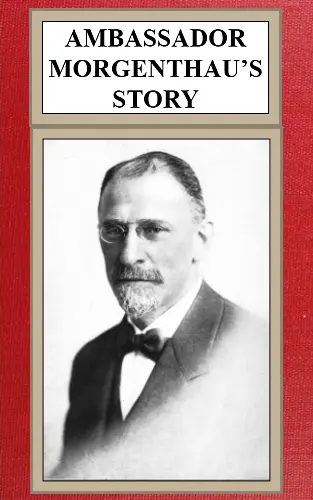
Henry Morgenthau
BEHIND THE BOOK
This eBook is for the use of anyone anywhere in the United States and most other parts of the world at no cost and with almost no restrictions whatsoever. You may copy it, give it away or re-use it under the terms of the Project Gutenberg License included with this eBook or online at www.gutenberg.org. If you are not located in the United States, you will have to check the laws of the country where you are located before using this eBook. Read the source licence.
The original source file, including credits and licence, is retained by this library. Request an original-format copy at no charge. Please include the book title and Project Gutenberg identifier #55421.
KEEP YOUR CURIOSITY GOING
Cécile Tormay

Moritz Busch
John L. Ransom
Frances Wright
Cécile Tormay

Mabel Potter Daggett