All in a Life-time
Henry Morgenthau & French Strother
THE CLASSIC COLLECTION · 1918
"Secrets of the Bosphorus" by Henry Morgenthau is a historical account written in the early 20th century. The book recounts the author's experiences as the American ambassador to the Ottoman Empire during a critical period, from 1913 to 1916. It offers insights into the political machinations and intrigues surrounding the German influence in Turkey and the broader geopolitical context leading up to World War I. Morgenthau's narrative provides both personal observations and a broader analysis of the tumultuous events unfolding in the region, focusing on key figures such as German Ambassador Baron Wangenheim and Turkish leaders Talaat and Enver. The opening of the book sets the stage for an exploration of the complex and often treacherous political landscape in Turkey as Germany sought to solidify its power in the region. Morgenthau reflects on his early impressions of the characters who played pivotal roles in the unfolding drama, particularly emphasizing Wangenheim's ambitions and the chaotic state of the Ottoman government. He describes the Young Turks, whose initial promises of democracy had devolved into a regime marked by violence and oppression. As tensions rise and the specter of war looms, the author hints at the dire consequences of these historical events, foreshadowing the tragic fate of various ethnic groups, especially the Armenians, in the years to come.
Introduction adapted from the source catalogue; source summaries may be automatically generated.
Free to read · English · 110,892 words · No account needed
MAKE TIME FOR A GOOD BOOK
On by default. Untick to stop anonymous reading totals. Each page counts after 10 seconds in view. How this works.
Anonymous counting is on unless you have switched it off.
Wangenheim constantly harped upon this fact. “You can’t trust anything they say,” he would tell Talaat and Enver; “didn’t they all go back on you a year ago?” And then with great cleverness he would play upon the only emotion which really actuates the Turk. The descendants of Osman hardly resemble any people I have ever known. They do not hate, they do not love; they have no lasting animosities or affections. They only fear. And naturally they attribute to others the motives which regulate their own conduct. “How stupid you are!” Wangenheim would tell Talaat and Enver, discussing the English attitude. “Don’t you see why the English want you to keep out? It is because they fear you. Don’t you see that, with the help of Germany, you have again become a great military power? No wonder England doesn’t want to fight you!” He dinned this so continually in their ears that they finally believed it, for this argument not only completely explained the attitude of the Entente, but it flattered Turkish pride.
Whatever may have been the attitude of Enver and Talaat, I think that England and France were more popular with all classes in Turkey than was Germany. The Sultan was opposed to war; the heir-apparent, Youssouff Izzadin, was openly pro-Ally; the Grand Vizier, Saïd Halim, favoured England rather than Germany; Djemal, the third member of the ruling triumvirate, had the reputation of being a Francophile--he had recently returned from Paris, where the reception he had received had greatly flattered him; a majority of the Cabinet had no enthusiasm for Germany; and public opinion, so far as public opinion existed in Turkey, regarded England, not Germany, as Turkey’s historic friend. Wangenheim, therefore, had much opposition to overcome, and the methods which he took to break it down form a classic illustration of German propaganda. He started a lavish publicity campaign against England, France, and Russia. I have described the feelings of the Turks at losing their ships in England. Wangenheim’s agents now filled columns of purchased space in the newspapers with bitter attacks on England for taking over these vessels. The whole Turkish Press rapidly passed under the control of Germany. Wangenheim purchased the Ikdam, one of the largest Turkish newspapers, which immediately began to sing the praises of Germany and to abuse the Entente. The Osmanischer Lloyd, published in French and German, became an organ of the German Embassy. Although the Turkish Constitution guaranteed a free Press, a censorship was established in the interest of the Central Powers. All Turkish editors were ordered to write in Germany’s favour, and they obeyed instructions. The Jeune Turc, a pro-Entente newspaper, printed in French, was suppressed. The Turkish papers exaggerated German victories and completely manufactured others; they were constantly printing the news of Entente defeats, most of them wholly imaginary. In the evening Wangenheim and Pallavicini would show me official telegrams giving the details of military operations, but when, in the morning, I would look in the newspapers, I would find that this news had been twisted or falsified in Germany’s favour. A certain Baron Oppenheim travelled all over Turkey manufacturing public opinion against England and France. Ostensibly he was an archæologist, while in reality he opened offices everywhere from which issued streams of slanders against the Entente. Huge maps were pasted on walls, showing all the territory which Turkey had lost in the course of a century. Russia was portrayed as the nation chiefly responsible for these “robberies,” and attention was drawn to the fact that England had now become Russia’s ally. Pictures were published, showing the grasping powers of the Entente as rapacious animals, snatching away at poor Turkey. Enver was advertised as the “hero” who had recovered Adrianople; Germany was pictured as Turkey’s friend; the Kaiser suddenly became “Hadji Wilhelm,” the great protector of Islam, and stories were even printed that he had become a convert to Mohammedanism. The Turkish populace was informed that the Moslems of India and of Egypt were about to revolt and throw off their English “tyrants.” The Turkish man-on-the-street was taught to say Gott Strafe England, and all the time the motive-power of this infamous campaign was German money.
Your reading position is saved on this browser. Take it to another device with a library code. Reading pages adapt to text, rather than matching a printed edition.
Henry Morgenthau & French Strother
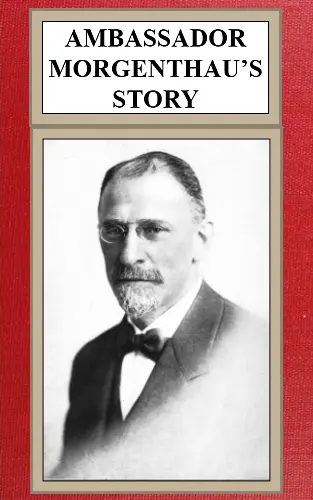
Henry Morgenthau
BEHIND THE BOOK
This eBook is for the use of anyone anywhere in the United States and most other parts of the world at no cost and with almost no restrictions whatsoever. You may copy it, give it away or re-use it under the terms of the Project Gutenberg License included with this eBook or online at www.gutenberg.org. If you are not located in the United States, you will have to check the laws of the country where you are located before using this eBook. Read the source licence.
The original source file, including credits and licence, is retained by this library. Request an original-format copy at no charge. Please include the book title and Project Gutenberg identifier #55421.
KEEP YOUR CURIOSITY GOING
Cécile Tormay

Moritz Busch
John L. Ransom
Frances Wright
Cécile Tormay

Mabel Potter Daggett