All in a Life-time
Henry Morgenthau & French Strother
THE CLASSIC COLLECTION · 1918
"Secrets of the Bosphorus" by Henry Morgenthau is a historical account written in the early 20th century. The book recounts the author's experiences as the American ambassador to the Ottoman Empire during a critical period, from 1913 to 1916. It offers insights into the political machinations and intrigues surrounding the German influence in Turkey and the broader geopolitical context leading up to World War I. Morgenthau's narrative provides both personal observations and a broader analysis of the tumultuous events unfolding in the region, focusing on key figures such as German Ambassador Baron Wangenheim and Turkish leaders Talaat and Enver. The opening of the book sets the stage for an exploration of the complex and often treacherous political landscape in Turkey as Germany sought to solidify its power in the region. Morgenthau reflects on his early impressions of the characters who played pivotal roles in the unfolding drama, particularly emphasizing Wangenheim's ambitions and the chaotic state of the Ottoman government. He describes the Young Turks, whose initial promises of democracy had devolved into a regime marked by violence and oppression. As tensions rise and the specter of war looms, the author hints at the dire consequences of these historical events, foreshadowing the tragic fate of various ethnic groups, especially the Armenians, in the years to come.
Introduction adapted from the source catalogue; source summaries may be automatically generated.
Free to read · English · 110,892 words · No account needed
MAKE TIME FOR A GOOD BOOK
On by default. Untick to stop anonymous reading totals. Each page counts after 10 seconds in view. How this works.
Anonymous counting is on unless you have switched it off.
Then he rushed out on the portico and leaned over the balustrade. At the same moment I saw a little launch put out from the Corcovado toward the Ambassador’s dock. Wangenheim hurried down, seized an envelope from one of the sailors, and a moment afterward burst into the room again.
“We’ve got them!” he shouted to me.
“Got what?” I asked.
“The Goeben and the Breslau have passed through the Dardanelles!”
He was waving the wireless message with all the enthusiasm of a college boy whose football team has won a victory.
Then, momentarily checking his enthusiasm, he came up to me solemnly, humorously shook his forefinger, lifted his eyebrows, and said, “Of course, you understand that we have sold these ships to Turkey!
“And Admiral Souchon,” he added with another wink, “will enter the
Sultan’s service!”
Wangenheim had more than patriotic reasons for this exultation; the arrival of these ships was the greatest day in his diplomatic career. It was really the first diplomatic victory which Germany had won. For years the Chancellorship of the Empire had been Wangenheim’s laudable ambition, and he behaved now like a man who saw his prize within his grasp. The voyage of the Goeben and the Breslau was his personal triumph; he had arranged with the Turkish Cabinet for their passage through the Dardanelles, and he had directed their movements by wireless in the Mediterranean. By safely getting the Goeben and the Breslau into Constantinople, Wangenheim had definitely clinched Turkey as Germany’s ally. All his intrigues and plottings for three years had now finally succeeded.
I doubt if any two ships have exercised a greater influence upon history than these two German cruisers. Not all of us at that time fully realised their importance, but subsequent developments have fully justified Wangenheim’s exuberant satisfaction. The Goeben was a powerful battle-cruiser of recent construction, the Breslau was not so large a ship, but she, like the Goeben, had the excessive speed that made her extremely serviceable in those waters. These ships had spent the few months preceding the war cruising in the Mediterranean, and when the declaration finally came they were taking on supplies at Messina. I have always regarded it as more than a coincidence that these two vessels, both of them having a greater speed than any French or English ships in the Mediterranean, should have been lying not far from Turkey when war broke out. The selection of the Goeben was particularly fortunate, as she had twice before visited Constantinople and her officers and men knew the Dardanelles perfectly. The behaviour of these crews, when the news of war was received, indicated the spirit with which the German Navy began hostilities; the men broke out into song and shouting, lifted their admiral upon their shoulders, and held a real German jollification. It is said that Admiral Souchon preserved, as a touching souvenir of this occasion, his white uniform bearing the finger-prints of his grimy sailors! For all their joy at the prospect of battle, the situation of these ships was still a precarious one. They formed no match for the large British and French naval forces which were roaming through the Mediterranean. The Goeben and the Breslau were far from their native bases; with the coaling problem such an acute one, and with England in possession of all important stations, where could they flee for safety? Several Italian destroyers were circling around the German ships at Messina, enforcing neutrality and occasionally reminding them that they could remain in port only twenty-four hours. England had ships stationed at the Gulf of Otranto, the head of the Adriatic, to cut them off in case they sought to escape into the Austrian port of Pola. The British Navy also stood guard at Gibraltar and Suez, the only other exits that apparently offered the possibility of escape. There was only one other place in which the Goeben and the Breslau might find a safe and friendly reception. That was Constantinople. Apparently the British Navy dismissed this as an impossibility. At that time, early in August, international law had not entirely disappeared as the guiding conduct of nations. Turkey was then a neutral country, and, despite the many evidences of German domination, she seemed likely to maintain her neutrality. The Treaty of Paris, which was signed in 1856, as well as the Treaty of London, signed in 1871, provided that warships should not use the Dardanelles except on the special permission of the Sultan, which permission could be granted only in times of peace. In practice the Government had seldom given this permission except for ceremonial occasions. In the existing conditions it would have amounted virtually to an unfriendly act for the Sultan to have removed the ban against war vessels in the Dardanelles, and to permit the Goeben and the Breslau to remain in Turkish waters for more than twenty-four hours would have been nothing less than a declaration of war. It is, perhaps, not surprising that the British in the early days of August, 1914, when Germany had not completely made clear her official opinion that “international law had ceased to exist,” regarded these treaty stipulations as barring the German ships from the Dardanelles and Constantinople. Relying upon the sanctity of these international regulations, the British Navy had shut off every point through which these German ships could have escaped to safety--except the entrance to the Dardanelles. Had England, immediately on the declaration of war, rushed a powerful squadron to this vital spot, how different the history of the last three years might have been!
Your reading position is saved on this browser. Take it to another device with a library code. Reading pages adapt to text, rather than matching a printed edition.
Henry Morgenthau & French Strother
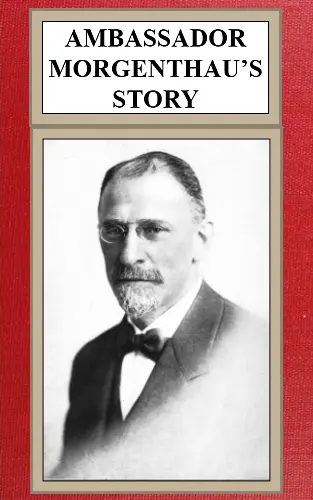
Henry Morgenthau
BEHIND THE BOOK
This eBook is for the use of anyone anywhere in the United States and most other parts of the world at no cost and with almost no restrictions whatsoever. You may copy it, give it away or re-use it under the terms of the Project Gutenberg License included with this eBook or online at www.gutenberg.org. If you are not located in the United States, you will have to check the laws of the country where you are located before using this eBook. Read the source licence.
The original source file, including credits and licence, is retained by this library. Request an original-format copy at no charge. Please include the book title and Project Gutenberg identifier #55421.
KEEP YOUR CURIOSITY GOING
Cécile Tormay

Moritz Busch
John L. Ransom
Frances Wright
Cécile Tormay

Mabel Potter Daggett