
All in a Life-time
Henry Morgenthau & French Strother
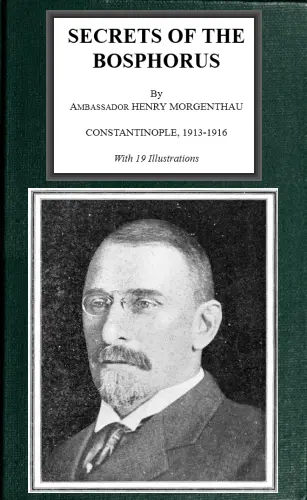
THE CLASSIC COLLECTION · 1918
"Secrets of the Bosphorus" by Henry Morgenthau is a historical account written in the early 20th century. The book recounts the author's experiences as the American ambassador to the Ottoman Empire during a critical period, from 1913 to 1916. It offers insights into the political machinations and intrigues surrounding the German influence in Turkey and the broader geopolitical context leading up to World War I. Morgenthau's narrative provides both personal observations and a broader analysis of the tumultuous events unfolding in the region, focusing on key figures such as German Ambassador Baron Wangenheim and Turkish leaders Talaat and Enver. The opening of the book sets the stage for an exploration of the complex and often treacherous political landscape in Turkey as Germany sought to solidify its power in the region. Morgenthau reflects on his early impressions of the characters who played pivotal roles in the unfolding drama, particularly emphasizing Wangenheim's ambitions and the chaotic state of the Ottoman government. He describes the Young Turks, whose initial promises of democracy had devolved into a regime marked by violence and oppression. As tensions rise and the specter of war looms, the author hints at the dire consequences of these historical events, foreshadowing the tragic fate of various ethnic groups, especially the Armenians, in the years to come.
Introduction adapted from the source catalogue; source summaries may be automatically generated.
Free to read · English · 110,892 words · No account needed
MAKE TIME FOR A GOOD BOOK
On by default. Untick to stop anonymous reading totals. Each page counts after 10 seconds in view. How this works.
Anonymous counting is on unless you have switched it off.
Upon him, upon more than almost any diplomatic representative of Germany, depended the success of the Kaiser’s conspiracy for world domination. This German diplomat came to Constantinople with a single purpose. For twenty years the German Government had been cultivating the Turkish Empire. All this time the Kaiser had been preparing for a world war, and in this war it was destined that Turkey should play an almost decisive part. Unless Germany should obtain the Ottoman Empire as its ally, there was little chance that she could succeed in a general European war. When France had made her alliance with Russia, this placed the man-power, 170,000,000, on her side, in the event of a war with Germany. For more than twenty years Germany had striven diplomatically to detach Russia from this French alliance, but had failed. There was only one way in which Germany could make valueless the Franco-Russian alliance; this was by obtaining Turkey as an ally. With Turkey on her side, Germany could close the Dardanelles, the only practical line of communication between Russia and her Western allies. This simple act would deprive the Czar’s army of war munitions, destroy Russia economically by stopping her grain exports, her greatest source of wealth, and thus detach Russia from her partners in the world war. Thus Wangenheim’s mission was to make it absolutely certain that Turkey should join Germany in the great contest that was impending.
Wangenheim believed that, should he succeed in accomplishing this task, he would reap the reward which for years had represented his final goal--the Chancellorship of the Empire. His skill at establishing personal relations with the Turks gave him a great advantage over his rivals. Wangenheim had precisely that combination of force, persuasiveness, geniality, and brutality needed in dealing with the Turkish character. I have emphasised his Prussian qualities; yet Wangenheim was a Prussian not by birth but by development; he was a native of Thuringia, and, together with all the push, ambition, and overbearing traits of the Prussian, he had some of the softer characteristics which we associate with Southern Germany. He had one conspicuous quality, which is not Prussian at all--that is, tact; and for the most part he succeeded in keeping his less agreeable tendencies under the surface and showing only his more ingratiating side. He dominated not so much by brute strength as by a mixture of force and amiability; externally he was not a bully; his manner was more insinuating than coercive; he won by persuasiveness, not by the mailed fist, but we who knew him well understood that back of all his gentleness there lurked a terrific, remorseless ambition. Yet the impression left was not one of brutality, but of excessive animal spirits and good nature. Indeed, Wangenheim had in combination the jovial enthusiasm of a college student, the rapacity of a Prussian official, and the happy-go-lucky qualities of a man of the world. I still recall the picture of this huge figure of a man, sitting at the piano, improvising in some beautiful classic theme--and then suddenly starting to pound out uproarious German drinking songs or popular melodies. I still see him jumping on his horse on the polo grounds, spurring the splendid animal to its speediest efforts--never making sufficient speed, however, to satisfy the ambitious sportsman. Indeed, in all his activities, grave and gay, Wangenheim displayed this same restless spirit of the chase. Whether he was flirting with the Greek ladies at Pera, or spending hours over the card-table at the Cercle d’Orient, or bending the Turkish officials to his will in the interest of Germany, all life was to him a game, which was to be played more or less recklessly, and in which the chances favoured the man who was bold and audacious and willing to pin success or failure on a single throw. And this greatest game of all--that upon which was staked, as Bernhardi has expressed it, “World empire or downfall”--Wangenheim did not play languidly, as though it had been merely a duty to which he had been assigned; to use the German phrase, he was “fire and flame” for it; he had the consciousness that he was a strong man set aside to perform a mighty task. As I write of Wangenheim I feel myself affected by the force of his personality, yet I knew all the time that, like the Government which he served so loyally, he was fundamentally ruthless, shameless, and cruel. He was content to accept all the consequences of his policy, however hideous these might be. He saw only a single goal, and, with all the realism and logic that are so characteristically German, Wangenheim would brush aside all feelings of humanity and decency that might interfere with success. He accepted in full Bismarck’s famous dictum that a German must be ready to sacrifice for Kaiser and Fatherland not only his life but his honour as well.
Your reading position is saved on this browser. Take it to another device with a library code. Reading pages adapt to text, rather than matching a printed edition.
Henry Morgenthau & French Strother
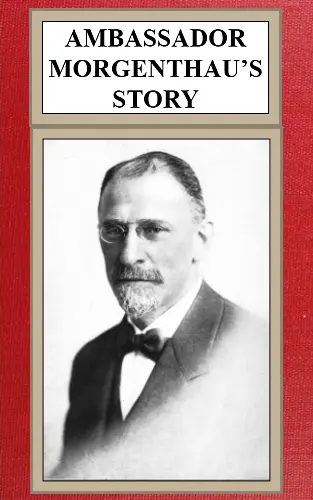
Henry Morgenthau
BEHIND THE BOOK
This eBook is for the use of anyone anywhere in the United States and most other parts of the world at no cost and with almost no restrictions whatsoever. You may copy it, give it away or re-use it under the terms of the Project Gutenberg License included with this eBook or online at www.gutenberg.org. If you are not located in the United States, you will have to check the laws of the country where you are located before using this eBook. Read the source licence.
The original source file, including credits and licence, is retained by this library. Request an original-format copy at no charge. Please include the book title and Project Gutenberg identifier #55421.
KEEP YOUR CURIOSITY GOING
Cécile Tormay

Moritz Busch
John L. Ransom
Frances Wright
Cécile Tormay

Mabel Potter Daggett