
All in a Life-time
Henry Morgenthau & French Strother
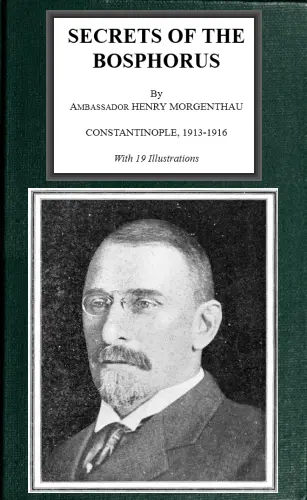
THE CLASSIC COLLECTION · 1918
"Secrets of the Bosphorus" by Henry Morgenthau is a historical account written in the early 20th century. The book recounts the author's experiences as the American ambassador to the Ottoman Empire during a critical period, from 1913 to 1916. It offers insights into the political machinations and intrigues surrounding the German influence in Turkey and the broader geopolitical context leading up to World War I. Morgenthau's narrative provides both personal observations and a broader analysis of the tumultuous events unfolding in the region, focusing on key figures such as German Ambassador Baron Wangenheim and Turkish leaders Talaat and Enver. The opening of the book sets the stage for an exploration of the complex and often treacherous political landscape in Turkey as Germany sought to solidify its power in the region. Morgenthau reflects on his early impressions of the characters who played pivotal roles in the unfolding drama, particularly emphasizing Wangenheim's ambitions and the chaotic state of the Ottoman government. He describes the Young Turks, whose initial promises of democracy had devolved into a regime marked by violence and oppression. As tensions rise and the specter of war looms, the author hints at the dire consequences of these historical events, foreshadowing the tragic fate of various ethnic groups, especially the Armenians, in the years to come.
Introduction adapted from the source catalogue; source summaries may be automatically generated.
Free to read · English · 110,892 words · No account needed
MAKE TIME FOR A GOOD BOOK
On by default. Untick to stop anonymous reading totals. Each page counts after 10 seconds in view. How this works.
Anonymous counting is on unless you have switched it off.
“But the German Government is not responsible,” said Zimmerman. “We know nothing about it.”
Naturally I could not accept that statement on its face value--recent developments have shown how mendacious it was--but we passed to other topics. The matter of the submarine came up again.
“We have voluntarily interned our Navy,” said Zimmerman. “We can do nothing at sea except with our submarines. It seems to me that the United States is making a serious mistake in so strongly opposing the submarine. You have a long coastline and you may need the U-boat yourself some day. Suppose one of the European Powers, and particularly Japan, should attack you. You could use the submarine to good purpose then. Besides, if you insist on this proposed declaration in the Lusitania matter, you will simply force our Government into the hands of the Tirpitz party.”
Zimmerman now returned again to the situation in Turkey. His questions showed that he was much displeased with the new German Ambassador, Graf von Metternich. Metternich, it seemed, had not made a success of winning the goodwill of the reigning powers in Turkey and had been a trial to the German Foreign Office. Metternich had shown a different attitude toward the Armenians from Wangenheim, and he had made sincere attempts with Talaat and Enver to stop them. Zimmerman now told me that Metternich had made a great mistake in doing this and had destroyed his influence at Constantinople. Zimmerman made no effort to conceal his displeasure over Metternich’s manifestation of a humanitarian spirit. I now saw that Wangenheim had really represented the attitude of official Berlin, and I thus had confirmation, from the highest German authority, of my conviction that Germany had silently acquiesced in those deportations.
In a few days we had taken the steamer at Copenhagen, and on February 22nd I found myself once more sailing into New York Harbour.
Abdul-Hamid, 6, 9, 186, 188
Adrianople, 9, 19, 173, 178
Ægean Coast, Greek population of, 30
Ægean Coast deportations, 31
Alsace-Lorraine, 59
American ammunition for Allies, 103
American and Turkish relations, 103
Angora deportations, 205
Angora, Typhus at, 170
Archangel, 70
Armenians, American assistance of, 227-239
Armenians, Destruction of, 211
Armenians, History of, 188
Armenians massacred, 111, 189, 198
Armenian politics, 186, 191
Armenian soldiers, 186, 198
Armenian State Church, 189
Arrogant Turks, 180
Assassination of Austrian Heir, 37
Assassination of Nazim, 9
Bagdad, 182
Bagdad Railway, 59, 241
Balkans smouldering, 35
Balkanzug, The, 179, 259
Baltic, The, 70
Bastinado, The, 201
Bedri Bey, 87, 97, 100, 123, 163, 167, 204
Berlin, February, 1916, 261
Bethlehem Steel Co., 103
Bethmann-Hollweg, 55
Billings, C. K., 9, 23
Black Sea, Control of, 51
“Blacksmith of Bashkale,” 202
Bompard, 17, 82
Bosnia and Herzegovina, 7, 37, 57, 177
Bosphorus, The, 36, 53, 71
“Boss System” in Turkey, 12
Bouvet, The, 140, 147
Breslau, The, 45, 63, 140, 252
Brest-Litovsk, Treaty of, 117
British Records, Burning of, 83
Bronsart, 40, 96, 130
Bruère, Henry, 23
Bulgaria, 118, 147, 159, 173
Bulgaria up for auction, 176
Bulgaria joins Central Powers, 177
Burial permits, 184
Burlesque gun, A, 144
Bustány Effendi, 23, 78
Cabinet Council, A Turkish, 160
Calais, 60
Caliph, The, 10
Capitulations, The, 73, 183
Your reading position is saved on this browser. Take it to another device with a library code. Reading pages adapt to text, rather than matching a printed edition.
Henry Morgenthau & French Strother
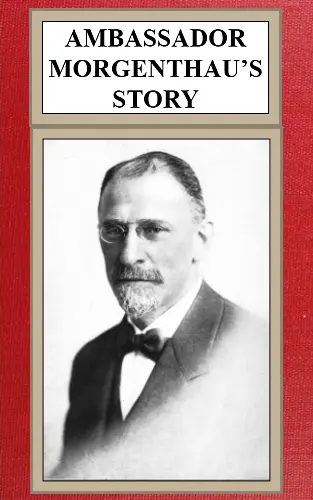
Henry Morgenthau
BEHIND THE BOOK
This eBook is for the use of anyone anywhere in the United States and most other parts of the world at no cost and with almost no restrictions whatsoever. You may copy it, give it away or re-use it under the terms of the Project Gutenberg License included with this eBook or online at www.gutenberg.org. If you are not located in the United States, you will have to check the laws of the country where you are located before using this eBook. Read the source licence.
The original source file, including credits and licence, is retained by this library. Request an original-format copy at no charge. Please include the book title and Project Gutenberg identifier #55421.
KEEP YOUR CURIOSITY GOING
Cécile Tormay

Moritz Busch
John L. Ransom
Frances Wright
Cécile Tormay

Mabel Potter Daggett