
All in a Life-time
Henry Morgenthau & French Strother
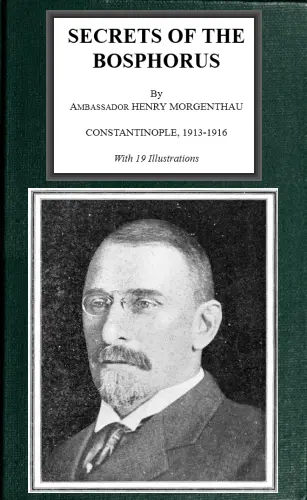
THE CLASSIC COLLECTION · 1918
"Secrets of the Bosphorus" by Henry Morgenthau is a historical account written in the early 20th century. The book recounts the author's experiences as the American ambassador to the Ottoman Empire during a critical period, from 1913 to 1916. It offers insights into the political machinations and intrigues surrounding the German influence in Turkey and the broader geopolitical context leading up to World War I. Morgenthau's narrative provides both personal observations and a broader analysis of the tumultuous events unfolding in the region, focusing on key figures such as German Ambassador Baron Wangenheim and Turkish leaders Talaat and Enver. The opening of the book sets the stage for an exploration of the complex and often treacherous political landscape in Turkey as Germany sought to solidify its power in the region. Morgenthau reflects on his early impressions of the characters who played pivotal roles in the unfolding drama, particularly emphasizing Wangenheim's ambitions and the chaotic state of the Ottoman government. He describes the Young Turks, whose initial promises of democracy had devolved into a regime marked by violence and oppression. As tensions rise and the specter of war looms, the author hints at the dire consequences of these historical events, foreshadowing the tragic fate of various ethnic groups, especially the Armenians, in the years to come.
Introduction adapted from the source catalogue; source summaries may be automatically generated.
Free to read · English · 110,892 words · No account needed
MAKE TIME FOR A GOOD BOOK
On by default. Untick to stop anonymous reading totals. Each page counts after 10 seconds in view. How this works.
Anonymous counting is on unless you have switched it off.
The Armenians are not the only subject people in Turkey who have suffered from this policy of making Turkey exclusively the country of the Turks. The story which I have told about the Armenians I could also tell with certain modifications about the Greeks and the Syrians. Indeed, the Greeks were the first victims of this nationalising idea. I have already described how, in the few months preceding the European war, the Ottoman Government began deporting its Greek subjects along the coast of Asia Minor. These outrages aroused little interest in Europe or the United States, yet in the space of three or four months about 400,000 Greeks were taken from their age-long homes in the Mediterranean littoral and removed to the Greek Islands in the Ægean Sea. For the larger part these were bona fide deportations; that is, the Greek inhabitants were actually removed to new places and were not subjected to wholesale massacre. It was probably for the reason that the civilised world did not protest against these deportations that the Turks afterward decided to apply the same methods on a larger scale not only to the Greeks but to the Armenians, Syrians, Nestorians, and others of its subject peoples. In fact, Bedri Bey, the Prefect of Police at Constantinople, himself told one of my secretaries that the Turks had expelled the Greeks so successfully that they had decided to adopt the same method to all the other races in the empire.
The martyrdom of the Greeks therefore comprised two periods, that antedating the war, and that which began in the early part of 1915. The first affected the Greeks living on the sea-coast of Asia Minor. The second affected those living in Thrace and in the territories surrounding the Sea of Marmora, the Dardanelles, the Bosphorus, and the coast of the Black Sea. These latter, to the extent of several hundred thousand, were sent to the interior of Asia Minor. The Turks adopted almost identically the same procedure against the Greeks as that which they had adopted against the Armenians. They began by incorporating the Greeks into the Ottoman Army and then transforming them into labour battalions, using them to build roads in the Caucasus and other scenes of action. These Greek soldiers, just like the Armenians, died by thousands from cold, hunger, and other privations. The same house-to-house searches for hidden weapons took place in the Greek villages, and Greek men and women were beaten and tortured just as were their fellow Armenians. The Greeks had to submit to the same forced requisitions, which amounted in their case, as in the case of the Armenians, merely to plundering on a wholesale scale. The Turks attempted to force the Greek subjects to become Mohammedans; Greek girls, just like Armenian girls, were stolen and taken to Turkish harems, and Greek boys were kidnapped and placed in Moslem households. The Greeks, just like the Armenians, were accused of disloyalty to the Ottoman Government; the Turks accused them of furnishing supplies to the English submarines in the Marmora and also of acting as spies. The Turks also declared that the Greeks were not loyal to the Ottoman Government, but that they also looked forward to the day when the Greeks outside of Turkey would become part of Greece. These latter charges were unquestionably true; that the Greeks, after suffering for five centuries the most unspeakable outrages at the hands of the Turks, should look longingly to the day when their territory should be part of the Fatherland, was to be expected. The Turks, as in the case of the Armenians, seized upon this as an excuse for a violent onslaught on the whole race. Everywhere the Greeks were gathered in groups and, under the so-called protection of Turkish gendarmes, they were transported, the larger part on foot, into the interior. Just how many were scattered in this fashion is not definitely known, the estimates varying anywhere from 200,000 up to 1,000,000. These caravans suffered great privations, but they were not submitted to general massacre as were the Armenians, and this is probably the reason why the outside world has not heard so much about them. The Turks showed them this greater consideration not from any motive of pity. The Greeks, unlike the Armenians, had a Government which was vitally interested in their welfare. At this time there was a general apprehension among the Teutonic Allies that Greece would enter the war on the side of the Entente, and a wholesale massacre of Greeks in Asia Minor would unquestionably have produced such a state of mind in Greece that its pro-German king would have been unable longer to have kept his country out of the war. It was only a matter of state policy, therefore, that saved these Greek subjects of Turkey from all the horrors that befell the Armenians. But their sufferings are still terrible, and constitute another chapter in the long story of crimes for which civilisation will hold the Turk responsible.
Your reading position is saved on this browser. Take it to another device with a library code. Reading pages adapt to text, rather than matching a printed edition.
Henry Morgenthau & French Strother
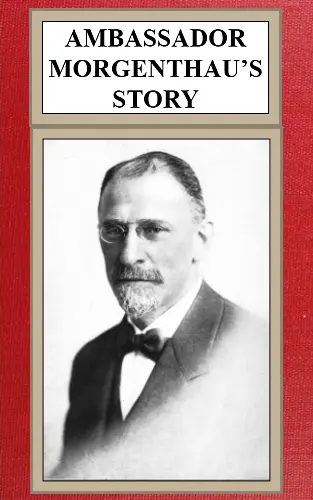
Henry Morgenthau
BEHIND THE BOOK
This eBook is for the use of anyone anywhere in the United States and most other parts of the world at no cost and with almost no restrictions whatsoever. You may copy it, give it away or re-use it under the terms of the Project Gutenberg License included with this eBook or online at www.gutenberg.org. If you are not located in the United States, you will have to check the laws of the country where you are located before using this eBook. Read the source licence.
The original source file, including credits and licence, is retained by this library. Request an original-format copy at no charge. Please include the book title and Project Gutenberg identifier #55421.
KEEP YOUR CURIOSITY GOING
Cécile Tormay

Moritz Busch
John L. Ransom
Frances Wright
Cécile Tormay

Mabel Potter Daggett