
All in a Life-time
Henry Morgenthau & French Strother
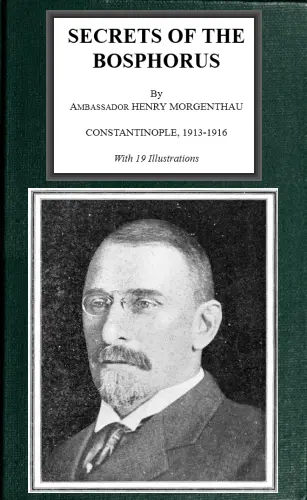
THE CLASSIC COLLECTION · 1918
"Secrets of the Bosphorus" by Henry Morgenthau is a historical account written in the early 20th century. The book recounts the author's experiences as the American ambassador to the Ottoman Empire during a critical period, from 1913 to 1916. It offers insights into the political machinations and intrigues surrounding the German influence in Turkey and the broader geopolitical context leading up to World War I. Morgenthau's narrative provides both personal observations and a broader analysis of the tumultuous events unfolding in the region, focusing on key figures such as German Ambassador Baron Wangenheim and Turkish leaders Talaat and Enver. The opening of the book sets the stage for an exploration of the complex and often treacherous political landscape in Turkey as Germany sought to solidify its power in the region. Morgenthau reflects on his early impressions of the characters who played pivotal roles in the unfolding drama, particularly emphasizing Wangenheim's ambitions and the chaotic state of the Ottoman government. He describes the Young Turks, whose initial promises of democracy had devolved into a regime marked by violence and oppression. As tensions rise and the specter of war looms, the author hints at the dire consequences of these historical events, foreshadowing the tragic fate of various ethnic groups, especially the Armenians, in the years to come.
Introduction adapted from the source catalogue; source summaries may be automatically generated.
Free to read · English · 110,892 words · No account needed
MAKE TIME FOR A GOOD BOOK
On by default. Untick to stop anonymous reading totals. Each page counts after 10 seconds in view. How this works.
Anonymous counting is on unless you have switched it off.
Talaat, like most strong men, had his forbidding, even his ferocious, moods. One day I found him sitting at the usual place, his massive shoulders drawn up, his eyes glowering, his wrists planted on the desk. I always anticipated trouble whenever I found him in this attitude. As I made request after request, Talaat, between his puffs at his cigarette, would answer “No!” “No!” “No!”
I slipped around to his side of the desk.
“I think those wrists are making all the trouble, your Excellency,” I said. “Won’t you please take them off the table?”
Talaat’s ogre-like face began to crinkle, he threw up his arms, leaned back, and gave a roar of terrific laughter. He enjoyed my method of treating him so much that he granted every request I made.
At another time I came into his room when a couple of Arab princes were present. Talaat was solemn and dignified, and refused every favour I asked. “No, I shall not do that. No, I haven’t the slightest idea of doing that,” he would answer. I saw that he was trying to impress his princely guests, to show them that he had become so great a man that he did not hesitate to “turn down” an Ambassador. So I came up nearer and spoke quietly.
“I see you are trying to make an impression on these princes,” I said. “Now if it’s necessary for you to pose, do it with the Austrian Ambassador--he’s out there waiting to come in. My affairs are too important to be trifled with.”
Talaat laughed. “Come back in an hour,” he said. I came back; the Arab princes had left, and we had no difficulty in arranging matters to my satisfaction.
“Someone has got to govern Turkey; why not we?” Talaat once said to me. The situation had just about come to that. “I have been greatly disappointed,” he would tell me, “at the failure of the Turks to appreciate democratic institutions. I hoped for it once, and I worked hard for it--but they were not prepared for it.” He saw a Government which the first enterprising man who came along might seize, and he determined to be that man. Of all the Turkish politicians I met, I regarded Talaat as the only one who really had extraordinary innate ability. He had great force and dominance, the ability to think quickly and accurately, and an almost superhuman insight into men’s motives. His great geniality and his lively sense of humour also made him a splendid manager of men. He showed his shrewdness in the measures which he took, after the murder of Nazim, to gain the upper hand in this distracted Empire. He did not seize the Government all at once; he went at it gradually, feeling his way. He realised the weaknesses of his position; he had several forces to deal with: the envy of his associates on the revolutionary committee which had backed him, the army, the foreign Governments, and the several factions that made up what then passed for public opinion in Turkey. Any of these elements might destroy him, politically and physically. He understood the dangerous path he was treading, and he always anticipated a violent death. “I do not expect to die in my bed,” he told me. By becoming Minister of the Interior, Talaat gained control of the police and the administration of the provinces, or vilayets. This gave him a great amount of patronage, which he used to strengthen his position with the Committee. He attempted to gain the support of all influential factions by gradually placing their representatives in the other Cabinet posts. Though he afterwards became the man who was chiefly responsible for the massacre of hundreds of thousands of Armenians, at this time Talaat maintained the pretence that the Committee stood for the unionisation of all the races in the Empire, and for this reason his first Cabinet contained an Arab-Christian, a Deunme (a Jew by race, but a Mohammedan by religion), a Circassian, an Armenian, an Egyptian. He made the latter Grand Vizier, the highest post in the Government, a position which roughly corresponds to that of Chancellor in the German Empire. The man whom he selected for this part, which in ordinary times was the most dignified and important in the Empire, belonged to quite a different order of society from Talaat. Not uncommonly bosses in America select high-class figure-heads for mayors or even governors, men who will give respectability to their faction yet whom, at the same time, they think that they can control. It was some such motive as this which led Talaat and his associates to elevate Saïd Halim to the Grand Vizierate. Saïd Halim was an Egyptian Prince, the cousin of the Khedive of Egypt, a man of great wealth and great culture. He spoke English and French as fluently as his own tongue, and was an ornament to any society in the world. But he was a man of unlimited vanity and ambition. His great desire was to become Khedive of Egypt, and this had led him to join his political fortunes to the gang that was then ascendant in Turkey. He was the heaviest “campaign contributor,” and, indeed, he had largely furnished the Young Turks in their earliest days. In exchange they had given him the highest office in the Empire, but with the tacit understanding that he should not attempt to exercise the real powers of his office, but content himself with enjoying its dignities and holding himself in readiness for the Khedivate, when all their plans had succeeded.
Your reading position is saved on this browser. Take it to another device with a library code. Reading pages adapt to text, rather than matching a printed edition.
Henry Morgenthau & French Strother
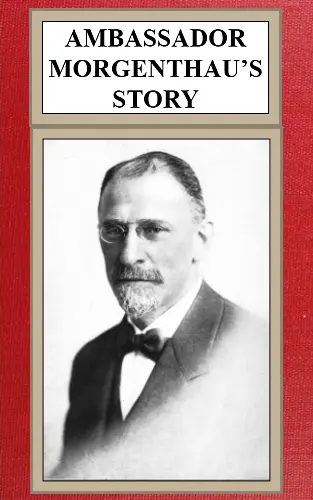
Henry Morgenthau
BEHIND THE BOOK
This eBook is for the use of anyone anywhere in the United States and most other parts of the world at no cost and with almost no restrictions whatsoever. You may copy it, give it away or re-use it under the terms of the Project Gutenberg License included with this eBook or online at www.gutenberg.org. If you are not located in the United States, you will have to check the laws of the country where you are located before using this eBook. Read the source licence.
The original source file, including credits and licence, is retained by this library. Request an original-format copy at no charge. Please include the book title and Project Gutenberg identifier #55421.
KEEP YOUR CURIOSITY GOING
Cécile Tormay

Moritz Busch
John L. Ransom
Frances Wright
Cécile Tormay

Mabel Potter Daggett