The Devil
Leo, graf Tolstoy
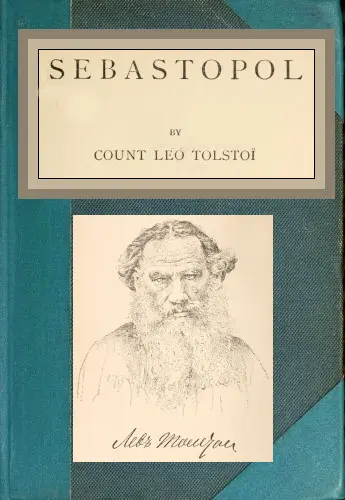
THE CLASSIC COLLECTION · 1887
"Sebastopol" by graf Leo Tolstoy is a collection of three short stories published in 1855. Based on Tolstoy's firsthand experiences during the siege of Sevastopol in Crimea, these sketches offer vivid glimpses into wartime life. Through hospital tours, psychological examinations of heroism and vanity, and the stories of two brothers fighting for Russia, Tolstoy captures the brutal realities of the conflict. These early works later formed the foundation for episodes in his masterpiece, "War and Peace."
Introduction adapted from the source catalogue; source summaries may be automatically generated.
Free to read · English · 42,781 words · No account needed
MAKE TIME FOR A GOOD BOOK
On by default. Untick to stop anonymous reading totals. Each page counts after 10 seconds in view. How this works.
Anonymous counting is on unless you have switched it off.
White flags are flying on our fortifications and in the French intrenchments. In the blossom-covered valley mutilated bodies, clothed in blue or in gray, with bare feet, lie in heaps, and the men are carrying them off to place them in carts. The air is poisoned by the odor of the corpses. Crowds of people pour out of Sebastopol and out of the French camp to witness this spectacle. The different sides meet each other on this ground with eager and kindly curiosity.
Listen to the words exchanged between them. On this side, in a small group of French and Russians, a young officer is examining a cartridge-box. Although he speaks bad French, he can make himself understood.
“And why that--that bird?” he asks.
“Because it is the cartridge-box of a regiment of the guard, sir. It is ornamented with the imperial eagle.”
“And you--you belong to the guard?”
“Pardon, sir, to the sixth regiment of the line.”
“And this--where was this bought?” The officer points to the little wooden mouth-piece which holds the Frenchman’s cigarette.
“At Balaklava, sir. It is only palm-wood.”
“Pretty,” replies the officer, obliged to make use of the few words he knew, and which, nolens volens, intruded themselves into the conversation.
“You will oblige me if you will keep that as a souvenir of this
meeting.”
The Frenchman throws away his cigarette, blows in the mouth-piece, and politely presents it to the officer with a salute. The latter gives him his in exchange. All the French and Russian by-standers smile and seem delighted.
Here comes a shrewd-looking infantryman in a red shirt, his overcoat thrown over his shoulders. His face is full of good spirits and curiosity. Accompanied by two comrades, their hands behind their backs, he approaches and asks a Frenchman for a light. The latter blows into his pipe, shakes it, and offers a light to the Russian.
“Tabac bonn!” says the soldier in the red shirt, and the by-standers
smile.
“Yes, good tobacco--Turkish tobacco!” answers the Frenchman; “and with you Russian tobacco good?”
“Rouss bonn!” repeats the soldier in the red shirt, and this time the spectators burst out laughing.
“Français pas bonn, bonn jour, mousiou!” continues the soldier, making a show of all he knew in French, laughing, and tapping on the stomach of the man who was talking with him. The Frenchmen also laugh.
“They are not pretty, these Russian B----,” said a Zouave.
“What are they laughing at?” asks another, with an Italian accent.
“Le caftan bonn!” the bold soldier begins again, examining the embroidered uniform of the Zouave.
“To your places, sacré nom!” shouts a French corporal at this instant.
The soldiers sulkily disperse.
Your reading position is saved on this browser. Take it to another device with a library code. Reading pages adapt to text, rather than matching a printed edition.
Leo, graf Tolstoy
Leo, graf Tolstoy
Leo, graf Tolstoy
Leo, graf Tolstoy
BEHIND THE BOOK
This eBook is for the use of anyone anywhere in the United States and most other parts of the world at no cost and with almost no restrictions whatsoever. You may copy it, give it away or re-use it under the terms of the Project Gutenberg License included with this eBook or online at www.gutenberg.org. If you are not located in the United States, you will have to check the laws of the country where you are located before using this eBook. Read the source licence.
The original source file, including credits and licence, is retained by this library. Request an original-format copy at no charge. Please include the book title and Project Gutenberg identifier #61388.
KEEP YOUR CURIOSITY GOING
Cécile Tormay

Moritz Busch
Coulson Kernahan
John L. Ransom

Maurice Baring
Frances Wright