
The Writing of News A Handbook with Chapters on Newspaper Correspondence and Copy Reading
Charles G. (Charles Griffith) Ross
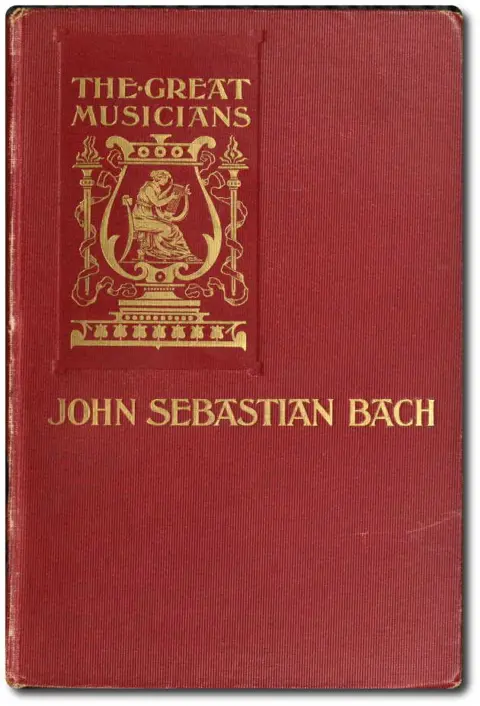
THE CLASSIC COLLECTION · 1882
"Sebastian Bach" by Reginald Lane Poole is a biographical account written in the late 19th century. This work delves into the life and musical contributions of Johann Sebastian Bach, exploring his ancestry, upbringing, and the development of his genius within a family rich in musical tradition. The biography aims to provide an insightful look into the experiences and influences that shaped Bach into one of classical music's most enduring figures. At the start of the text, the author discusses the significance of Bach's family roots, emphasizing the long lineage of musicians in the Bach family dating back to the 16th century. The narrative highlights key ancestors and their contributions to music, showcasing an unbroken legacy that paved the way for Bach's own talents. The author outlines Martin Luther's influence on the Bach family, the musical environment of Thuringia, and Bach's early education under his brother Christoph. This opening sets a foundation for understanding how Bach's familial background and early influences played significant roles in the emergence of his artistic greatness.
Introduction adapted from the source catalogue; source summaries may be automatically generated.
Free to read · English · 36,562 words · No account needed
MAKE TIME FOR A GOOD BOOK
On by default. Untick to stop anonymous reading totals. Each page counts after 10 seconds in view. How this works.
Anonymous counting is on unless you have switched it off.
Wie oft geschieht’s nicht bei dem Rauchen,
Dass, wenn der Stopfer nicht zu Hand,
Man pflegt den Finger zu gebrauchen?
Dann denk’ ich, wenn ich mich verbrannt,
O macht die Kohle solche Pein;
Wie heiss mag erst die Hölle sein.
[46] The two comic cantatas have been published by S. W. Dehn in two editions; the second is issued by C. A. Klemm at Leipzig.
[47] Three are mentioned: one is lost; the second probably dates from Coethen, and is published by the Bach-Gesellschaft, xi. (2) p. 75; and the third had already been used for certainly three occasions before it was adapted to a marriage festival, it seems in 1749.
[48] Possibly we should add a cantata which seems to belong to some
court festival, and exists in private hands at Dresden: Spitta, ii. 450
f.
[49] MS. at Berlin.
[50] Afterwards absorbed into the church cantata, Erhöhtes Fleisch und
Blut.
[51] Afterwards re-written as church cantata No. 35.
[52] The Trauer-Ode is published in the Bach-Gesellschaft, xiii. p. 3.
[53] Of this sort Bach is only known to have written three cantatas, of which two remain. One, Non sà che sia dolore, lies in MS. at Berlin; the other, Amore traditore, is printed by the Bach-Gesellschaft, xi. (2) p. 93.
[54] All but No. 2 have been published at Leipzig by Breitkopf and Haertel: a few others are of doubtful genuineness.
[55] Preface to the twentieth volume, first division, of the
Bach-Gesellschaft.
[56] Vol. ii. pp. 335 ff.
[57] Vol. ii. pp. 338-346.
[58] Sometimes in Italy the oratorio was actually presented with all the scenic accessories of the opera, just as Liszt’s Saint Elisabeth was performed at Weimar, in 1881.
[59] The only change is by way of addition, namely, of two place from S. Matthew xxvi. 75, xxvii. 51, 52, to the distinct invigoration of the somewhat colourless narrative of the fourth Gospel.
[60] G. A. Macfarren, preface to Novello’s edition of the Passion, p.
ii.
[61] In the interval it had apparently formed part of the Passion music written for 1725, of which indeed it remains the solitary relic. See above, p. 89.
[62] This idea had already suggested itself to Telemann, in his S. Mark Passion; and before him it had been used by Heinrich Schuetz in his Seven Words. Another method had been to give Christ’s words to a chorus, as though too great for any single voice: Spitta, vol. ii. pp. 374 f.
Your reading position is saved on this browser. Take it to another device with a library code. Reading pages adapt to text, rather than matching a printed edition.
BEHIND THE BOOK
This eBook is for the use of anyone anywhere in the United States and most other parts of the world at no cost and with almost no restrictions whatsoever. You may copy it, give it away or re-use it under the terms of the Project Gutenberg License included with this eBook or online at www.gutenberg.org. If you are not located in the United States, you will have to check the laws of the country where you are located before using this eBook. Read the source licence.
The original source file, including credits and licence, is retained by this library. Request an original-format copy at no charge. Please include the book title and Project Gutenberg identifier #46076.
KEEP YOUR CURIOSITY GOING
Charles G. (Charles Griffith) Ross
Hannah Webster Foster

Emily Lawless
Edwin Hamlin Carr

Charles De Lano Hine
Andrew Ure