
The Writing of News A Handbook with Chapters on Newspaper Correspondence and Copy Reading
Charles G. (Charles Griffith) Ross
THE CLASSIC COLLECTION · 1882
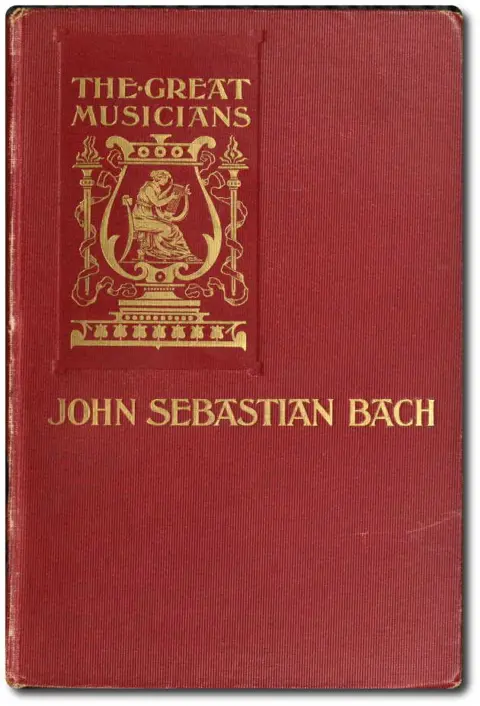
"Sebastian Bach" by Reginald Lane Poole is a biographical account written in the late 19th century. This work delves into the life and musical contributions of Johann Sebastian Bach, exploring his ancestry, upbringing, and the development of his genius within a family rich in musical tradition. The biography aims to provide an insightful look into the experiences and influences that shaped Bach into one of classical music's most enduring figures. At the start of the text, the author discusses the significance of Bach's family roots, emphasizing the long lineage of musicians in the Bach family dating back to the 16th century. The narrative highlights key ancestors and their contributions to music, showcasing an unbroken legacy that paved the way for Bach's own talents. The author outlines Martin Luther's influence on the Bach family, the musical environment of Thuringia, and Bach's early education under his brother Christoph. This opening sets a foundation for understanding how Bach's familial background and early influences played significant roles in the emergence of his artistic greatness.
Introduction adapted from the source catalogue; source summaries may be automatically generated.
Free to read · English · 36,562 words · No account needed
MAKE TIME FOR A GOOD BOOK
On by default. Untick to stop anonymous reading totals. Each page counts after 10 seconds in view. How this works.
Anonymous counting is on unless you have switched it off.
4. A Prelude in C (printed among the organ works, series v. 8. 3), and two sets of twelve and six little preludes for beginners (200, pp. 3, 14).
5. Five Fugues, in C minor, two in C, and two in D minor (200, pp.
20, 22, 24; 212, pp. 3, 5).
6. Four Preludes and Fugues in D minor, E minor, and two in A minor (200, pp. 26, 28, 33; 207, p. 36).
C. Leipzig Period.
Two Fantasias and Fugues in A minor and C minor (208, p. 22; 207, p. 32 and 212, p. 22, the two parts are separated in the edition).
To this list must be added the two sets of inventions (201) written at Coethen; and the four great Duets (208 p. 36) in which the idea of the invention (or sinfonia) is treated on a much larger scale.[27] The duets were written at Leipzig, and it has always been claimed that no skill could possibly add a third real part to them.
In a similar intermediate position stand the two sets of Variations, one in A minor, a Weimar composition, headed alla maniera Italiana (215, p. 10), the other a great series of thirty variations in G, of which notice will be taken in connexion with Bach’s life at Leipzig (209).
The Suites begin at Coethen with the six so-called French Suites (202) and three single sets which probably belong together (214, pp. 18, 26, 32). A solitary suite, in F, bears traces of having been written at Weimar (215, p. 25). At Leipzig Bach produced six Great Suites, known as the English (203, 204), and an equal number of sets of Partitas (205, 206). Another partita of the same period, in B minor, is known from its opening as the French Overture (208, p. 4).[28]
At Coethen Bach also wrote three sonatas, in A minor, C, and D minor (213, pp. 2, 16, 24), with a fourth which remains only a fragment (212, p. 18).[29] These sonatas, the title being to some extent interchangeable with suite, have little in common with the form to which Bach’s son Philipp Emanuel, Haydn, and Mozart (Beethoven can of course not come into the comparison) developed it. The parent of this exists also among Bach’s works, but it has a different name, being distinguished as the Italian Concerto (207, p. 4). It is remarkable that it should bear a designation properly true of an orchestral composition, as though in prevision of the unlimited development of which the form was susceptible.[30] But the feeble internal resources of the clavichord, Bach’s chosen instrument for study—the harpsichord was too hard, and the infant pianoforte too coarse for him—prevented him from himself following up the conception. He preferred to write music which was independent of so imperfect an exponent; and his clavichord works are characterised by freedom and delicacy of melody, infinite fancy, and, as we see specially in his fugues, the fullest solidity and richness of structure, rather than by any effects which need a responsive sympathy in the instrument. It is as such that we ought to judge them, however much their life is broadened by performance on the piano.
Your reading position is saved on this browser. Take it to another device with a library code. Reading pages adapt to text, rather than matching a printed edition.
BEHIND THE BOOK
This eBook is for the use of anyone anywhere in the United States and most other parts of the world at no cost and with almost no restrictions whatsoever. You may copy it, give it away or re-use it under the terms of the Project Gutenberg License included with this eBook or online at www.gutenberg.org. If you are not located in the United States, you will have to check the laws of the country where you are located before using this eBook. Read the source licence.
The original source file, including credits and licence, is retained by this library. Request an original-format copy at no charge. Please include the book title and Project Gutenberg identifier #46076.
KEEP YOUR CURIOSITY GOING
Charles G. (Charles Griffith) Ross
Hannah Webster Foster

Emily Lawless
Edwin Hamlin Carr

Charles De Lano Hine
Andrew Ure