
The Writing of News A Handbook with Chapters on Newspaper Correspondence and Copy Reading
Charles G. (Charles Griffith) Ross
THE CLASSIC COLLECTION · 1882
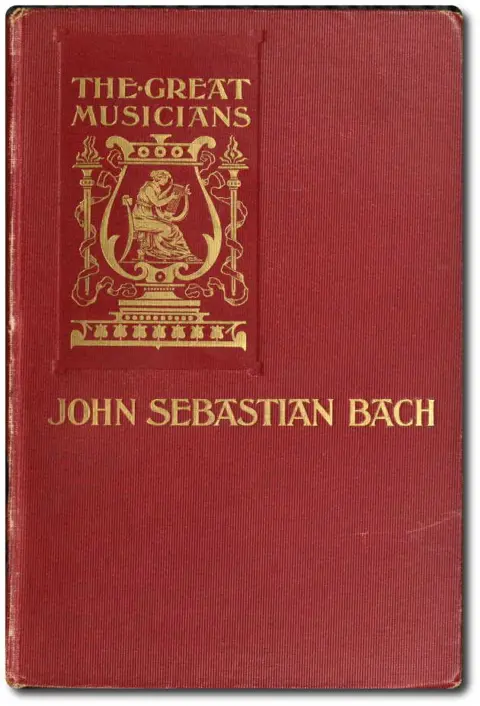
"Sebastian Bach" by Reginald Lane Poole is a biographical account written in the late 19th century. This work delves into the life and musical contributions of Johann Sebastian Bach, exploring his ancestry, upbringing, and the development of his genius within a family rich in musical tradition. The biography aims to provide an insightful look into the experiences and influences that shaped Bach into one of classical music's most enduring figures. At the start of the text, the author discusses the significance of Bach's family roots, emphasizing the long lineage of musicians in the Bach family dating back to the 16th century. The narrative highlights key ancestors and their contributions to music, showcasing an unbroken legacy that paved the way for Bach's own talents. The author outlines Martin Luther's influence on the Bach family, the musical environment of Thuringia, and Bach's early education under his brother Christoph. This opening sets a foundation for understanding how Bach's familial background and early influences played significant roles in the emergence of his artistic greatness.
Introduction adapted from the source catalogue; source summaries may be automatically generated.
Free to read · English · 36,562 words · No account needed
MAKE TIME FOR A GOOD BOOK
On by default. Untick to stop anonymous reading totals. Each page counts after 10 seconds in view. How this works.
Anonymous counting is on unless you have switched it off.
[11] Bach’s appointment is dated 14th June, 1707. The signatures of three members of the consistory are absent; they offer a pathetic excuse. Their houses had just been burnt to the ground in a great fire that had laid waste much of the town, and they were destitute even of the means of signing their names, hätten keine Feder oder Tinte, wären wegen des Unglücks so bestürzet, dass sie an keine Music dächten; wie es die anderen Herren machten wären sie zufrieden: Spitta, i. 851 f.
[12] The description of the scene, in somewhat sesquipedalian Latin, is quoted by Spitta, i. 801.
[13] Note to Quintilian, Inst. Orat. i. xii. 3, in Spitta ii. 89.
[14] Forkel, Life of J. S. Bach, pp. 30 f., E. T., London, 1820.
[15] The early works for organ have already been enumerated, above pp.
21 f.
[16] An excellent catalogue of this edition is contained in Alfred Doerffel’s Thematisches Verzeichniss, u.s.w., Leipzig, 1867.
[17] He might indeed just go too far, as we may see from the complaints made against Bach when at Arnstadt (above p. 25).
[18] Handel too was a student of Legrenzi, as a motive in one of his
oratorios bears witness.
[19] Mattheson proposed the theme some years later, without stating its derivation, to a candidate for examination on the organ: Spitta, i. 634 f.
[20] This fugue is based upon the G minor violin-sonata, and possibly
was composed at Coethen.
[21] To this period belongs also a fragmentary Fantasia in C minor, preserved in MS. at Berlin.
[22] The inventory of Bach’s property at his death mentions among his books August Pfeiffer’s Anti-Calvinismus. He certainly possessed it at Coethen, as witnesses the inscription on a Clavier-Büchlein written for his second wife.
[23] Their intimate relations may be illustrated by the fact that a child of Bach’s, born in November, 1718, was christened after the Prince and one of his brothers, who with a sister and two courtiers all stood sponsors to the boy.
[24] Bernhard Bach came to occupy his father’s old post at Muehlhausen. He afterwards studied law at Jena, but died there of a fever in 1739.
[25] Spitta, i. 665-669.
[26] A fifth, in A minor, remains in MS. at Berlin.
[27] Dr. Spitta argues in support of its genuineness, and is inclined also to accept another one, at present unpublished, of which he quotes the opening bars: vol. ii. p. 686.
[28] Add to these three detached minuets printed at 216, pp. 30 f.
[29] An early sonata and two capriccios have already been noticed
above, p. 23.
Your reading position is saved on this browser. Take it to another device with a library code. Reading pages adapt to text, rather than matching a printed edition.
BEHIND THE BOOK
This eBook is for the use of anyone anywhere in the United States and most other parts of the world at no cost and with almost no restrictions whatsoever. You may copy it, give it away or re-use it under the terms of the Project Gutenberg License included with this eBook or online at www.gutenberg.org. If you are not located in the United States, you will have to check the laws of the country where you are located before using this eBook. Read the source licence.
The original source file, including credits and licence, is retained by this library. Request an original-format copy at no charge. Please include the book title and Project Gutenberg identifier #46076.
KEEP YOUR CURIOSITY GOING
Charles G. (Charles Griffith) Ross
Hannah Webster Foster

Emily Lawless
Edwin Hamlin Carr

Charles De Lano Hine
Andrew Ure