
The Writing of News A Handbook with Chapters on Newspaper Correspondence and Copy Reading
Charles G. (Charles Griffith) Ross
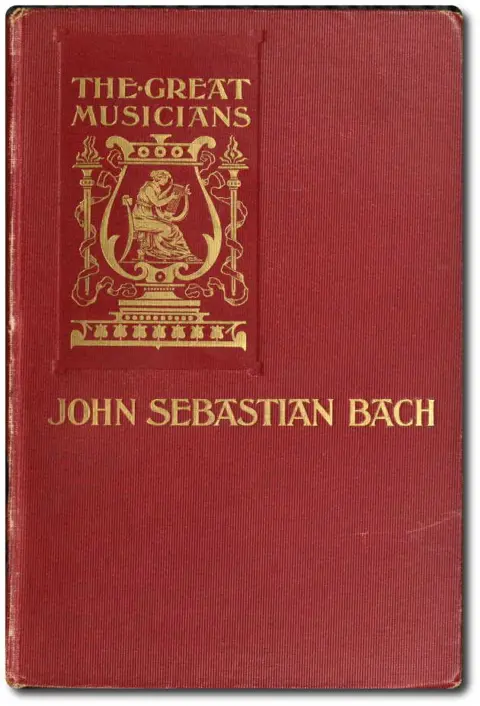
THE CLASSIC COLLECTION · 1882
"Sebastian Bach" by Reginald Lane Poole is a biographical account written in the late 19th century. This work delves into the life and musical contributions of Johann Sebastian Bach, exploring his ancestry, upbringing, and the development of his genius within a family rich in musical tradition. The biography aims to provide an insightful look into the experiences and influences that shaped Bach into one of classical music's most enduring figures. At the start of the text, the author discusses the significance of Bach's family roots, emphasizing the long lineage of musicians in the Bach family dating back to the 16th century. The narrative highlights key ancestors and their contributions to music, showcasing an unbroken legacy that paved the way for Bach's own talents. The author outlines Martin Luther's influence on the Bach family, the musical environment of Thuringia, and Bach's early education under his brother Christoph. This opening sets a foundation for understanding how Bach's familial background and early influences played significant roles in the emergence of his artistic greatness.
Introduction adapted from the source catalogue; source summaries may be automatically generated.
Free to read · English · 36,562 words · No account needed
MAKE TIME FOR A GOOD BOOK
On by default. Untick to stop anonymous reading totals. Each page counts after 10 seconds in view. How this works.
Anonymous counting is on unless you have switched it off.
In leaving Weimar in 1717, Bach ceased for ever to be by calling an organist, though the instrument remained always his chief delight, and once at least he was tempted again to resume it as a profession. As a performer he seems to have grown every year in mature strength. In 1720, when he visited Hamburg, his performance at S. Katharine’s Church was attended by the aged organist, Reincke, and an assemblage of many of the principal men of the city. How he impressed Reincke has already been related, and no doubt it was partly the enthusiasm with which he was greeted that made him view Hamburg as a congenial home for him. An organistship was vacant at one of the other churches there, and Bach directly offered himself for the place. He had to leave before the trial of the candidates took place, but was so eager for the appointment that he wrote from Coethen to repeat his willingness to accept it. The post as it turned out, was given to the man who paid the highest premium, and Mattheson was not the only man in Hamburg who expressed indignation at the well-to-do tradesman’s son, who could prelude better with dollars than with fingers, being preferred to the great virtuoso whose mastery excited the admiration of every one. Neumeister, who was chief preacher of the church, took occasion to remark in a sermon just after, that he was sure enough that if one of the angels who sang at Bethlehem were to come down from heaven and play divinely and desire to be organist of S. James’s, nevertheless if he had no money he might as well fly back again straight.
There are constant and innumerable proofs, besides the few we have noticed, of the impression Bach made as an organist: not the least striking among these is a note by Gesner, with whom Bach was closely connected in later years at Leipzig, illustrating a musical passage in Quintilian. After describing in vigorous rhetoric the almost superhuman powers of his friend, he adds, Though none can surpass me in my support of the ancients I opine that many Orpheuses and twenty Arions are comprehended singly in my Bach and any, if such there be, like to him.[13] The characteristics which gave Bach his quite unique position as an organist are partly those of an extraordinary originality in the application of the mechanical resources of the instrument. How minutely he knew its structure is shewn by the frequency with which he was chosen, almost from boyhood, to pronounce upon the necessity and the detail of repair in organs, and to judge the success of the result. His arrangement of stops before he played was so singular as to make connoisseurs absolutely incredulous of the possibility of so producing harmonious combinations, but when he began the doubt was changed into amazement at the swiftness, the precision, and the power of his movements both of feet and hands. If, however, a by-stander expressed astonishment, he would silence him with quiet modesty. There is nothing to wonder at in that, he would say: you have only to touch the right key at the right time and the instrument plays itself. As a rule he gave the pedal a real part of its own, often of incredible difficulty; and by this means he left his hands free to develop the theme in the broadest manner, and to apply the stops, each as it appeared most appropriate and characteristic, with wonderful insight and ingenuity. He liked also to use the pedal to announce a tenor part whenever (as was the case at Weimar) he could find a four-foot register. Of difficulties he seemed unconscious, and this was equally true when he was elaborating a simple bass or a chorale, or improvising a fugue, as when he was playing from a written score. Indeed Forkel, who knew Bach’s sons, relates that “his unpremeditated voluntaries on the organ, where nothing was lost in writing down, are said to have been still more devout, solemn, dignified, and sublime,” than those which stand in record of his supreme command of the instrument. Forkel instances Bach and the son to whom his gifts were transmitted in a special measure, Wilhelm Friedemann, as solitary examples of consummate skill equally on clavichord and organ. “Both,” he says, “were elegant performers on the clavichord; but when they came to the organ, no trace of the harpsichord-player was to be perceived. Melody, harmony, motion, &c., all was different, that is, all was adapted to the nature of the instrument and its destination. When I heard Will. Friedemann on the harpsichord, all was delicate, elegant, and agreeable. When I heard him on the organ, I was seized with reverential awe. There, all was pretty; here, all was grand and solemn. The same was the case with John Sebastian, but both in a much higher degree of perfection. William Friedemann was here too but a child to his father, and most frankly concurred in this opinion.”[14]
Your reading position is saved on this browser. Take it to another device with a library code. Reading pages adapt to text, rather than matching a printed edition.
BEHIND THE BOOK
This eBook is for the use of anyone anywhere in the United States and most other parts of the world at no cost and with almost no restrictions whatsoever. You may copy it, give it away or re-use it under the terms of the Project Gutenberg License included with this eBook or online at www.gutenberg.org. If you are not located in the United States, you will have to check the laws of the country where you are located before using this eBook. Read the source licence.
The original source file, including credits and licence, is retained by this library. Request an original-format copy at no charge. Please include the book title and Project Gutenberg identifier #46076.
KEEP YOUR CURIOSITY GOING
Charles G. (Charles Griffith) Ross
Hannah Webster Foster

Emily Lawless
Edwin Hamlin Carr

Charles De Lano Hine
Andrew Ure