
Last letters from the living dead man
David Patterson (Spirit) Hatch
THE CLASSIC COLLECTION · 1909
"Schopenhauer" by Thomas Whittaker is a philosophical analysis written in the early 20th century. This work focuses on the life and ideas of Arthur Schopenhauer, who is often regarded as one of the most significant philosophical writers of his time, recognized for his unique perspective on topics like will, knowledge, and aesthetics. The book likely delves into the complexities of Schopenhauer’s philosophical doctrines, particularly his views on pessimism and the nature of reality as driven by the will. The opening of the book introduces Arthur Schopenhauer as a pivotal figure in philosophy, highlighting his unique literary skills alongside his philosophical insights. It begins with a brief overview of his life, education, and the initial reception of his work, emphasizing that he was more than just a writer; he grappled deeply with fundamental problems in philosophy, particularly concerning evil, suffering, and the quest for knowledge. Schopenhauer's philosophy is introduced as one that combines elements of Eastern philosophies with a critical stance on Western thought, particularly regarding the idea that the tragedy of existence can only be transcended through a form of redemption from one’s desires and the denial of the will to live. This sets the stage for a detailed exploration of his ideas, laying a foundation for later discussions on Schopenhauer’s theories of knowledge, metaphysics, ethics, and aesthetics.
Introduction adapted from the source catalogue; source summaries may be automatically generated.
Free to read · English · 19,404 words · No account needed
MAKE TIME FOR A GOOD BOOK
On by default. Untick to stop anonymous reading totals. Each page counts after 10 seconds in view. How this works.
Anonymous counting is on unless you have switched it off.
Schopenhauer is not one of the philosophers who have founded a school, though he has had many disciples and enthusiastic admirers. The pessimism that was for a time a watchword with certain literary groups has passed as a mode, and his true significance must be sought elsewhere. Of the thinkers who have followed him in his pessimism, two indeed stand out as the architects of distinct systems, Eduard von Hartmann and Philipp Mainlaender (both already incidentally referred to); but while they are to be classed unquestionably as philosophers, their systems contain an element that their master would have regarded as mythological. Schopenhauer declared as clearly as any of the Greeks that the phenomenal world is without beginning and without end. Kant's positing of an 'antinomy' on this point he regarded as wholly without rational justification. What Kant calls the 'antithesis,' namely, the infinite series, can be logically proved for phenomena. The 'thesis,' which asserts a beginning in time, is defended by mere fallacies. Now Hartmann and Mainlaender both hold, though in different fashions, that there is a world-process from a beginning to an end, namely, the extinction of consciousness. This is the redemption of the world. Their affinity, therefore, seems to be with the Christian Gnostics rather than with the pure philosophers of the Greek tradition, continued in modern times by Bruno, Spinoza, and Schopenhauer.
Whatever may be thought of the pessimism by which Schopenhauer's mood is distinguished from that of his precursors, few will fail to recognise that special doctrines of his system contain at least a large portion of truth. His theories of Art, of Genius, and of Love are enough to found an enduring reputation for any thinker, even if there were nothing else of value in his writings. But there is much else, both in systematic construction and in the illumination of detail. I have been inclined to put forward first of all the translation into idealistic terms of the universal sentiency held by the Ionian thinkers to be inherent in the primordial elements of nature. While they viewed the world as an objective thing having psychological qualities, Schopenhauer, after the long intermediate process of thought, could treat it as phenomenal object with a psychological or subjective essence. For both doctrines alike, however, mind or soul is immanent. Still, it must be allowed that a difference remains by which Schopenhauer was even more remote than they were from the later Greek idealism. As they were not materialists, so they did not exclude reason from the psychical properties of their substances. Schopenhauer, while he rejected the materialism of their ancient and modern successors alike, took the step of formally derationalising the elements of mind. This, no doubt, is unsustainable ultimately, if reason is ever to emerge from them. Yet the one-sidedness of the position has had a peculiar value in combating an equally one-sided rationalistic idealism. This is recognised by clear-sighted opponents. And Schopenhauer's calling the non-rational or anti-rational element in the world 'will' helps to make plainer the real problem of evil. There is truth in the Hegelian paradox that 'pessimism is an excellent basis for optimism.' An optimist like Plotinus saw that, even if good comes of evil, the case of the optimist must fail unless evil can be shown to be a necessary constituent of the world. The Platonic and Neo-Platonic 'matter,' a principle of diremption or individuation, like time and space for Schopenhauer, was an attempt to solve this problem; but something more positive seemed to be needed as the source of the stronger manifestations of evil. To the strength of these Plato drew attention in a passage (Republic, x. 610[5]) where it is acknowledged that injustice confers a character of vitality and sleeplessness upon its possessor. In the notion of a blind and vehement striving, Schopenhauer supplies something adequate; only, to maintain a rational optimism, it must be regarded as a necessary element in a mixture, not as the spring of the whole.
Your reading position is saved on this browser. Take it to another device with a library code. Reading pages adapt to text, rather than matching a printed edition.
BEHIND THE BOOK
This eBook is for the use of anyone anywhere in the United States and most other parts of the world at no cost and with almost no restrictions whatsoever. You may copy it, give it away or re-use it under the terms of the Project Gutenberg License included with this eBook or online at www.gutenberg.org. If you are not located in the United States, you will have to check the laws of the country where you are located before using this eBook. Read the source licence.
The original source file, including credits and licence, is retained by this library. Request an original-format copy at no charge. Please include the book title and Project Gutenberg identifier #38283.
KEEP YOUR CURIOSITY GOING
David Patterson (Spirit) Hatch
Coulson Kernahan

Ralph Waldo Emerson
Frances Wright
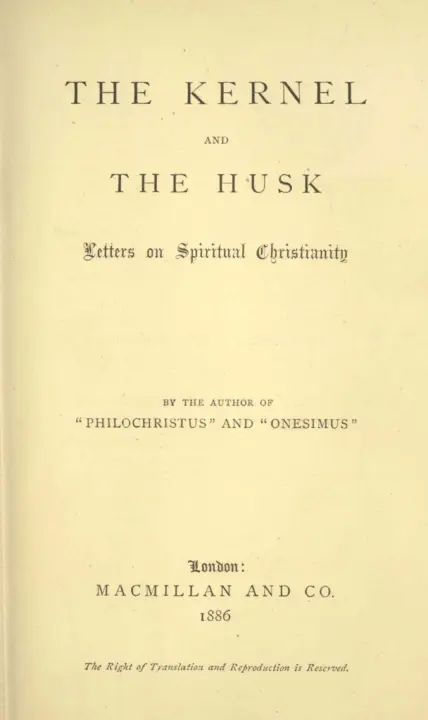
Edwin Abbott Abbott
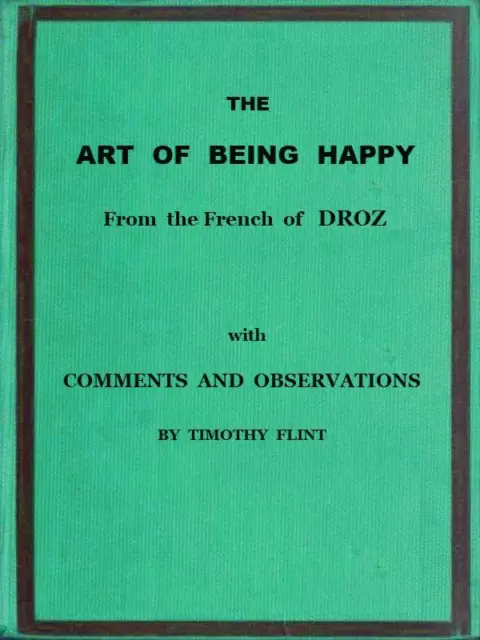
Joseph Droz