THE CLASSIC COLLECTION✦Queer peopleCLASSIC FREE BOOKS
Queer people
Basil Thomson
THE CLASSIC COLLECTION · 1902
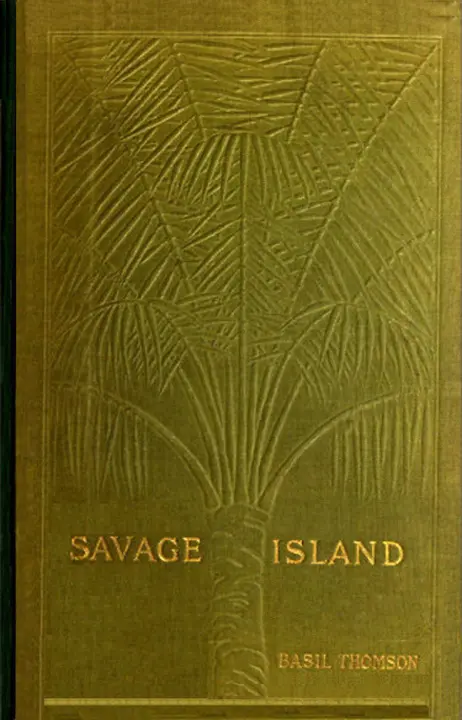
"Savage Island: An Account of a Sojourn in Niué and Tonga" by Basil C. Thomson is a historical account written in the early 20th century. The narrative explores the remote Pacific island of Niué, also known as Savage Island, during a time of transition following the influence of European colonial powers. The text delves into the native culture and the complexities surrounding the relationship between the islanders and the British Empire, particularly focusing on the people and events leading to the establishment of a British protectorate. The opening of the work sets the stage by providing rich contextual details about Niué and its people, revealing the island's isolation and historical backdrop. It introduces key figures, including King Fataäiki and the current monarch, King Tongia, who navigate their roles amid political and cultural changes influenced by missionaries and European visitors. The narrative captures initial encounters with Europeans, including Captain Cook’s visit and subsequent missionary efforts that bring about both optimism and apprehension among the islanders. Through vivid descriptions and a blend of personal observations, Thomson portrays the evolving identity of the Niuéans as they grapple with the consequences of foreign presence and the desire for security in their sovereignty.
Introduction adapted from the source catalogue; source summaries may be automatically generated.
Free to read · English · 50,101 words · No account needed
MAKE TIME FOR A GOOD BOOK
On by default. Untick to stop anonymous reading totals. Each page counts after 10 seconds in view. How this works.
Anonymous counting is on unless you have switched it off.
Punctually at ten next morning we made our official landing, taking with us Her Majesty's presents to the King of Tonga--her portrait and a sword of honour inscribed with his name. The kodak representations of our procession were not flattering, but the large crowd of Tongans in the public square was too much preoccupied to perceive the humour in the show. For after passing the guard of honour on the wharf, we had to skirt the flagstaff, and we were told afterwards that, according to Mr. Baker, we should halt there and run up the Jack in place of the Geneva cross that fluttered aloft. But we passed the fatal spot, to the evident relief of the natives sitting on the grass and the disappointment of the Europeans who had their kodaks ready levelled.
The entire Tongan army was drawn up in the palace compound as a guard of honour, and its band played our national anthem very creditably as we approached. While the rank and file numbered about thirty, as in my time, I noticed that the roll of officers had increased until they formed a third line nearly as close as that of the men: their uniforms were so spotless and correct that some of my companions mistook them for Europeans. We were ushered into the throne-room, where two rows of chairs were drawn up facing one another, each with a becrowned armchair in the centre. On these, after the first greetings, we took our seats. I knew the room well, and it called up many memories, for here old King George had often received me informally, and all the state functions and receptions of foreign officials, which the old king disliked so heartily and underwent so cheerfully, had taken place. At an earlier date, when Mr. Baker had sought protection in the palace with his family, it had been Mrs. Baker's parlour, and from that epoch dated the fairy lights, wax flowers, and other incongruities. The faces of the king's suite were all familiar, for they had been my own colleagues when I was a Tongan like themselves. There was Fatafehi in his sober suit of black; Kubu, now swelled to the dignity of a sovereign's father-in-law, in a French-looking uniform with a cocked hat; Sateki, greyer and more care-lined than of old, and the two uniformed aides-de-camp, both famous cricketers in my day, but now inclining to obesity. Towering above all was the king, something over six feet in height and so broad in proportion that he cannot weigh much less than twenty stone. His tight uniform tunic, which enhanced his bulk, was covered with orders, which on closer examination proved to be the various classes of some Tongan decoration instituted by himself, designed by a jeweller in Sydney, and not yet bestowed upon lesser men. He has a broad, intelligent, good-humoured face, with black, languid eyes, and a strong family likeness to his kinsman, poor Tukuaho. His manners are scarcely less genial and engaging, though he has not much taste for the society of Europeans, who cannot help feeling in his company qu'il ne montre jamais le fond du sac. Of his intelligence it is enough to say that, though he has never been abroad save for a few weeks spent in Auckland, he speaks English fairly well and reads the English newspapers; that he conducts his own correspondence with a typewriter, and can write Pitman's system of shorthand with facility. Though there are said to be flaws in his nature which prevent him from becoming a strong or popular ruler, he is by no means wanting in character. He has never been tempted by strong liquors, like so many of the Polynesian chiefs; his private life is regular; he has always known how to hold himself aloof from the lower sort of European; and I do not doubt that the insincerity of which he is so generally accused is really due to the desire of pleasing and the dislike of refusing a request. His health is not all that could be desired. Remembering the early death of all his family, until he alone was left to succeed his great-grandfather, we could not regard his stoutness, which had been characteristic of all of them, as a healthy sign, especially when we heard that he only took exercise in the palace compound at the direct order of his doctor. His mother and his uncles had all died of fatty degeneration of the heart when under forty, and none were so stout as he at twenty-seven.
Your reading position is saved on this browser. Take it to another device with a library code. Reading pages adapt to text, rather than matching a printed edition.
BEHIND THE BOOK
This eBook is for the use of anyone anywhere in the United States and most other parts of the world at no cost and with almost no restrictions whatsoever. You may copy it, give it away or re-use it under the terms of the Project Gutenberg License included with this eBook or online at www.gutenberg.org. If you are not located in the United States, you will have to check the laws of the country where you are located before using this eBook. Read the source licence.
The original source file, including credits and licence, is retained by this library. Request an original-format copy at no charge. Please include the book title and Project Gutenberg identifier #43573.
KEEP YOUR CURIOSITY GOING
Wilfrid Scawen Blunt
Wilfrid Scawen Blunt

E. W. (Edgar Watson) Howe
Cécile Tormay

Moritz Busch
John L. Ransom