THE CLASSIC COLLECTION✦Queer peopleCLASSIC FREE BOOKS
Queer people
Basil Thomson
THE CLASSIC COLLECTION · 1902
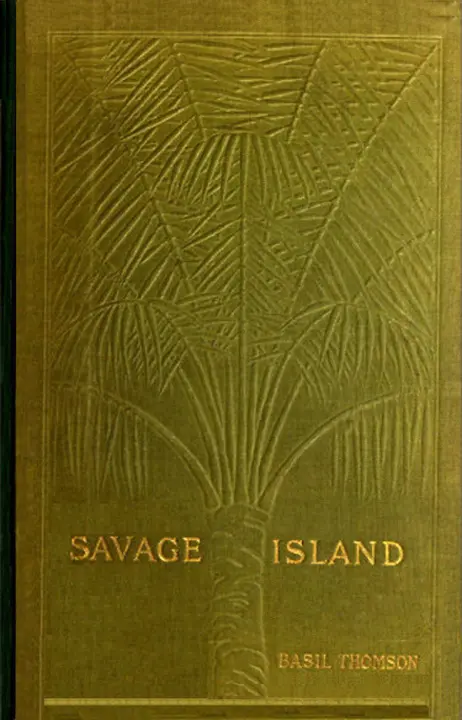
"Savage Island: An Account of a Sojourn in Niué and Tonga" by Basil C. Thomson is a historical account written in the early 20th century. The narrative explores the remote Pacific island of Niué, also known as Savage Island, during a time of transition following the influence of European colonial powers. The text delves into the native culture and the complexities surrounding the relationship between the islanders and the British Empire, particularly focusing on the people and events leading to the establishment of a British protectorate. The opening of the work sets the stage by providing rich contextual details about Niué and its people, revealing the island's isolation and historical backdrop. It introduces key figures, including King Fataäiki and the current monarch, King Tongia, who navigate their roles amid political and cultural changes influenced by missionaries and European visitors. The narrative captures initial encounters with Europeans, including Captain Cook’s visit and subsequent missionary efforts that bring about both optimism and apprehension among the islanders. Through vivid descriptions and a blend of personal observations, Thomson portrays the evolving identity of the Niuéans as they grapple with the consequences of foreign presence and the desire for security in their sovereignty.
Introduction adapted from the source catalogue; source summaries may be automatically generated.
Free to read · English · 50,101 words · No account needed
MAKE TIME FOR A GOOD BOOK
On by default. Untick to stop anonymous reading totals. Each page counts after 10 seconds in view. How this works.
Anonymous counting is on unless you have switched it off.
The judicial preference for moral suasion to overcome contumacy is shared by the Executive. Nothing is done in Niué without the decree of the Fono, a council attended by all the chiefs of villages and heads of families. The Fono is half parliament and half law-court. Nothing is too great or too small for its attention. Has a strong man encroached on a widow's yam patch, it is to the Fono that she makes her plaint. Has a villager of Avatele been rude to a visitor from Tuapa, it is to the Fono that he will be called to answer. Time was when the Fono made laws, but as the only copy of these enactments is in the possession of Mr. Lawes, and the magistrates have managed very well without them for many years past, legislation is a very rare part of its labours. It sometimes happens that a village has refused to obey the decree of the Fono. The Great Council flies into no vulgar passion, talks not of legal penalties, sets no police in motion. It simply announces that the next meeting will be held in the rebellious village. This means more than meets the eye, for councillors are hungry folk, and they do not bring sandwiches with them. No village would dare incur the odium of neglecting to feed its august visitors. The headstrong village knows its doom. Day after day the Fono will blandly hold its sittings, eating its meals with intervals of talk between, and one thing only will prorogue the session--the humble submission of its refractory entertainers. Is it surprising that no standing army is wanted to suppress sedition in Niué?
When I asked to see the Statute Book, Mr. Lawes, who combines with his other unofficial functions the duties of Custos Rotulorum, produced a faded sheaf of foolscap paper. It was the only existing copy of the Acts of King Fataäiki, and it was doubtful whether any of the magistrates, who administered the code from memory, knew of its existence. It was simple in the extreme. Theft and adultery were to be punished with labour on the roads; for traffic in strong liquor and the sale of land, both absolutely forbidden, no penalties were provided. I would fain have left the law in its nebulous and elastic condition had it not been for the increasing proneness of the Niuéan to remove his neighbour's landmark and--if the naked truth be told--his neighbour's wife. Having with me the Penal Code which I drafted for the Tongans in 1891, I dictated to Mr. Lawes the simplest and the shortest Penal Code that every nation had, providing broadly for every crime in the calendar, with penalties ranging from a fine of a plaited straw hat to a maximum of six months' labour on the roads. The omission was criminal assault upon children--a crime unknown in Niué, Mr. Lawes assured me, though by a strange coincidence, as I heard afterwards, this very crime was committed within a month from the passing of the code. My part of the work was finished in two hours, and I blushed when I accepted the offer of my patient amanuensis to make the translations and fair copies after my departure, and even to persuade King Tongia to the task of commending it to his council--the only legislative body. To quote Mr. Lawes' own words, written six weeks afterwards: "We got the Quarantine Regulations through at Fono on May 1st. At the same time I read the translation of the laws which you wrote out, and suggested that the present would be a fitting time to revise their laws, and, together with those left by you, get all written out and put in force. The proposal was received more cordially than I expected. The patus had two sittings at Alofi. In every case in which they had similar laws to those left by you they voted for the mena fou in preference to the old. I wrote out all on which they were unanimous, and at the Fono at Tuapa to-day they have passed them by show of hands, and got the king's signature affixed. The late king was an intelligent, shrewd man, but I could not get him to do what Tongia has now done. There was a little hesitation in substituting work in almost every case for fines. The constables shrugged their shoulders at six or three months on the roads, and no pay. We advised them to pass the law and arrange afterwards about some remuneration for constables. For feeding the prisoners for the longer terms of labour they have agreed to let them off two days a week, to work for themselves and get food. In addition to fines, they have decided upon a sixpenny poll-tax per annum for man and wife and sons up to the age of going away in ships: unmarried women and girls exempt. The beginning of taxes in Savage Island! What will it grow to?"
Your reading position is saved on this browser. Take it to another device with a library code. Reading pages adapt to text, rather than matching a printed edition.
BEHIND THE BOOK
This eBook is for the use of anyone anywhere in the United States and most other parts of the world at no cost and with almost no restrictions whatsoever. You may copy it, give it away or re-use it under the terms of the Project Gutenberg License included with this eBook or online at www.gutenberg.org. If you are not located in the United States, you will have to check the laws of the country where you are located before using this eBook. Read the source licence.
The original source file, including credits and licence, is retained by this library. Request an original-format copy at no charge. Please include the book title and Project Gutenberg identifier #43573.
KEEP YOUR CURIOSITY GOING
Wilfrid Scawen Blunt
Wilfrid Scawen Blunt

E. W. (Edgar Watson) Howe
Cécile Tormay

Moritz Busch
John L. Ransom