THE CLASSIC COLLECTION✦Queer peopleCLASSIC FREE BOOKS
Queer people
Basil Thomson
THE CLASSIC COLLECTION · 1902
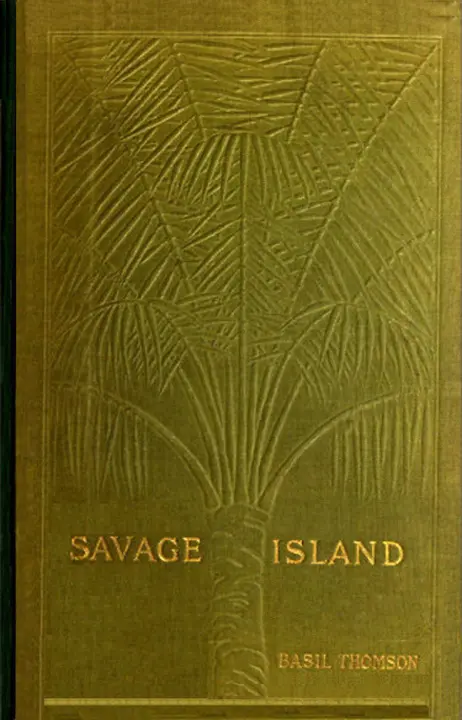
"Savage Island: An Account of a Sojourn in Niué and Tonga" by Basil C. Thomson is a historical account written in the early 20th century. The narrative explores the remote Pacific island of Niué, also known as Savage Island, during a time of transition following the influence of European colonial powers. The text delves into the native culture and the complexities surrounding the relationship between the islanders and the British Empire, particularly focusing on the people and events leading to the establishment of a British protectorate. The opening of the work sets the stage by providing rich contextual details about Niué and its people, revealing the island's isolation and historical backdrop. It introduces key figures, including King Fataäiki and the current monarch, King Tongia, who navigate their roles amid political and cultural changes influenced by missionaries and European visitors. The narrative captures initial encounters with Europeans, including Captain Cook’s visit and subsequent missionary efforts that bring about both optimism and apprehension among the islanders. Through vivid descriptions and a blend of personal observations, Thomson portrays the evolving identity of the Niuéans as they grapple with the consequences of foreign presence and the desire for security in their sovereignty.
Introduction adapted from the source catalogue; source summaries may be automatically generated.
Free to read · English · 50,101 words · No account needed
MAKE TIME FOR A GOOD BOOK
On by default. Untick to stop anonymous reading totals. Each page counts after 10 seconds in view. How this works.
Anonymous counting is on unless you have switched it off.
The European music which have been the foundation of the Lakalaka are Wesleyan hymns, military band marches, and Mozart's Twelfth Mass, which is very well done by the students of the Wesleyan College. Most of the educated natives can read very well in the tonic sol-fa notation, and they have now begun to compose a kind of choral anthem for themselves, which is very much like the Lakalaka without the gestures. They show a great aptitude for keeping their parts, even in complicated counterpoint. That they have a strong natural turn for music is certain; it is the exception to find a native without a voice and a correct ear, and if they lack originality themselves, they have at least a very quick appreciation. I have described elsewhere[A] how the Grand March from Tännhauser took them by storm when it was first performed, albeit imperfectly, by the king's band.
[Music: LAKALAKA.
by FINEASE FUJI of MUA]
[12] The Diversions of a Prime Minister.
Abduction, 108
Adultery, the punishment for, 105
Aitutaki, 90
-- teachers, 73
Alofi, 63, 69, 82, 93, 113, 115, 147;
arrival at, 6, 10;
the cottages of, 14;
church of, 18, 35;
a council at, 23 et seq.;
types of physiognomy at, 88
Amosa, the Samoan teacher, 77
Apia, 4
Architecture, native, 16-18
Asibeli Kubu, 160
Ata, 201, 202
-- family, the, death portent of, 197, 201
Atatá, the islet of, 152
Avatele, 72, 77, 147;
the people of, 89, 90;
the headman of, 122
Aylen, Captain, 190, 191
Baker, Shirley Waldemar, 160 et seq., 167, 168, 175,
181, 183, 200, 216
Bea, 194, 195
Beauty, the Tongan ideal of, 203
Bell, Mr., 67
Blue-jackets, the political influence wielded by, 124
"Broom Road," the, 106
Bubonic plague, 114
Burial customs, 50, 51
Calliope, H.M.S., 190
Camden, the, 75
Camping and Tramping in Malaya, H. Rathbone's, 100 (footnote)
Cannibalism, 102
Catacombs, ancient, 51
Cator, Captain, 80
Celt, a curious stone, 216
Chincha Islands, the, 81
Circumcision, the practice of, 92
Cloudy Bay, a native fight in, 131
Cook, Captain, 127, 130;
landing of, in Niué, 69, 70;
a relic of, 150, 205;
native traditions of his visit to Tonga, 206
Cook's Voyages, 220
Copra, trade in, 56 et seq.;
manufacture of, 58, 61;
price of, 61;
use of, 62
Crawshaw, Captain, 211
Crime, an unknown, 113
Crime and its punishment, 103 et seq.
Crook, Mr., 75
Cruise of H.M.S. "Fawn," The, 80 (footnote)
Custom, a unique, 92
Dance, a native, 119, 120
Disease, native fear of, 75, 76;
introduced by whalers, 78
Diseases of the natives, 133 et seq.
"Dongai," 100
Duel, a mimic, 121
Duff, the, 75, 105
Dunedin, the Bishop of, 162
Earth, tradition of the peopling of the, 84
Eaves-dropping, 208
Elephantiasis, cases of, 176
English, Mr., 131
Entertainment, a native, 117 et seq.
Erskine, Captain, visit of, to Niué, 77
European merchants, 209
Evil spirits, belief in, 99
Fakafolau, the practice of, 102
Falcon Island, 183
Fao, 86, 87
Fataaki, King, 2, 3, 35, 36 (footnote)
Fatafehi, 157, 168, 171, 182, 189, 214, 216
-- family, death portent of, 197
Favourite, H.M.S., 194, 195
Fawn, H.M.S., 80
Feletoa, fortress, 191, 193
Fiji, 94, 100;
the Mathuata province in, 95;
medical officers in, 98;
warriors of, 131;
concubitancy in, 135;
land tenure in, 138
Fijian architecture, 16, 17
Finau, George, 185, 190, 191
-- Ulukalala, 189, 191-3
Flies, swarms of, 140
Flood, Mr., 50; his store, 55
Fono, the, 37, 111, 112
Fornander, 91
Your reading position is saved on this browser. Take it to another device with a library code. Reading pages adapt to text, rather than matching a printed edition.
BEHIND THE BOOK
This eBook is for the use of anyone anywhere in the United States and most other parts of the world at no cost and with almost no restrictions whatsoever. You may copy it, give it away or re-use it under the terms of the Project Gutenberg License included with this eBook or online at www.gutenberg.org. If you are not located in the United States, you will have to check the laws of the country where you are located before using this eBook. Read the source licence.
The original source file, including credits and licence, is retained by this library. Request an original-format copy at no charge. Please include the book title and Project Gutenberg identifier #43573.
KEEP YOUR CURIOSITY GOING
Wilfrid Scawen Blunt
Wilfrid Scawen Blunt

E. W. (Edgar Watson) Howe
Cécile Tormay

Moritz Busch
John L. Ransom