
In the Name of the People
Arthur W. Marchmont
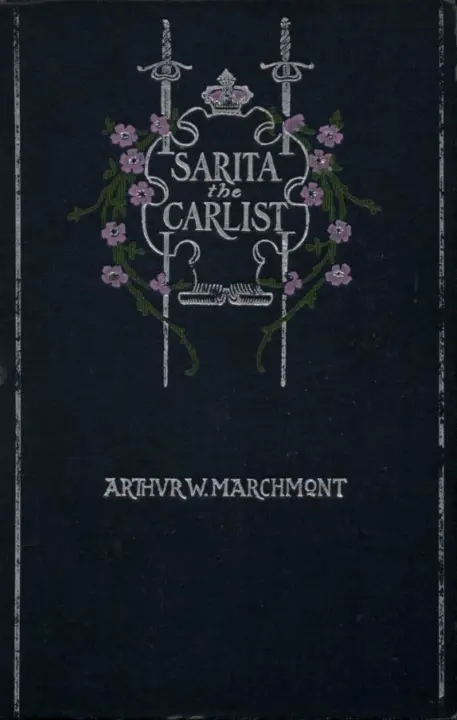
THE CLASSIC COLLECTION · 1902
"Sarita, the Carlist" by Arthur W. Marchmont is a novel written in the early 20th century. The story revolves around Ferdinand Carbonnell, who finds himself embroiled in the complicated political intrigues of Spain as he navigates familial relationships and the dangerous world of the Carlists. The narrative suggests a rich blend of romance, political drama, and personal conflict as Ferdinand encounters his cousin Sarita Castelar and must grapple with unexpected familial obligations and a tumultuous past. The opening of the novel introduces Ferdinand Carbonnell, who faces the repercussions of a woman’s preference as his family plots for a match between him and a wealthy widow. Suddenly thrust into a diplomatic role, he discovers a deeper familial connection to the Quesadas in Madrid and is drawn into a web of political secrecy and familial history, including the troubling legacy of his uncle. Shortly after his arrival, he is mistaken for a Carlist leader and nearly suffers serious consequences due to a case of mistaken identity. It is Sarita Castelar, the stunning cousin he meets, who rescues him from a dire situation, hinting at their shared family ties and the looming political machinations that will entwine their fates. The tension between personal aspiration and political loyalty sets the stage for this engaging tale of love, loyalty, and upheaval.
Introduction adapted from the source catalogue; source summaries may be automatically generated.
Free to read · English · 118,996 words · No account needed
MAKE TIME FOR A GOOD BOOK
On by default. Untick to stop anonymous reading totals. Each page counts after 10 seconds in view. How this works.
Anonymous counting is on unless you have switched it off.
"I knew there was something. What is it? Tell us that, Lord Glisfoyle. I beg and pray of you, say what it is," cried Dolores, in a tone of fervent entreaty.
"It is useless even to name it. It is nothing less than the undoing of all this wilful and unholy persecution of the Carlists--wilful and unholy because undertaken for the sake of furthering, not the welfare of Spain, but your brother's ambition."
"It is not impossible. I am sure it is not," she exclaimed. "You can do anything, Sebastian; while your influence is what it is, you can do anything. Say that this shall be done, and Lord Glisfoyle will leave Spain--I know he will--and give up these documents you fear so much."
They were the mere wild, idle words of a distracted woman, the cry of a true heart torn asunder by the vehemence of emotion.
To my surprise, her brother did not instantly repudiate them, however, but sat with pent, frowning brows in deep thought for a moment.
"Would you go alone?" he asked then, without relaxing the stern, set
expression of face.
"Do you mean would anything ever make me consent to see Sarita Castelar
your wife?"
"Would you go alone?" he repeated, in the same tone.
"Nothing would make me consent to that," I replied, answering my own question. "And nothing will ever induce me not to hold you responsible for her safety."
He heard me without a sign, and again buried himself in his thoughts. Then he pushed his chair back, rose, and went to the door.
"Leave us a few minutes, Dolores," he said, still in the same set, even tone. "It is possible that we may yet arrive at an understanding."
She looked at him in fear, then at me, doubtingly, and again back at
him.
"No, I cannot leave you. I--I dare not."
"Leave us, Dolores. I shall not murder Lord Glisfoyle."
She still hesitated and lingered, but at length yielded, saying as she
passed me--
"I shall see you again?"
I bowed, but said nothing; I was too full of surprise at the turn things were taking, and too thoughtful, wondering what was to come next.
Quesada held the door while his sister passed out, and closed and locked it after her, and turned back to his table.
"We are now quite alone, Lord Glisfoyle, and can speak plainly. You love Sarita Castelar, and hope to make her your wife?"
"I decline to discuss her with you, Senor Quesada."
"Well, then, I tell you she is pledged to marry me, and I will suffer no man on earth to take her from me."
Your reading position is saved on this browser. Take it to another device with a library code. Reading pages adapt to text, rather than matching a printed edition.
Arthur W. Marchmont
Arthur W. Marchmont
Arthur W. Marchmont
Arthur W. Marchmont
BEHIND THE BOOK
This eBook is for the use of anyone anywhere in the United States and most other parts of the world at no cost and with almost no restrictions whatsoever. You may copy it, give it away or re-use it under the terms of the Project Gutenberg License included with this eBook or online at www.gutenberg.org. If you are not located in the United States, you will have to check the laws of the country where you are located before using this eBook. Read the source licence.
The original source file, including credits and licence, is retained by this library. Request an original-format copy at no charge. Please include the book title and Project Gutenberg identifier #53551.
KEEP YOUR CURIOSITY GOING
Cécile Tormay

Moritz Busch
Coulson Kernahan
John L. Ransom

Maurice Baring
Frances Wright