
In the Name of the People
Arthur W. Marchmont
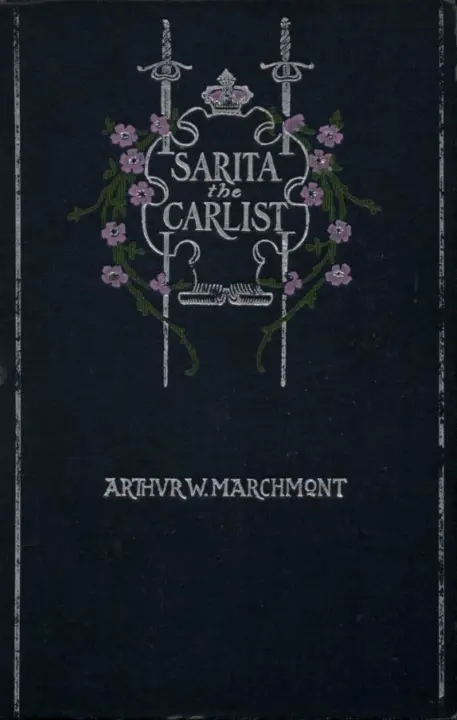
THE CLASSIC COLLECTION · 1902
"Sarita, the Carlist" by Arthur W. Marchmont is a novel written in the early 20th century. The story revolves around Ferdinand Carbonnell, who finds himself embroiled in the complicated political intrigues of Spain as he navigates familial relationships and the dangerous world of the Carlists. The narrative suggests a rich blend of romance, political drama, and personal conflict as Ferdinand encounters his cousin Sarita Castelar and must grapple with unexpected familial obligations and a tumultuous past. The opening of the novel introduces Ferdinand Carbonnell, who faces the repercussions of a woman’s preference as his family plots for a match between him and a wealthy widow. Suddenly thrust into a diplomatic role, he discovers a deeper familial connection to the Quesadas in Madrid and is drawn into a web of political secrecy and familial history, including the troubling legacy of his uncle. Shortly after his arrival, he is mistaken for a Carlist leader and nearly suffers serious consequences due to a case of mistaken identity. It is Sarita Castelar, the stunning cousin he meets, who rescues him from a dire situation, hinting at their shared family ties and the looming political machinations that will entwine their fates. The tension between personal aspiration and political loyalty sets the stage for this engaging tale of love, loyalty, and upheaval.
Introduction adapted from the source catalogue; source summaries may be automatically generated.
Free to read · English · 118,996 words · No account needed
MAKE TIME FOR A GOOD BOOK
On by default. Untick to stop anonymous reading totals. Each page counts after 10 seconds in view. How this works.
Anonymous counting is on unless you have switched it off.
"I was leaving Spain when your men stopped me and brought me to Madrid,"
I said.
"But not alone," he rapped out, sharply.
"No, with the lady who is to be my wife," I retorted.
For a second his hands clenched involuntarily, and he winced, but instantly recovered himself, and spoke calmly.
"That remains to be seen. But why this interview?"
"I have not sought it," I answered curtly, and got up to leave.
"You must not go," cried Dolores.
"My dear Dolores, do not meddle any more."
"Yes, Sebastian, I will. I must speak. Senor Carbonnell--Lord Glisfoyle, I mean--knows your secret plotting in regard to the King; he holds, as you told me, documents which must compromise you, and may ruin you if he can prove they are genuine. These are what you call his weapons. There must be some inducement that can prevail upon him not to use them. Is that not so, Lord Glisfoyle?" she cried, turning to me in deep distress.
"You are forgetting yourself, Dolores. We are not children or women," said the Minister, sternly. "I will have no more of this child's play. You should not have brought Lord Glisfoyle here. Every word you utter but makes your blunder worse; and God knows you have done enough mischief already to satisfy even a woman."
"I asked you a question, Lord Glisfoyle," said Dolores, paying no regard
to his protests.
"A question I find most difficult, I may say impossible, to answer. Your brother knows how he has treated me, and knows also how he would act were our positions reversed. I can say no more."
"But do you mean to use these letters?" she persisted.
"Since obtaining them I have obtained others, and much information. I know the part you have played throughout this business, Senor Quesada,"--I felt it easier to speak to him--"and I shall not rest until I have done my utmost to bring this home to you. In one thing you have wronged your sister. I should not have remained in what you term safe keeping more than a few hours at the utmost; for already there are forces at work for my liberation which even you would find it hopeless to resist. What you term your sister's blunder, therefore--procuring my liberation from the prison--is no more than an anticipation by those few hours of what must have followed."
"That may be. At any rate, you are free, and you owe it to her." This reminder of my obligation to Dolores was the first slight rift in his firmness.
"If it were possible, it would influence my attitude. But nothing can do that--nothing, at least, that you can do."
Your reading position is saved on this browser. Take it to another device with a library code. Reading pages adapt to text, rather than matching a printed edition.
Arthur W. Marchmont
Arthur W. Marchmont
Arthur W. Marchmont
Arthur W. Marchmont
BEHIND THE BOOK
This eBook is for the use of anyone anywhere in the United States and most other parts of the world at no cost and with almost no restrictions whatsoever. You may copy it, give it away or re-use it under the terms of the Project Gutenberg License included with this eBook or online at www.gutenberg.org. If you are not located in the United States, you will have to check the laws of the country where you are located before using this eBook. Read the source licence.
The original source file, including credits and licence, is retained by this library. Request an original-format copy at no charge. Please include the book title and Project Gutenberg identifier #53551.
KEEP YOUR CURIOSITY GOING
Cécile Tormay

Moritz Busch
Coulson Kernahan
John L. Ransom

Maurice Baring
Frances Wright