THE CLASSIC COLLECTION✦My diaries, being a personal narrative of events 1888-1914, Part 2 (1900-1914)CLASSIC FREE BOOKS
My diaries, being a personal narrative of events 1888-1914, Part 2 (1900-1914)
Wilfrid Scawen Blunt
THE CLASSIC COLLECTION · 1926
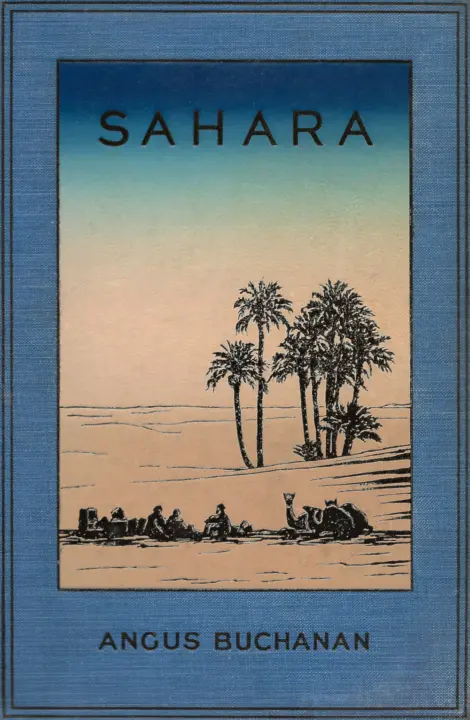
"Sahara" by Angus Buchanan is a travelogue written in the early 20th century. The work chronicles an extensive journey across the Sahara Desert, highlighting the perils and marvels encountered by the author and his companions, including the struggle for survival and the captivating landscapes. Buchanan's dual background as a naturalist and explorer adds depth to his observations of the desert environment and its unique fauna. At the start of "Sahara," the author reflects on his preparation for a major expedition into the vast desert after years of contemplation. He recounts his discussions with an influential military captain that ignited his ambition to explore further into this mystical territory. After navigating the slow bureaucratic process for approval, Buchanan and his companions embark on a treacherous 3,500-mile journey characterized by hardships, scarce resources, and encounters with both the desert's natural beauty and its relentless challenges. The opening portion sets the stage for the extraordinary experiences and rich descriptions of life within the Sahara that unfold as the narrative progresses.
Introduction adapted from the source catalogue; source summaries may be automatically generated.
Free to read · English · 65,282 words · No account needed
MAKE TIME FOR A GOOD BOOK
On by default. Untick to stop anonymous reading totals. Each page counts after 10 seconds in view. How this works.
Anonymous counting is on unless you have switched it off.
And this strength of religion has its political significance. Notwithstanding the French influence, and the venturings of missionaries, in parts that surround the Sahara, I am confident that, throughout the length and breadth of the desert to-day, its scattered peoples have, at heart, only the faith of Islam, and really admit true friendship and allegiance to the Caliph, and to none other. Wherever the wayfarer goes he will find the inner mind of the nomad turn ever to one magic name—“Stombole”—the Turkish centre in Constantinople, and the home of the Caliph.
Meantime, the sun has come completely into view; a great glowing
orb, looking twice the size it will appear when later it is high
in the sky.
The time is 6 a.m. For an hour more we travel in comparative coolness; but by 9 a.m. we are into the full heat of day—that awful, dreaded heat, that constantly torments and sets out, without pity, to subdue and conquer the stoutest. In the desert the sun is master, cruel and remorseless beyond belief, with bleaching blaze that eats up life and kills. For the rest of the day the caravan must pass under the rule of its greatest enemy.
Throughout the morning the camels travel well and the spirit of the men is fairly cheerful. Though there is not much talking among them now, as they sit huddled on their camels with their gowns thrown over their heads as covering from the sun. They know well that it is wise to conserve their strength, for long, weary hours lie ahead.
I scan the caravan as we plod monotonously along.
We have been travelling close on two hundred days, and the ranks are sadly thinned, though the journey is not yet half completed.
There were sixteen natives at the start: now there are only six—Elatu, Mohammed, Sili, Gumbo, Sakari, and Ali. Most of the others have gone through fear of the dangers of the journey, lack of heart for the hard, endless work, physical weakness, and incurable sickness. (Two of the latter, left behind in good hands, to recover, when next heard of, had died).
There had been forty-four camels at the start; now there are but twenty-one. I have long learned to know them by their native names. Those that are with us still are:
“AWENA” =“Wall-eyed, or piebald-eyed.”
“BANRI” =“The one-eyed one.”
“ALLETAT” =“White Belly.”
“ABEROK” =“The dark grey one.”
“KADEDE” =“The thin one.”
“ADIGNAS” =“The white one.”
“TERFURFUS” =“The piebald female.” (A female, because of the T prefixed before the name, which designates sex in the Tamascheq language of the Tuareg nomads of the Sahara).
“KORURIMI” =“The earless one” (because ears damaged).
Your reading position is saved on this browser. Take it to another device with a library code. Reading pages adapt to text, rather than matching a printed edition.
BEHIND THE BOOK
This eBook is for the use of anyone anywhere in the United States and most other parts of the world at no cost and with almost no restrictions whatsoever. You may copy it, give it away or re-use it under the terms of the Project Gutenberg License included with this eBook or online at www.gutenberg.org. If you are not located in the United States, you will have to check the laws of the country where you are located before using this eBook. Read the source licence.
The original source file, including credits and licence, is retained by this library. Request an original-format copy at no charge. Please include the book title and Project Gutenberg identifier #70525.
KEEP YOUR CURIOSITY GOING
Wilfrid Scawen Blunt
Wilfrid Scawen Blunt

E. W. (Edgar Watson) Howe
Cécile Tormay

Moritz Busch
John L. Ransom