THE CLASSIC COLLECTION✦My diaries, being a personal narrative of events 1888-1914, Part 2 (1900-1914)CLASSIC FREE BOOKS
My diaries, being a personal narrative of events 1888-1914, Part 2 (1900-1914)
Wilfrid Scawen Blunt
THE CLASSIC COLLECTION · 1926
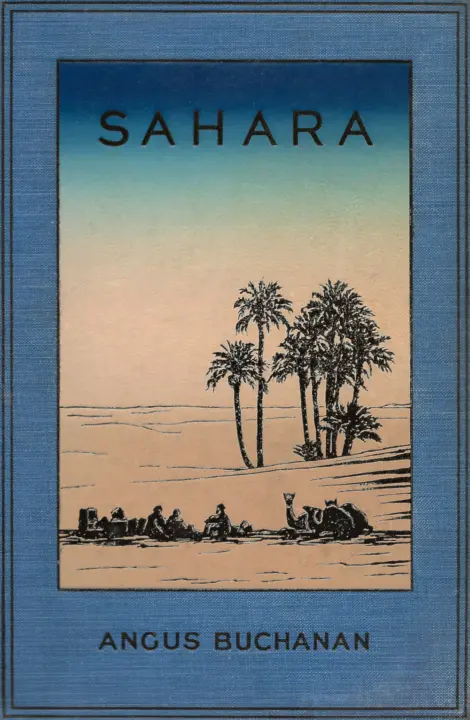
"Sahara" by Angus Buchanan is a travelogue written in the early 20th century. The work chronicles an extensive journey across the Sahara Desert, highlighting the perils and marvels encountered by the author and his companions, including the struggle for survival and the captivating landscapes. Buchanan's dual background as a naturalist and explorer adds depth to his observations of the desert environment and its unique fauna. At the start of "Sahara," the author reflects on his preparation for a major expedition into the vast desert after years of contemplation. He recounts his discussions with an influential military captain that ignited his ambition to explore further into this mystical territory. After navigating the slow bureaucratic process for approval, Buchanan and his companions embark on a treacherous 3,500-mile journey characterized by hardships, scarce resources, and encounters with both the desert's natural beauty and its relentless challenges. The opening portion sets the stage for the extraordinary experiences and rich descriptions of life within the Sahara that unfold as the narrative progresses.
Introduction adapted from the source catalogue; source summaries may be automatically generated.
Free to read · English · 65,282 words · No account needed
MAKE TIME FOR A GOOD BOOK
On by default. Untick to stop anonymous reading totals. Each page counts after 10 seconds in view. How this works.
Anonymous counting is on unless you have switched it off.
But, with the light, comes a lifting of spirits. The men commence to chatter; and someone breaks into hopeful rhythmic song—a love-lilt of a tribe, reminiscent of home-fond memories. Others pick it up, rough-tuned and jazz-fashion, and a gay voice laughs after it has inserted a sly line or two of misquotation to point the words to a comrade’s sweetheart.
And so are rough men wooed to cheerfulness, even in time of stress, by the soft magic hand of morn, and its influence, that resembles the touch of a woman’s caress. For a space, all too short, the caravan lives at its best, careless of aught but the hour.
Meanwhile, the first flush of day creeps on. And soon, away at the sand-end “Edge of the World,” the great golden sun, till now the hidden source of day, blazes suddenly into sight, in the east, shooting coloured shaft-rays in the sky by the very glory of its brilliance.
It is the signal for Mohammedan prayer, and I order the caravan to halt in consideration of the religion of my followers.
All except the sick man, Sili, move out clear of the camels.
Facing the east, where far-off, in another world, lie Mecca and the Shrine of the Prophet, the men remove their sandals and, barefoot, reverently pray.
First they stoop to touch the ground with the palms of the hands, then pass them, dust-begrimed, over the face before they meet again, in an action that resembles washing. Then, standing, the prayer is commenced. Soon, the figures bend down to sit on the sand while continuously muttering softly modulated prayer, and dipping the forehead in the dust in moments of stress, or in gesticulations of respect.
There they sit for a little, stooping anon as before.
Again they rise upright.
Again they sit down. And then a gradual repose sets in.
Finally the prayer dies out restfully, and, by the subtle composure of the figures, the onlooker is conscious that the minds of the natives have settled in peace.
In a little they rise and rejoin the caravan; and the camels move on.
Let no man idly misunderstand or underrate the faith of these peoples of the East. It is a tremendous faith—and no single day may pass without deep worship and thought of Allah. It may be, in the Sahara, the faith of the primitive, the faith of an outdoor people, but it is complete and ever present. And who of us dare say so much of the Christianity of modern civilisation?
Your reading position is saved on this browser. Take it to another device with a library code. Reading pages adapt to text, rather than matching a printed edition.
BEHIND THE BOOK
This eBook is for the use of anyone anywhere in the United States and most other parts of the world at no cost and with almost no restrictions whatsoever. You may copy it, give it away or re-use it under the terms of the Project Gutenberg License included with this eBook or online at www.gutenberg.org. If you are not located in the United States, you will have to check the laws of the country where you are located before using this eBook. Read the source licence.
The original source file, including credits and licence, is retained by this library. Request an original-format copy at no charge. Please include the book title and Project Gutenberg identifier #70525.
KEEP YOUR CURIOSITY GOING
Wilfrid Scawen Blunt
Wilfrid Scawen Blunt

E. W. (Edgar Watson) Howe
Cécile Tormay

Moritz Busch
John L. Ransom