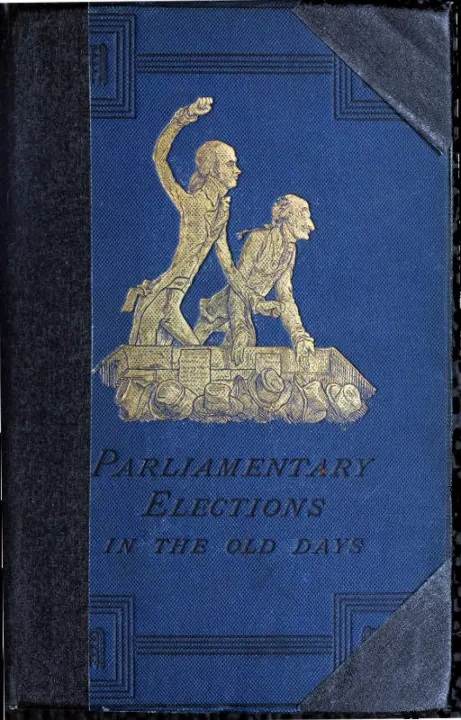
A History of Parliamentary Elections and Electioneering in the Old Days Showing the State of Political Parties and Party Warfare at the Hustings and in the House of Commons from the Stuarts to Queen Victoria
Joseph Grego
THE CLASSIC COLLECTION · 1880
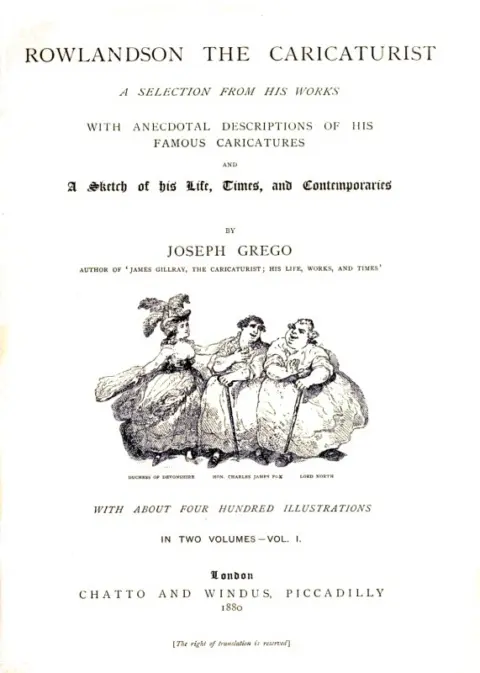
"Rowlandson the Caricaturist; a Selection from His Works. Vol. 2" by Joseph Grego is a comprehensive collection of satirical illustrations and caricatures created by Thomas Rowlandson, written in the late 19th century. This volume includes a range of works that reflect social and political themes from 1800 to 1825, accompanied by anecdotal descriptions of Rowlandson's famous caricatures as well as insights into his life and contemporaries. The book serves as both an art historical account and a commentary on the cultural context of Rowlandson’s time through humor and wit. At the start of the book, readers are introduced to the format that combines the index of the current volume with references to the first volume. This initial section hints at the structure of the book, which contains a chronological summary of Rowlandson's works alongside illustrations that capture the essence of early 19th-century British life, societal norms, humor, and politics. The opening includes a variety of titles and descriptions of the caricatures, showcasing Rowlandson's ability to blend humor with critical societal commentary, as seen in his representations of characters and events from that era. The illustrations aim to provide a vivid window into the past, through both artistic expression and narrative, exemplifying Rowlandson's unique blend of artistry and satire.
Introduction adapted from the source catalogue; source summaries may be automatically generated.
Free to read · English · 166,732 words · No account needed
MAKE TIME FOR A GOOD BOOK
On by default. Untick to stop anonymous reading totals. Each page counts after 10 seconds in view. How this works.
Anonymous counting is on unless you have switched it off.
April 26, 1807. John Rosedale, Mariner. Exhibitor at the Hall of Greenwich Hospital. Etched and published by T. Rowlandson.--Like the companion print, Mrs. Showwell (Feb. 26), the sketch is signed with the initials J. N. Esq. The old sailor Cicerone, who has a pigtail, and wears a long square-cut coat of naval blue, with gold buttons and lace, is pointing out with a cane the mysteries of certain allegorical compositions to the gaping spectators:--
'Here is George, Prince of Denmark, and in the perspective a view of St. Paul's, London, Sir James Thornhill in the wig, &c. &c.'
May 1, 1807. The Pilgrims and the Peas. Woodward del., Rowlandson sc. Published by T. Tegg, 111 Cheapside. One of a series of headings to songs, ballads, &c., published by T. Tegg.--In the illustration to Peter Pindar's Apologue of The Pilgrims and the Peas, the disconsolate sinner, with hard peas in his shoes, is crawling along, doubled up with agony, to the shrine at Loretto, meeting halfway the joyful pilgrim, who has accomplished his penance, 'whitewashed his soul,' and returned from his journey without personal inconvenience, by the exercise of the simplest precaution, as he confesses:--
To walk a little more at ease,
I took the liberty to boil my peas!
May 3, 1807. Scenes at Brighton, or the Miseries of Human Life. Published by A. Berigo, 38 Maiden Lane, Covent Garden.
Plate 1. Beauty, Music, a few thousands, and opportunity given by card tables, often feather the adventurer and prove an easy introduction to the Miseries of Human Life.
Plate 2. Jealousy, rage, disappointment, intrigue, and laughter are here pretty much exemplified, and afford an old Lover a high-seasoned taste of the Miseries of Human Life.
May 6, 1807. Monastic Fare.
And why I'm so plump, the reason I'll tell,
Who leads a good life is sure to live well,
What Baron, or Squire, or Knight of the Shire
Lives half so well as a Holy Friar?
May 6, 1807. Black, Brown, and Fair. Designed by Sir E. Bunbury. Rowlandson sculp. Published by T. Tegg, 111 Cheapside.--An illustration to the lines:--
With Black, Brown, and Fair, I have frolic'd 'tis true, But I never lov'd any, dear Mary, but you.
At the window of a tavern, at Wapping 'Dock Head,' is a bevy of beauties, representing the variations of complexion described by the song-writer. The redundant charms of this collection of beauties are arresting an equally diversified circle of admirers, numbering mulattos, a Chinaman, a Holland skipper, a foreign Jew, and a Virginia nigger.
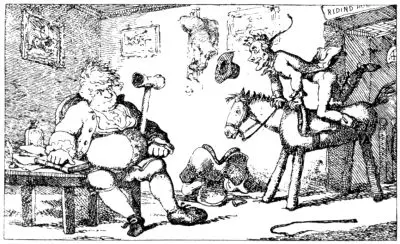
May 6, 1807. The Holy Friar. Designed by Sir E. Bunbury.
Rowlandson, sculp.
Your reading position is saved on this browser. Take it to another device with a library code. Reading pages adapt to text, rather than matching a printed edition.
Joseph Grego
Joseph Grego
BEHIND THE BOOK
This eBook is for the use of anyone anywhere in the United States and most other parts of the world at no cost and with almost no restrictions whatsoever. You may copy it, give it away or re-use it under the terms of the Project Gutenberg License included with this eBook or online at www.gutenberg.org. If you are not located in the United States, you will have to check the laws of the country where you are located before using this eBook. Read the source licence.
The original source file, including credits and licence, is retained by this library. Request an original-format copy at no charge. Please include the book title and Project Gutenberg identifier #45981.
KEEP YOUR CURIOSITY GOING
Cécile Tormay

Moritz Busch
John L. Ransom
Frances Wright
Cécile Tormay

Mabel Potter Daggett