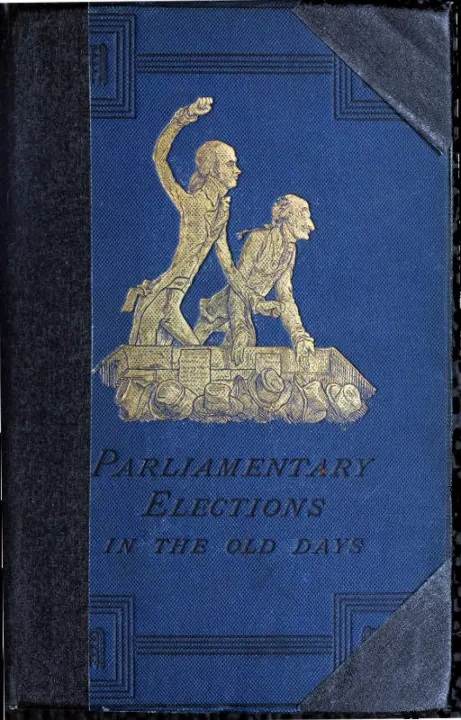
A History of Parliamentary Elections and Electioneering in the Old Days Showing the State of Political Parties and Party Warfare at the Hustings and in the House of Commons from the Stuarts to Queen Victoria
Joseph Grego
THE CLASSIC COLLECTION · 1880
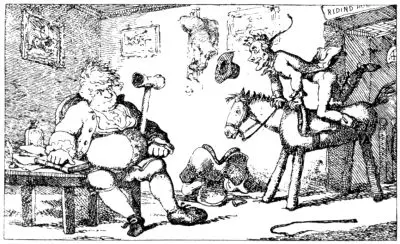
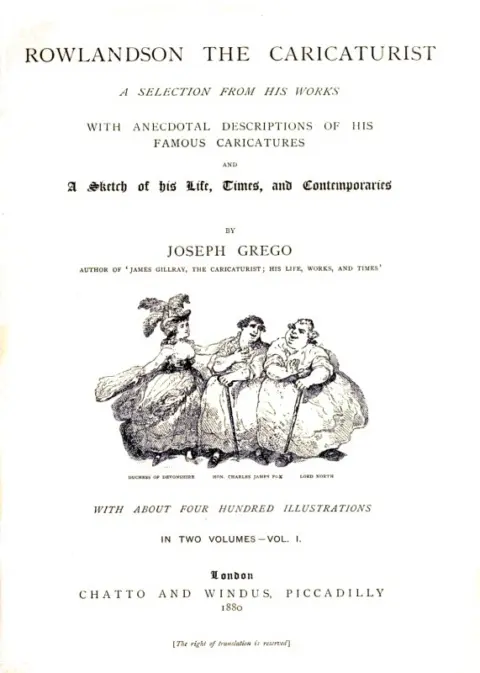
"Rowlandson the Caricaturist; a Selection from His Works. Vol. 2" by Joseph Grego is a comprehensive collection of satirical illustrations and caricatures created by Thomas Rowlandson, written in the late 19th century. This volume includes a range of works that reflect social and political themes from 1800 to 1825, accompanied by anecdotal descriptions of Rowlandson's famous caricatures as well as insights into his life and contemporaries. The book serves as both an art historical account and a commentary on the cultural context of Rowlandson’s time through humor and wit. At the start of the book, readers are introduced to the format that combines the index of the current volume with references to the first volume. This initial section hints at the structure of the book, which contains a chronological summary of Rowlandson's works alongside illustrations that capture the essence of early 19th-century British life, societal norms, humor, and politics. The opening includes a variety of titles and descriptions of the caricatures, showcasing Rowlandson's ability to blend humor with critical societal commentary, as seen in his representations of characters and events from that era. The illustrations aim to provide a vivid window into the past, through both artistic expression and narrative, exemplifying Rowlandson's unique blend of artistry and satire.
Introduction adapted from the source catalogue; source summaries may be automatically generated.
Free to read · English · 166,732 words · No account needed
MAKE TIME FOR A GOOD BOOK
On by default. Untick to stop anonymous reading totals. Each page counts after 10 seconds in view. How this works.
Anonymous counting is on unless you have switched it off.
1816. Bullock's London Museum, Piccadilly.[26]--'Mr. Bullock, having purchased Bonaparte's carriage of Major von Keller, has here exhibited it. It was taken by him at the entrance of the small town of Jenappe, at eleven o'clock on the night of June 18, 1815. A full account of the carriage and its ingenious contents is to be found in the Repository of Arts for February 1816.'
March 31, 1816. The Attempt to Wash the Blackamoor White. In the Whitehall, City of Laputa.--There is no publisher's name on this plate, and the explanation of the subject, a military scandal, is not so clear as could be desired. An officer, dressed as a hussar, is standing in the centre, while being submitted to the whitewashing process; he wears no sword, and is holding a written defence in one hand. Above his head appears an arm, also belonging to an officer, which is menacing the hussar, who is appealing to his friends: 'O save my honour. Rub away, my friend, rub it home. O, 'tis the phantom of a horrid dream.' Another officer, from his uniform apparently in the Guards, is treading on a written 'oath,' and, with a pail of whitewash, is doing his best for the so-called 'Blackamoor,' declaring, 'We'll say nothing about your honour!' Another friend, in a Highland uniform, evidently a person of rank, since he wears a red riband, and has a star on his breast, is trying to obliterate the mark of a kick, which has left an ugly outline of a foot on the white pantaloons of the injured individual, but the impression is ineradicable: 'Deel o' me saul, mon, but the stain of the foot will ne'er come oot.'
1816 (?) Bostonian Electors of Lancashire. Published by W. Holland.
1816. Lady Hamilton at Home, or a Neapolitan Ambassador.--The outline of this subject, which is not without its interest as a contemporary sketch of a celebrated trio, is from an original drawing in the collection of the present writer. There seems some discrepancy about the date, since Sir William Hamilton died in 1803, and the sketch evidently belongs to the latter period of the ambassador's life. Sir William Hamilton, whose collection of antiques formed a valuable addition to the national collection in the British Museum, was, it will be remembered, successful in rendering such services to Admiral Nelson, by his influence with the court of Naples, where he resided as British ambassador, that our naval hero was enabled to refit and victual his fleet entirely, without losing the time which would have been sacrificed in returning to England, and thus contributed in a marked degree to assist Nelson in surprising the French fleet in Aboukir Bay, resulting in the famous victory of the Nile, which first checked the tide of Napoleon's career, crippled the power of France, and finally compelled the armies of the Republic to withdraw from Egypt. Lady Hamilton's exertions with the Queen of Naples, over whom she had gained considerable ascendency, were not without their national importance, although her services were entirely ignored in the lady's last days, at a time when the Government left her without that future provision which Nelson, in falling fighting in his country's cause, and bequeathing her claims as a legacy to the nation, imagined he was securing for the support of his friend, who, it is reported, died in abject poverty, if she did not perish of actual want, as it has been hinted. In Rowlandson's drawing, Lady Hamilton, in classic garb, is watering a plant placed in a classic vase; ancient busts, candelabra, and urns are standing about; the furniture, implements, and accessories are all fashioned after the antique. The caricaturist has taken certain freedoms with the person of the Neapolitan ambassador, and Sir William is travestied as a stout personage, suffering from the gout. Another female figure, also draped after the antique, is touching a lyre, and chanting certain ditties of her own composition; this lady represents Miss Cornelia Knight (an authoress of some repute in her day, whose small notoriety rests on her Continuation of Rasselas, and her Private Life of the Romans)[27] who travelled in the suite of the ambassador with his lady.
Your reading position is saved on this browser. Take it to another device with a library code. Reading pages adapt to text, rather than matching a printed edition.
Joseph Grego
Joseph Grego
BEHIND THE BOOK
This eBook is for the use of anyone anywhere in the United States and most other parts of the world at no cost and with almost no restrictions whatsoever. You may copy it, give it away or re-use it under the terms of the Project Gutenberg License included with this eBook or online at www.gutenberg.org. If you are not located in the United States, you will have to check the laws of the country where you are located before using this eBook. Read the source licence.
The original source file, including credits and licence, is retained by this library. Request an original-format copy at no charge. Please include the book title and Project Gutenberg identifier #45981.
KEEP YOUR CURIOSITY GOING
Cécile Tormay

Moritz Busch
John L. Ransom
Frances Wright
Cécile Tormay

Mabel Potter Daggett