
Two Women, 1862; a Poem
Constance Fenimore Woolson
THE CLASSIC COLLECTION · 1880
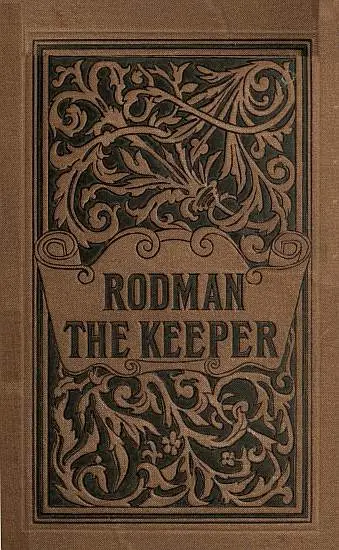
"Rodman the Keeper: Southern Sketches" by Constance Fenimore Woolson is a collection of character-driven sketches written in the late 19th century. The book provides a vivid portrayal of life in the post-Civil War South, particularly focusing on the somber reflections of its main character, John Rodman, who serves as the keeper of a national cemetery. As he navigates his solitude and encounters the memories of the soldiers buried there, the sketches explore themes of loss, duty, and the complex beauty of the Southern landscape." "At the start of the narrative, we are introduced to John Rodman sitting in the doorway of his cottage, reflecting on both his duties as a keeper of the graves of fallen soldiers and the isolation that accompanies them. The cemetery itself is enriched with the memories and stories of those who laid down their lives for their causes, and Rodman is portrayed as a man weighed by both the weight of history and his singular existence amid the ruins of pride and loss. His interactions with local townsfolk reveal an underlying tension between North and South, punctuated by moments of self-reflection and humanity as he tends to the graves of the fourteen thousand soldiers committed to rest there. This opening sets the stage for Rodman's journey through memories, melancholy, and a supreme sense of obligation to honor the fallen."
Introduction adapted from the source catalogue; source summaries may be automatically generated.
Free to read · English · 114,280 words · No account needed
MAKE TIME FOR A GOOD BOOK
On by default. Untick to stop anonymous reading totals. Each page counts after 10 seconds in view. How this works.
Anonymous counting is on unless you have switched it off.
The day appointed was at the end of the next week; Gardis had decided that that would be more ceremonious. "And they are to understand," she said proudly, "that it is a mere dinner of ceremony, and not of friendship."
"Certainly," said Cousin Copeland.
Old Dinah was delighted. Gardis brought out some of the half-year rent money, and a dinner was planned, of few dishes truly, but each would be a marvel of good cooking, as the old family servants of the South used to cook when time was nothing to them. It is not much to them now; but they have heard that it ought to be, and that troubles the perfection of their pie-crust. There was a little wine left in the wine-room--a queer little recess like a secret chamber; and there was always the crocodile china and the few pieces of cut glass. The four forks would be enough, and Gardis would take no jelly, so that the spoons would serve also; in fact, the dinner was planned to accommodate the silver. So far, so good. But now as to dress; here the poor little mistress was sadly pinched. She knew this; but she hoped to make use of a certain well-worn changeable silk that had belonged to Miss Margaretta, in hue a dull green and purple. But, alas! upon inspection she discovered that the faithful garment had given way at last, after years of patient service, and now there was nothing left but mildew and shreds. The invitation had been formally accepted; the dinner was in course of preparation: what should she do? She had absolutely nothing, poor child, save the two faded old lawns which she wore ordinarily, and the one shabby woolen dress for cooler weather. "If they were anything but what they are," she said to herself, after she had again and again turned over the contents of her three bureau drawers, "I would wear my every-day dress without a moment's thought or trouble. But I will not allow these men, belonging to the despot army of the North, these aliens forced upon us by a strong hand and a hard fate, to smile at the shabby attire of a Southern lady." She crossed the hall to Miss Margaretta's closed room: she would search every corner; possibly there was something she did not at the moment recall. But, alas! only too well did she know the contents of the closet and the chest of drawers, the chest of drawers and the closet; had she not been familiar with every fold and hue from her earliest childhood? Was there nothing else? There was the cedar chamber, a little cedar cupboard in the wall, where Miss Margaretta kept several stately old satin bonnets, elaborate structures of a past age. Mechanically Gardis mounted the steps, and opened the little door half-way up the wall. The bonnets were there, and with them several packages; these she took down and opened. Among various useless relics of finery appeared, at last, one whole dress; narrow-skirted, short, with a scantily fashioned waist, it was still a complete robe of its kind, in color a delicate blue, the material clinging and soft like Canton crape. Folded with the dress were blue kid slippers and a silk belt with a broad buckle. The package bore a label with this inscription, "The gown within belonged to my respected mother, Pamela Gardiston," in the handwriting of Miss Margaretta; and Gardis remembered that she had seen the blue skirt once, long ago, in her childhood. But Miss Margaretta allowed no prying, and her niece had been trained to ask permission always before entering her apartment, and to refrain from touching anything, unless asked to do so while there. Now the poverty-stricken little hostess carried the relics carefully across to her own room, and, locking the door, attired herself, and anxiously surveyed the effect. The old-fashioned gown left her shoulders and arms bare, the broad belt could not lengthen the short waist, and the skirt hardly covered her ankles. "I can wear my old muslin cape, but my arms will have to show, and my feet too," she thought, with nervous distress. The creased blue kid slippers were full of little holes and somewhat mildewed, but the girl mended them bravely; she said to herself that she need only walk down to the dining-room and back; and, besides, the rooms would not be brightly lighted. If she had had anything to work with, even so much as one yard of material, she would have made over the old gown; but she had absolutely nothing, and so she determined to overcome her necessities by sheer force of will.
Your reading position is saved on this browser. Take it to another device with a library code. Reading pages adapt to text, rather than matching a printed edition.
Constance Fenimore Woolson

Constance Fenimore Woolson

Constance Fenimore Woolson
Constance Fenimore Woolson
BEHIND THE BOOK
This eBook is for the use of anyone anywhere in the United States and most other parts of the world at no cost and with almost no restrictions whatsoever. You may copy it, give it away or re-use it under the terms of the Project Gutenberg License included with this eBook or online at www.gutenberg.org. If you are not located in the United States, you will have to check the laws of the country where you are located before using this eBook. Read the source licence.
The original source file, including credits and licence, is retained by this library. Request an original-format copy at no charge. Please include the book title and Project Gutenberg identifier #33813.
KEEP YOUR CURIOSITY GOING
Coulson Kernahan

Maurice Baring
Frances Wright
Cécile Tormay

Frederic Jesup Stimson

W. H. P. (William Henry Pope) Jarvis