
Two Women, 1862; a Poem
Constance Fenimore Woolson
THE CLASSIC COLLECTION · 1880
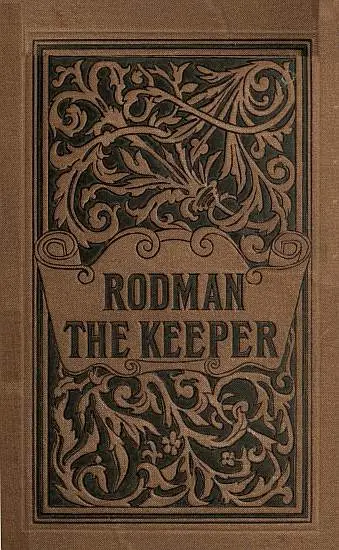
"Rodman the Keeper: Southern Sketches" by Constance Fenimore Woolson is a collection of character-driven sketches written in the late 19th century. The book provides a vivid portrayal of life in the post-Civil War South, particularly focusing on the somber reflections of its main character, John Rodman, who serves as the keeper of a national cemetery. As he navigates his solitude and encounters the memories of the soldiers buried there, the sketches explore themes of loss, duty, and the complex beauty of the Southern landscape." "At the start of the narrative, we are introduced to John Rodman sitting in the doorway of his cottage, reflecting on both his duties as a keeper of the graves of fallen soldiers and the isolation that accompanies them. The cemetery itself is enriched with the memories and stories of those who laid down their lives for their causes, and Rodman is portrayed as a man weighed by both the weight of history and his singular existence amid the ruins of pride and loss. His interactions with local townsfolk reveal an underlying tension between North and South, punctuated by moments of self-reflection and humanity as he tends to the graves of the fourteen thousand soldiers committed to rest there. This opening sets the stage for Rodman's journey through memories, melancholy, and a supreme sense of obligation to honor the fallen."
Introduction adapted from the source catalogue; source summaries may be automatically generated.
Free to read · English · 114,280 words · No account needed
MAKE TIME FOR A GOOD BOOK
On by default. Untick to stop anonymous reading totals. Each page counts after 10 seconds in view. How this works.
Anonymous counting is on unless you have switched it off.
"There is nothing in all the world like her," pursued the excited boy, "for her hair is of pure gold, not like the people here; and her eyes are so sweet, and her forehead so white! I never knew such people lived--why have you not told me all these years?"
"She is a blonde," replied Miss Elisabetha primly. "I, too, am a blonde,
Theodore."
"But not like this, aunt. My lovely lady is like a rose."
"A subdued monotone of coloring has ever been a characteristic of our family, Theodore. But I do not quite understand your story. Who is this person, and was she alone on the beach?"
"There were others, but I did not notice them; I only looked at her."
"And she sang?"
"O aunt, so heavenly sweet--so strange, so new her song, that I was carried away up into the blue sky as if on strong wings--I seemed to float in melody. But I can not talk of it; it takes my breath away, even in thought!"
Miss Elisabetha sat perplexed.
"Was it one of our romanzas, Theodore, or a ballad?" she said, running over the list in her mind.
"It was something I never heard before," replied Doro, in a low voice; "it was not like anything else--not even the mocking-bird, for, though it went on and on, the same strain floated back into it again and again; and the mocking-bird, you know, has a light and fickle soul. Aunt, I can not tell you what it was like, but it seemed to tell me a new story of a new world."
"How many beats had it to the measure?" asked Miss Elisabetha, after a
pause.
"I do not know," replied the boy dreamily.
"You do not know! All music is written in some set time, Theodore. At least, you can tell me about the words. Were they French?"
"No."
"Nor English?"
"No."
"What then?"
"I know not; angel-words, perhaps.
"Did she speak to you?"
"Yes," replied Doro, clasping his hands fervently. "She asked me if I liked the song, and I said, 'Lady, it is of the angels.' Then she smiled, and asked my name, and I told her,'Doro'--"
"You should have said, 'Theodore,'" interrupted Miss Elisabetha; "do I
not always call you so?"
"And she said it was a lovely name; and could I sing? I took her guitar,
and sang to her--"
"And she praised your method, I doubt not?"
"She said, 'Oh, what a lovely voice!' and she touched my hair with her little hands, and I--I thought I should die, aunt, but I only fell at her feet."
Your reading position is saved on this browser. Take it to another device with a library code. Reading pages adapt to text, rather than matching a printed edition.
Constance Fenimore Woolson

Constance Fenimore Woolson

Constance Fenimore Woolson
Constance Fenimore Woolson
BEHIND THE BOOK
This eBook is for the use of anyone anywhere in the United States and most other parts of the world at no cost and with almost no restrictions whatsoever. You may copy it, give it away or re-use it under the terms of the Project Gutenberg License included with this eBook or online at www.gutenberg.org. If you are not located in the United States, you will have to check the laws of the country where you are located before using this eBook. Read the source licence.
The original source file, including credits and licence, is retained by this library. Request an original-format copy at no charge. Please include the book title and Project Gutenberg identifier #33813.
KEEP YOUR CURIOSITY GOING
Coulson Kernahan

Maurice Baring
Frances Wright
Cécile Tormay

Frederic Jesup Stimson

W. H. P. (William Henry Pope) Jarvis